Custom Battery and Utility Enclosures: Supplier Questions
Compare enclosure suppliers using the equipment layout, ventilation brief, cable entries, maintenance access and buyer-defined safety requirements.
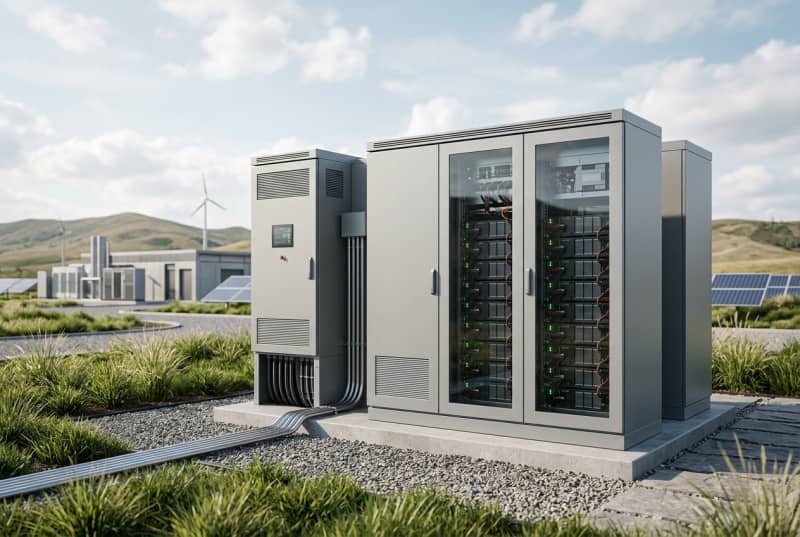
For most utility and infrastructure work in the United States, standard cabinets are a starting point, not a finish line. Real projects have site-specific wind and corrosion exposure, utility service clearances, thermal loads, cable routing limits, and maintenance rules that vary by region and owner. A battery site outside Phoenix faces different heat and UV stress than a coastal installation near Houston or Port Newark. A meter bank in Chicago has freeze-thaw cycling and salt exposure from winter road treatment. A transformer support enclosure at a Gulf Coast substation may need higher corrosion protection, reinforced mounting, and storm resilience. Because these conditions are not uniform, custom utility enclosures reduce risk, reduce rework, and improve lifecycle performance.
The practical buying goal is simple: select a manufacturer that can engineer around your specific load cases, environment, operation plan, and schedule constraints. That means evaluating structural design depth, weather sealing strategy, material selection, access and ventilation layout, manufacturing consistency, and delivery reliability. It also means writing a better RFQ so you get comparable, technically accurate quotes quickly instead of unclear proposals that cause change orders later.
This guide is written for U.S. buyers in energy storage, utilities, EPC contracting, transportation electrification, water infrastructure, telecom power, and industrial facilities. It covers what to customize, how to evaluate suppliers, what to include in procurement documents, and how to avoid common mistakes that lead to delays and higher maintenance.
Which Utility Products Are Most Commonly Customized for Battery Systems, Metering, Transformers, and Outdoor Equipment
Custom enclosure demand in the United States is strongest where projects combine outdoor exposure, mission-critical uptime, and strict serviceability requirements. Buyers are increasingly moving from “cabinet purchase” thinking to “system housing design” thinking. This shift is visible in battery storage deployments in Texas and California, utility metering upgrades in the Midwest, transformer modernization across aging substations, and distributed control expansion near logistics hubs.
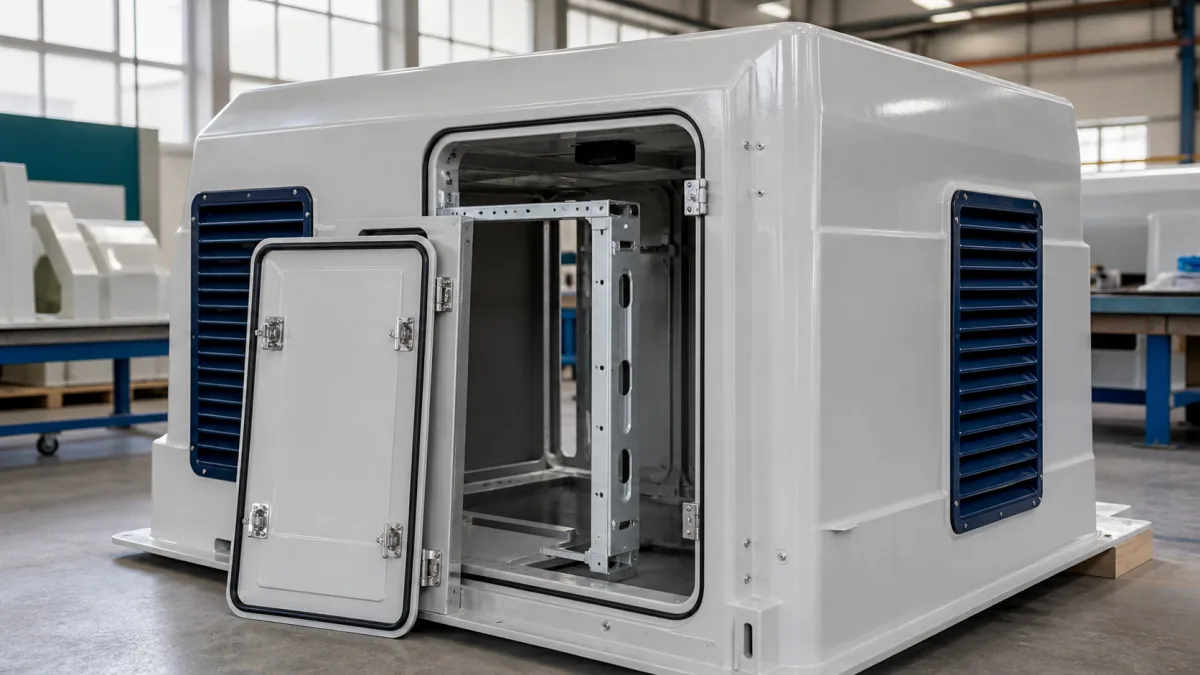
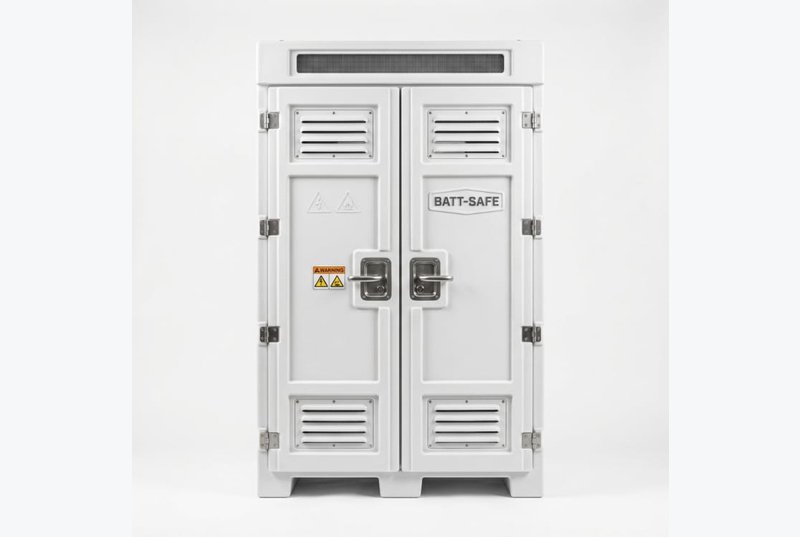
Typical product categories include battery housings, transformer enclosures, metering cabinets, and control cabinets with project-specific dimensions, thermal strategy, and access layout. For example, many U.S. integrators now request purpose-built FRP battery storage cabinets for outdoor BESS skids where corrosion resistance and electrical insulation matter. Grid and industrial users also specify custom transformer housings where cable entries, lifting points, and door clearances must match existing yard geometry. Metering projects commonly require specialized metering cabinet enclosures for utility access and lock coordination. SCADA and automation expansions often rely on robust control cabinet enclosures configured for field service access and ventilation.
Below is a practical map of common utility products and what is most frequently customized.
Industry mix also matters. Utility, renewable integration, transportation electrification, and water infrastructure each create different enclosure design priorities. The bar chart highlights realistic relative demand by segment.
How to Assess a Supplier’s Capability for Structural Design, Weather Protection, and Project-Specific Customization
Supplier assessment should go far beyond “can you fabricate this box.” For utility-grade work, ask for engineering process details, not just catalog dimensions. A qualified partner should show how they calculate structural loads, define sealing approach, handle thermal behavior, and control dimensional repeatability across production lots. In the U.S., where projects may span from Seattle rain exposure to West Texas heat, weather protection strategy must be explicitly engineered.
Ask each supplier to show example design packages from comparable projects: drawing revisions, load assumptions, mounting strategy, ingress-control design, and design-for-service features. If a supplier cannot explain why an enclosure wall thickness, frame reinforcement, or door gasket method was selected, that is a risk signal. You need evidence of engineering responsiveness, not only machining capability.
For larger infrastructure jobs, use weighted scoring rather than lowest-price ranking. A comparison framework helps procurement and engineering align decisions and document award logic for internal governance.
What Buyers Need to Check About Access Design, Ventilation, Serviceability, and External Exposure in Utility Enclosures
Many procurement issues happen because access and service design are treated as minor details. In reality, these details drive both safety and maintenance cost. U.S. field crews often work under narrow outage windows and strict lockout rules, so enclosure access geometry should support safe operation with gloves, test tools, and replacement parts. If doors open into traffic lanes or cable terminations are unreachable without removing live-adjacent parts, service time increases and risk rises.
Ventilation and exposure strategy should be based on local climate, not generic assumptions. In Florida and Gulf Coast regions, moisture control and corrosion resistance dominate. In Arizona and inland California, high ambient heat and UV aging dominate. In northern states, snow, ice, and freeze-thaw cycles affect seals and hinges. Good enclosure design separates hot zones, protects intake paths, and allows inspection without exposing critical components to direct weather.
For buyers managing multi-state portfolios, standardizing a serviceability checklist is more valuable than standardizing dimensions alone. A good checklist creates consistent field outcomes even when each enclosure geometry is customized.
How Material Choice Influences Corrosion Resistance, Weight, Installation Method, and Operating Life
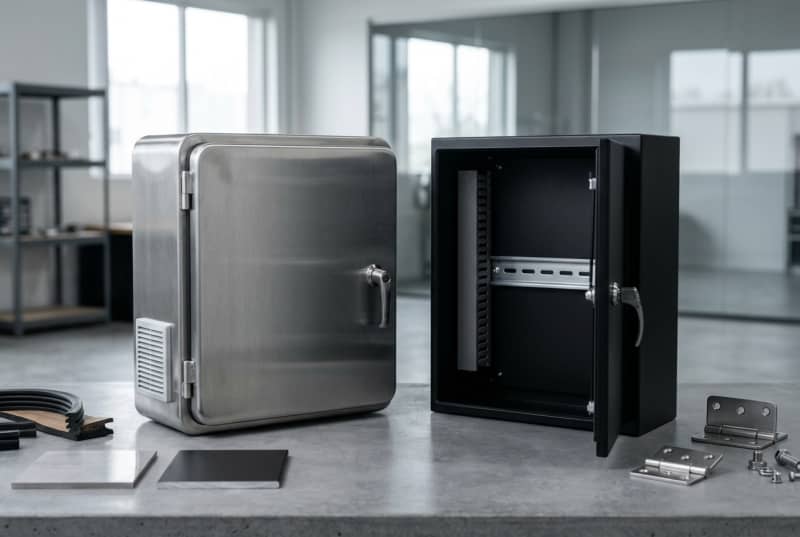
Material selection is one of the biggest lifecycle decisions in utility enclosure procurement. Initial price differences can be small compared with long-term maintenance, replacement, and outage costs. In many U.S. outdoor applications, FRP, coated steel, stainless steel, and aluminum all appear in bids. The right choice depends on corrosion profile, mechanical load, grounding strategy, thermal conditions, lifting constraints, and installation method.
FRP is often selected where corrosion resistance and electrical insulation are high priorities, especially for coastal or chemically exposed locations. Steel can offer excellent structural stiffness and cost efficiency when properly protected, but coating damage and long-term corrosion must be managed. Aluminum can reduce weight and ease handling, though galvanic considerations and structural design details remain important. Stainless steel provides strong corrosion resistance but may carry weight and cost penalties in some configurations.
The chart below illustrates a realistic trend shift in U.S. projects toward materials that improve corrosion durability and reduce field maintenance burden, especially in distributed energy and outdoor automation assets.
In practical terms, if your site is near ports such as Long Beach, Savannah, Houston, or Newark where salt-laden air is common, corrosion strategy should be treated as a first-order design decision. If your project has crane-limited access in dense urban areas like Boston, San Francisco, or Manhattan, enclosure mass and installation method can be equally critical. Material selection should always be tied to location-specific risk, not generic preference.
How to Compare Suppliers on Engineering Responsiveness, Quality Control, and Delivery Reliability for Infrastructure Jobs
Large infrastructure schedules are unforgiving. The best supplier is not necessarily the one with the lowest unit price; it is the supplier that repeatedly converts design inputs into right-first-time manufacturing and delivers on time. Engineering responsiveness is especially important when site conditions change during permitting, civil execution, or utility coordination. A supplier that can revise drawings quickly and accurately can save weeks of downstream delay.
For quality control, request visibility into incoming material checks, in-process inspections, final dimensional verification, and packaging protection standards. Ask whether the supplier performs first-article approval for new custom designs and whether they maintain records traceable to production batches. This is essential for public infrastructure and utility-owned assets where documentation quality impacts acceptance.
Delivery reliability should be measured by evidence, not promise. Compare recent on-time performance for projects similar in complexity, not generic company-wide averages. For U.S. deployments tied to construction windows in regions like the Northeast winter season or hurricane-prone Gulf periods, schedule reliability directly influences project risk.
A practical procurement tactic is to pre-qualify two to three suppliers by technical score, then negotiate commercial terms with top-ranked candidates. This avoids the common scenario where a low-price vendor wins but later drives change-order costs through design limitations.
Common Mistakes in Utility Enclosure Procurement That Lead to Rework, Delays, or Higher Maintenance
Most expensive mistakes are preventable and begin early: incomplete RFQs, generic drawings, unclear responsibility boundaries, and underdefined environmental requirements. In U.S. infrastructure programs, these mistakes often appear when procurement teams issue requests before field constraints are fully captured or when design and installation teams are not aligned.
Another frequent issue is mixing “equivalent” materials without lifecycle analysis. A cabinet that appears acceptable on paper can underperform in corrosive environments or high UV locations, creating avoidable maintenance cost in year two or three. Access design errors are also common: doors blocked by walls, no room for cable bend radius, no isolation between service zones, and poor ventilation that causes thermal stress.
Teams that avoid these mistakes usually align engineering, procurement, construction, and operations before final supplier selection. One coordination workshop often prevents months of downstream friction.
How to Build a Better RFQ for Custom Energy Enclosures So Quotes Are Faster and More Accurate
A strong RFQ is the fastest path to accurate pricing and comparable proposals. Suppliers can only quote correctly when input data is complete and unambiguous. For U.S. buyers, a high-quality RFQ typically includes site environment details, utility standards, electrical layout constraints, dimensional envelope, material requirements, service access rules, inspection expectations, and delivery milestones.
When RFQs include these elements, engineering clarifications decrease, quote cycles shorten, and later changes become smaller. This is critical in competitive bidding where schedule and certainty matter as much as unit cost.
A useful RFQ process in the United States is a two-stage issue: first, a technical package for design alignment; second, a commercial package after clarifications are closed. This avoids pricing noise caused by unknowns and helps all bidders quote the same technical basis.
Final Advice for Sourcing Durable Custom Utility and Energy Equipment Housings
The best sourcing outcomes come from a lifecycle mindset. Define operating context first, then design requirements, then supplier strategy. In practical terms: identify your real site constraints, convert them into measurable requirements, and select a manufacturer that can prove engineering depth, process control, and reliable delivery. A strong custom enclosure program should reduce installation friction, improve maintainability, and hold performance over years of outdoor exposure.
Direct Answer: What U.S. Buyers Should Do First
Start with a joint engineering-procurement workshop before RFQ release. Confirm five basics: environment class, service access model, thermal assumptions, material strategy, and schedule constraints. If any of these are unclear, pause and finalize them before soliciting bids. This single step reduces change orders and rework more than any other procurement tactic.
Industries and Applications Where Customization Pays Off Most
High-value applications include utility substations, renewable-plus-storage plants, municipal water systems, transportation electrification hubs, and industrial microgrids. In each of these, downtime costs and field access complexity are high enough that custom design quickly pays back through reduced service hours and fewer emergency interventions.
Case Examples from Common U.S. Project Conditions
Case 1: Coastal Metering Upgrade - A utility contractor serving coastal Louisiana moved from standard coated steel meter enclosures to corrosion-focused custom units with improved sealing and access segregation. Result: fewer corrosion-related interventions and easier inspection cycles during high-humidity months.
Case 2: Desert Battery Site - A developer in Arizona specified custom battery enclosures with optimized ventilation paths, UV-resistant shell material, and service-friendly rear access. Result: improved thermal consistency and reduced technician time during scheduled maintenance.
Case 3: Urban EV Fleet Depot - A transit project near Los Angeles required compact enclosures with strict footprint and door-clearance constraints. Custom dimensions and cable entry orientation prevented civil rework and enabled phased installation without blocking adjacent operations.
How to Shortlist Local and Regional Suppliers
When building a U.S. supplier shortlist, include geographic and logistics realities. Consider whether suppliers can support deliveries to major corridors and ports such as Houston, Savannah, Long Beach, Seattle, and New York/New Jersey with predictable transit timing. For inland projects in Dallas-Fort Worth, Denver, Chicago, or Atlanta, ask about regional staging options and packaging suitable for multi-leg freight handling. Local support coverage matters as much as manufacturing location.
Final Procurement Checklist
- Define environment and exposure class by exact site location.
- Validate service access geometry with real clearance constraints.
- Select material based on lifecycle conditions, not just initial price.
- Require first-article approval for all custom designs.
- Score suppliers on engineering speed, quality maturity, and delivery record.
- Include packaging, spares, and support SLAs in commercial terms.
- Standardize RFQ templates across projects while keeping site-specific data mandatory.
Frequently Asked Questions for United States Utility Enclosure Buyers
In summary, successful sourcing of custom utility and energy equipment housings in the United States depends on disciplined upfront definition, strong engineering collaboration, and supplier selection based on proven execution. If you treat enclosure procurement as a system design decision instead of a commodity purchase, you will get better reliability, fewer field issues, and a lower total cost of ownership.