Custom Automotive Exterior Parts: An OEM Sourcing Guide
Plan custom FRP exterior panels around vehicle reference data, tooling, mounting interfaces, surface finish and fit approval.
Direct Answer for Buyers in the United States
If you are sourcing custom automotive exterior parts in the United States, the fastest path to a successful launch is to make six decisions early: the exact part family, target annual volume, material route, required visual quality, assembly tolerance stack, and supplier validation plan. Most delays and cost overruns happen when these six decisions are postponed until after tooling starts. For EV startups, specialty truck brands, and low-volume mobility programs, custom exterior panels remain in strong demand because they allow faster design differentiation without waiting for legacy high-volume stamping cycles.
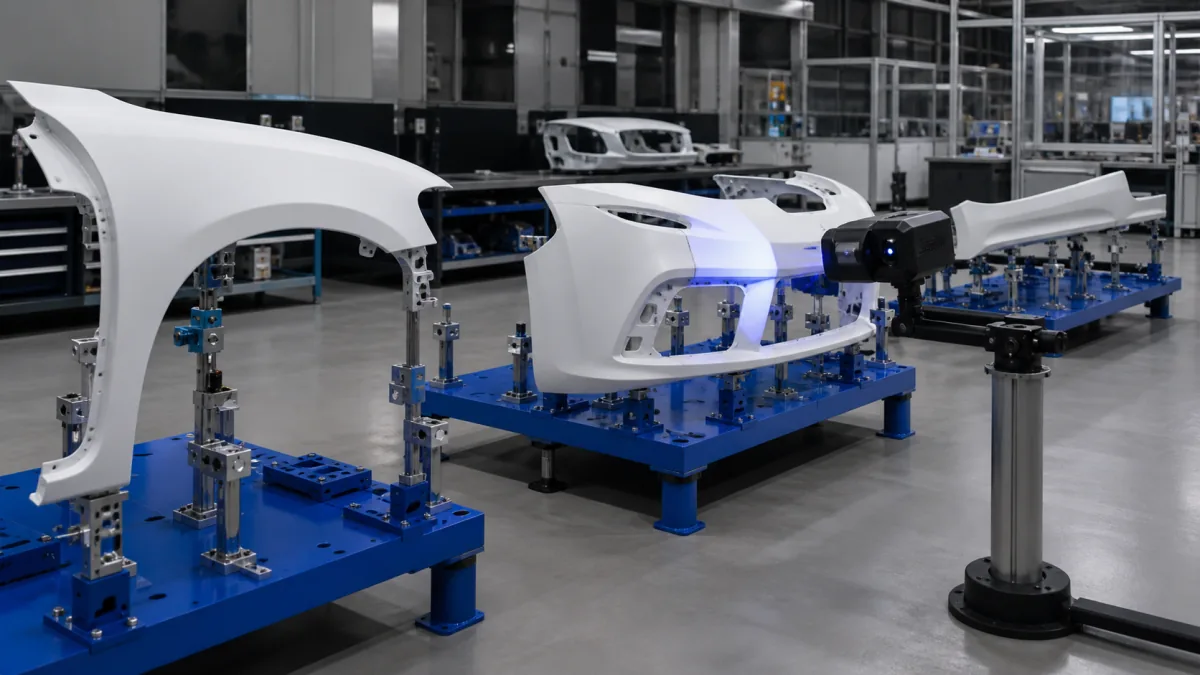
Across programs in Detroit, Los Angeles, Austin, and Greenville-Spartanburg, buyers that perform best treat exterior sourcing as a full industrialization project, not a simple purchase order. They define class-A surface standards, join-line strategy, and mounting architecture before releasing molds. They also require a supplier that can move from concept through repeat production with stable process control. That is especially important when sourcing FRP body panels, because geometry control and cosmetic consistency depend on both tooling quality and disciplined layup/curing methods.
For United States programs shipping through Port of Los Angeles, Port of Long Beach, Houston, Savannah, or Charleston, logistics timing must also be designed into the sourcing strategy. Exterior parts are large, damage-sensitive, and often shipped in dedicated dunnage. If packaging, humidity control, and dimensional checks are not defined early, in-transit distortion and fitment failures can erase any piece-price savings.
Why Custom Exterior Panels Are Still in Demand for EV Startups, Specialty Vehicles, and Low-Volume Programs
The trend line reflects what many buyers already feel on the ground: custom exterior development is becoming a normal industrial pathway, not an exception. This is especially true when annual volume is too high for handcrafted methods but too low to justify full automotive stamping amortization.
Automotive Exterior Parts Most Often Customized for Styling, Aerodynamics, Weight Savings, and Brand Identity
The most frequently customized exterior components are those that influence first impression, drag profile, and visual signature. In US programs, front fascia and rear bumper systems are usually the first parts to be customized because they deliver immediate brand recognition and support aero tuning. Side components, fairings, and door skins follow when a platform needs a stronger identity or a range-efficiency update.
Common sourcing priorities vary by segment. EV brands focus on drag reduction and flush transitions. Off-road and utility vehicles prioritize durability and serviceability. Shuttle and fleet customers prioritize repeat fit and lower total operating cost. Motorsports prioritize stiffness-to-weight performance and fast replacement cycles.
Below is a practical breakdown of what buyers most often customize and why.
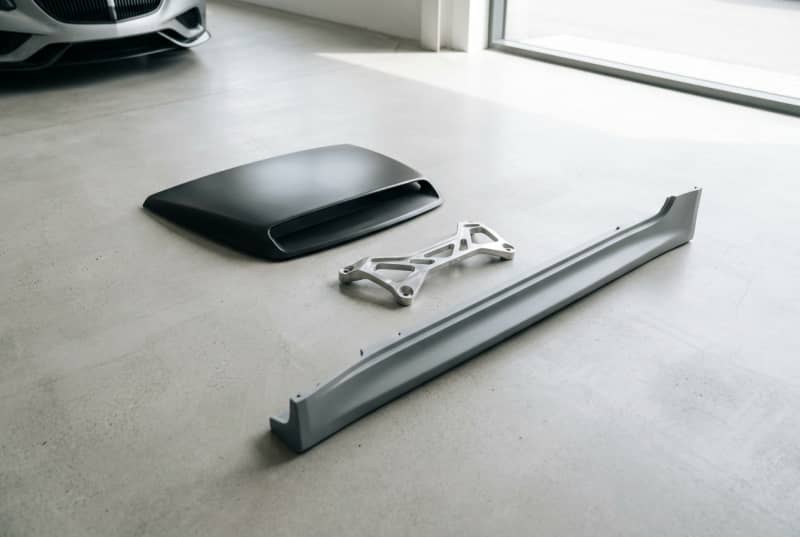
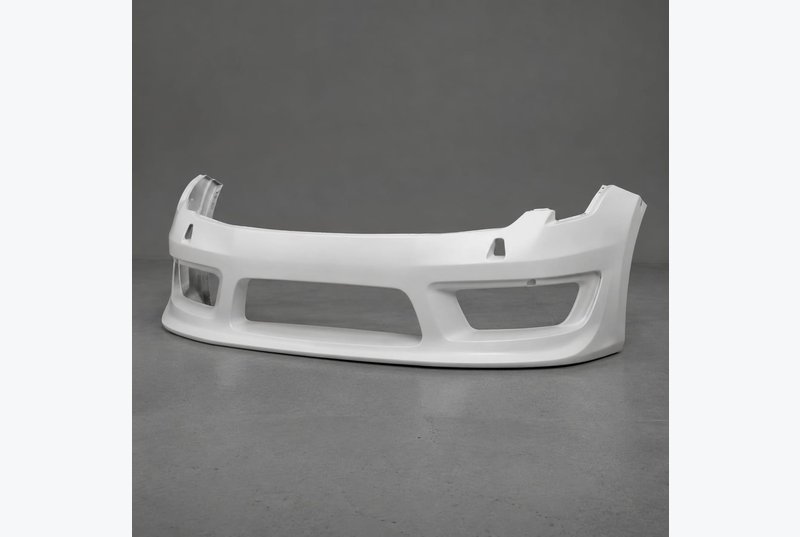
For teams mapping part categories to real FRP applications, these examples are often relevant in early scoping: custom FRP vehicle front fascia solutions for signature front-end design, FRP rear bumper shell manufacturing options for styling and impact packaging, front fairing panel development in fiberglass for aero efficiency, and EV door shell composite programs where weight and geometry consistency are both critical.
Industry demand by use case in the United States is shown below.
How to Select a Supplier That Can Deliver Tooling, Surface Precision, and Repeatable Exterior Production
Supplier selection for exterior components should be treated as a capability audit across tooling, process discipline, and inspection maturity. A factory that can make one good sample is not automatically ready for repeat production. For US buyers, especially those integrating parts in Michigan, Ohio, Tennessee, Texas, or California assembly sites, repeatability and lead-time reliability matter more than an attractive first quote.
The most reliable evaluation method is to score suppliers in three integrated dimensions: technological capabilities, manufacturing capabilities, and service capabilities.
Technological Capabilities
Look for suppliers that can support concept-to-production engineering, including DFM review, CAD refinement, layup or molding simulation, and surface accuracy planning before tool release. For FRP exterior parts, capability in geometry compensation, cure behavior prediction, and class-A surface development is essential. The goal is to ensure the panel you design is the panel they can repeatedly build.
Manufacturing Capabilities
Evaluate the complete production chain: tool fabrication quality, process control at molding and curing, dimensional inspection routines, and cosmetic finishing standards. Ask for evidence of stable cycle times, documented work instructions, and traceability by batch and cavity where applicable. Confirm how the factory handles humidity, resin storage, cure windows, trimming fixtures, and rework thresholds.
Service Capabilities
A strong supplier supports program management across sample iterations, PPAP-like submission packages, pilot builds, and ramp logistics into the United States. Practical support includes packaging engineering, spare-part planning, warranty response workflow, and technical communication cadence. The best partners function as an extension of your engineering and purchasing teams.
This checklist helps separate prototype-only shops from production-capable partners. In practical terms, your supplier should be able to run stable repeat batches, not just deliver attractive first-off parts.
What Drives Unit Cost in Custom Body Panels: Mold Investment, Volume, Geometry, or Finish?
For custom body panels, unit cost is shaped by four core factors: mold/tooling investment, annual volume, geometry complexity, and finish requirements. Buyers often over-focus on raw material price, but the largest cost swings usually come from scrap rates, cycle time, and rework caused by geometric complexity and cosmetic standards.
A useful way to model economics is to treat part cost as: (tooling amortization + variable process cost + finish labor + quality loss + logistics) divided by annual shipped quantity. If your annual volume is low, tooling amortization dominates. If your volume rises, process stability and labor efficiency dominate. If class-A finish is required, surface prep and rework can surpass molding cost.
When Composite Exterior Parts Make More Sense Than Steel, Aluminum, or Injection-Molded Plastic
Composite exterior parts are often the best choice when you need flexible design freedom, moderate tooling spend, and low-to-mid-volume economics. They are particularly effective when annual demand is below the level where full stamping tools become financially optimal. They also excel when geometry includes integrated forms, sharp styling features, and aerodynamic surfaces that are costly in conventional metal forming.
Steel remains strong for very high volume and high-impact structural integration. Aluminum is useful for mass reduction in high-volume premium applications but may require expensive forming and joining strategies. Injection-molded plastic is excellent for high repetition and integrated features, but mold investment and equipment constraints can be high for very large, complex panels in lower-volume programs.
How to Lower Development Risk with Samples, Fitment Checks, and Pre-Production Validation
Development risk is best controlled with a stage-gate validation path. Instead of jumping directly from design freeze to production tooling, leading buyers run structured prototypes, fitment checks on representative bodies, and controlled pilot lots before SOP. This approach reduces expensive late changes and protects launch timing.
A robust workflow for US programs normally includes: digital DFM review, initial sample set, fitment buck validation, updated sample build, thermal and vibration durability screening, pilot production, and pre-launch containment plan. The key is to treat each gate as a decision point with measurable pass criteria.
This sequence reduces risk because it catches failure modes at the cheapest point to fix them. Buyers in distributed manufacturing networks, such as design in California and assembly in the Midwest, benefit even more from strict stage-gate discipline.
Common Buyer Problems - Warping, Uneven Finish, and Poor Assembly Tolerance - and How to Prevent Them
The three most frequent external panel problems are warping, inconsistent finish, and assembly tolerance failure. These issues are preventable when technical requirements are translated into measurable production controls.
Warping usually comes from uneven cure, poor fixture support, or thermal mismatch between part and reinforcement. Prevent it by defining post-cure standards, stable mold temperature control, and flatness checkpoints before shipment.
Inconsistent finish often comes from uncontrolled surface prep, variable spray or coating parameters, and rework that is not standardized. Prevent it by using objective defect catalogs, lighting standards, and acceptance samples approved by both teams.
Poor assembly tolerance usually reflects weak datum strategy and uncontrolled trim operations. Prevent it with fixture-based trimming, CTQ dimensions tied to vehicle datums, and regular MSA studies on gauges and scan systems.
US buyers should also monitor packaging-related distortion. Large panels moved through long routes from coastal ports to inland plants can shift if dunnage is weak or stack pressure is too high. Packaging design is part of quality, not an afterthought.
Another frequent issue is engineering change drift. If your revision control is loose, parts from different revisions can mix and create intermittent line issues. Digital revision locks, serialized labels, and quarantine protocols are low-cost controls with high value.
How to Build a Long-Term Partnership with a Custom Automotive Parts Factory
Long-term performance comes from collaboration architecture, not one-off negotiations. A durable partnership should include shared forecasts, joint engineering reviews, transparent quality dashboards, and agreed pathways for cost-down over time. Buyers who treat suppliers as interchangeable transaction points typically face repeated relearning costs and unstable launches.
In successful relationships, the factory participates in early design dialogue. That allows practical feedback on tool splits, draft angles, layup feasibility, finish strategy, and fixture access before irreversible decisions are made. Over multiple programs, this shortens development cycles and improves cost predictability.
Commercially, a healthy model combines fair margin protection with performance incentives tied to yield, delivery, and escape rate. Operationally, monthly technical governance meetings and quarterly executive reviews keep both sides aligned.
How a Partnership Evolves Beyond One-Off Purchases
- Year 1: prototype and launch support, high engineering interaction.
- Year 2: process stabilization, first cost-down wave through scrap and cycle optimization.
- Year 3: platform reuse of tools, fixtures, and quality standards across new variants.
- Year 4+: co-development of next-generation lightweight and lower-carbon exterior solutions.
For United States brands managing multi-site operations, long-term partners also provide reliable logistics planning, regional buffer strategies, and documented continuity plans for disruptions at major trade hubs.
A Practical Supplier Evaluation Framework for Brands Sourcing Custom Exterior Components
A practical framework should score suppliers across technical readiness, manufacturing maturity, commercial stability, and collaboration quality. Use weighted scoring and run the assessment with engineering, quality, purchasing, and operations together. This reduces blind spots and prevents over-reliance on a single dimension such as quote price.
The sample framework below can be adapted by program type.
This scoring system is effective because it balances technical truth and commercial reality. A supplier with high cosmetic skill but weak repeatability should not outrank a supplier with stable industrial performance.
Comparison scoring visualization:
1) What annual volume usually justifies moving from simple FRP methods to higher automation?
Programs often review partial automation when annual demand consistently exceeds about 8,000 to 15,000 units per part family, depending on geometry and finish level. The real trigger is stable forecast plus repeat quality requirements.
2) Is mold cost or finish quality usually the bigger hidden expense?
At low volume, mold amortization can dominate. As volume rises, finish quality and rework often become the larger hidden cost if class-A appearance is required.
3) How many sample rounds are typical before pilot production?
Two to three structured sample rounds are common for custom exterior panels. Fewer can work when geometry is simple and carryover interfaces are stable.
4) What is the best way to avoid assembly tolerance surprises?
Define vehicle datums early, assign CTQ dimensions, use fixture-based trimming, and run full vehicle-level gap/flush mapping before pilot signoff.
5) How should US buyers evaluate logistics for large exterior panels?
Validate dunnage design, stacking rules, humidity protection, route transfer points, and shock/vibration exposure. Require route-specific packaging trials, especially for cross-country shipments.
6) What distinguishes a one-off supplier from a long-term production partner?
A long-term partner shows repeat capability data, disciplined revision control, transparent corrective actions, and proactive engineering support from concept to production.