Why EV Brands and Specialty Vehicle Makers Choose Custom Lightweight Body Components to Move Faster
For EV startups, specialty vehicle builders, and innovation teams inside established OEM ecosystems, the direct answer is this: custom lightweight body components are often the fastest path from idea to road-ready product when volume is uncertain, styling is a competitive lever, and capital must be staged carefully. In the United States, where market windows can open and close quickly across fleet electrification, urban mobility, off-road recreation, and commercial last-mile delivery, waiting for conventional high-volume stamping programs can delay launch by 12 to 24 months and absorb budget long before product-market fit is proven.
Custom FRP and hybrid lightweight exterior systems give teams a practical way to validate design intent, package batteries and thermal systems, and preserve brand identity while controlling tooling exposure. This is especially relevant in hubs such as Detroit, Los Angeles, Austin, Phoenix, and Atlanta, where suppliers, engineering talent, and pilot manufacturing partners are concentrated. Import routes through the Ports of Los Angeles/Long Beach, Savannah, Houston, and New York/New Jersey also influence sourcing strategy for imported body components and semi-finished panels.
Across the U.S. market, the most resilient programs usually share five traits: they define critical quality points early, choose a supplier that can bridge concept through low-to-mid volume manufacturing, adopt lightweight materials with clear integration plans, run parallel validation for fit and finish, and build procurement risk controls before issuing production purchase orders. The guidance below is designed for buyers who need both speed and discipline.

Which EV Components Can Be Customized: Body Shells, Doors, Roof Modules, and Exterior Panels
Customization in EV exterior development is broader than many procurement teams assume. It does not stop at cosmetic skins. The most valuable programs treat the body system as a modular architecture with different lead-time and durability requirements by part family. In practical terms, U.S. buyers should segment components into structural-adjacent shells, closures, upper structures, appearance panels, and interior-adjacent shells.
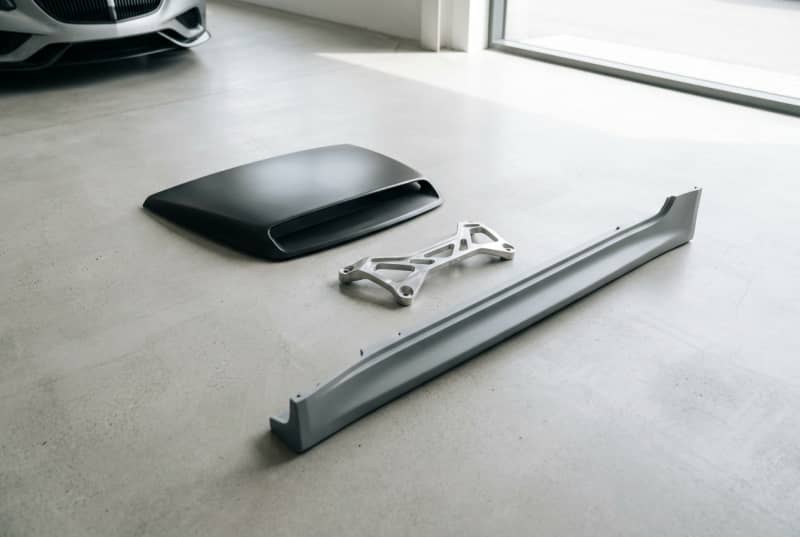
A typical custom scope can include complete outer body shells, door shells and inner structures, roof caps and integrated antenna/radar zones, fenders, hoods, trunk lids, front and rear fascias, rocker covers, wheel arch extensions, cargo pod skins, and dashboard shells for specialty cockpits. For early phase development, these can be produced with tooling strategies that support quick iterations while preserving Class-A surface objectives where needed.
| Component Type | Typical Customization Scope | Common Material Options | Prototype Lead Time | Low-Volume Production Fit | Key Validation Focus |
|---|---|---|---|---|---|
| Complete Body Shell | Exterior geometry, mounting points, aerodynamic profile | FRP, sandwich composite, hybrid laminate | 8–14 weeks | Excellent | Global dimensional control |
| Door Shells | Outer skin styling, hinge zones, seal interfaces | FRP, SMC variants, mixed-material assembly | 6–10 weeks | Excellent | Gap/flush and slam durability |
| Roof Sections | Curvature, integrated lighting, antenna/radar windows | FRP, translucent composite inserts | 6–12 weeks | Very good | Water sealing and NVH behavior |
| Front/Rear Fascia Skins | Brand face, sensor zones, serviceability design | FRP, reinforced polymer blends | 5–9 weeks | Very good | Surface waviness and paint match |
| Fenders and Quarter Panels | Wheel clearance and visual stance tuning | FRP, lightweight sheet composite | 5–8 weeks | Excellent | Local stiffness and fit repeatability |
| Hood/Decklid | Lightweight closure redesign and latch integration | FRP with local reinforcement | 7–11 weeks | Good | Thermal stability and latch quality |
| Dashboard Shell | Cockpit geometry, display integration, branding | FRP inner shell + trim stackups | 6–10 weeks | Very good | Attachment logic and perceived quality |
This matrix helps align engineering and purchasing teams on what can be customized now versus later. For teams evaluating suppliers, product-specific pages such as custom EV body shell solutions, FRP EV door shell manufacturing, vehicle roof cap development, and composite dashboard shell options can be useful when mapping RFQ scope to technical deliverables.
When reviewing part lists, insist on clear interfaces: bonding zones, mechanical fastener strategy, seal paths, and attachment datum hierarchy. Most downstream quality failures are not caused by material choice alone; they originate where one component meets another.

How to Select a Supplier for Concept Validation, Prototypes, and Low-to-Mid Volume Manufacturing
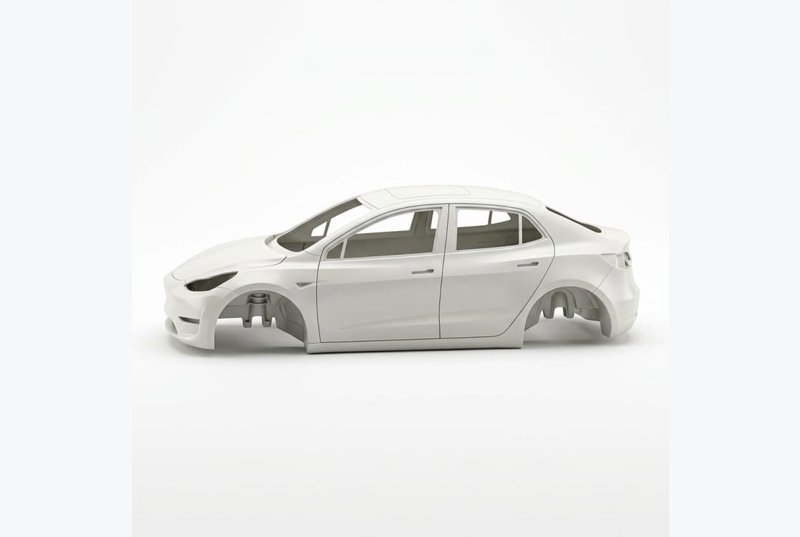
Supplier selection for EV body programs should be built around lifecycle capability, not just quote price. If one vendor can only do prototypes and another can only do production, you risk expensive engineering transfer loss and quality drift. In the U.S. context, where launch timelines are compressed and rework is costly, the best partner is one that can carry your design from concept validation through pilot and into stable low-to-mid volume output without changing core process assumptions.
Buyers should test supplier maturity in three dimensions. First, technical capability: design-for-manufacture feedback, material process windows, and metrology discipline. Second, manufacturing capability: repeatable tooling routes, documented work instructions, controlled curing/finishing conditions, and defect containment. Third, service capability: rapid engineering response, transparent change management, and logistics coordination into U.S. assembly sites.
| Evaluation Area | What to Ask | Evidence to Request | Minimum Acceptable Standard | Risk if Missing | Buyer Action |
|---|---|---|---|---|---|
| Concept Feasibility | Can they review CAD for manufacturability in 1–2 weeks? | DFM report sample | Actionable report with geometry risks | Late redesign loops | Gate RFQ release on DFM completion |
| Prototype Build Speed | What is first-shot prototype timing? | Past project Gantt evidence | Documented 6–12 week path by part type | Program delay | Contract milestone penalties |
| Tooling Strategy | Do they offer staged tooling for growth? | Tool class matrix | Prototype, bridge, and production options | Overinvestment early | Approve phased capital plan |
| Quality Systems | How are Cp/Cpk and defect trends tracked? | SPC and NCR templates | Weekly measurable quality dashboard | Unstable output | Run pre-SOP process audit |
| Surface Finishing | Can they support paint-ready A-surface targets? | Surface inspection protocol | Defined waviness/defect acceptance criteria | Brand perception damage | Pilot lot finish approval |
| Assembly Compatibility | Do they support fixture and datum alignment with your plant? | Fixture interface drawings | Matched datum strategy | Gap/flush rework | Joint dimensional review |
| Service Responsiveness | How quickly can ECO changes be implemented? | ECO turnaround history | Documented response within 72 hours | Engineering bottlenecks | Define SLA in contract |
Use this checklist as a scored matrix, not a qualitative discussion. Assign weighted criteria and rank vendors numerically to reduce internal bias. A common U.S. best practice is to combine procurement, manufacturing engineering, quality, and program management in one supplier selection committee so speed decisions are not made in isolation.
The market growth curve above reflects a realistic trend seen in niche EV and specialty vehicle segments: gradual expansion followed by faster adoption when programs move from prototype-only to repeatable low-volume production.
What Buyers Must Know About Surface Quality, Assembly Accuracy, and Styling Consistency in EV Exterior Parts
In EV markets, exterior quality is not optional branding polish; it is a purchase trigger. Many buyers compare vehicles online before seeing them in person, so reflections, panel transitions, and edge confidence affect conversion. U.S. brands targeting premium or technology-forward positioning should define quality criteria before tool release and align those criteria with realistic process capability.
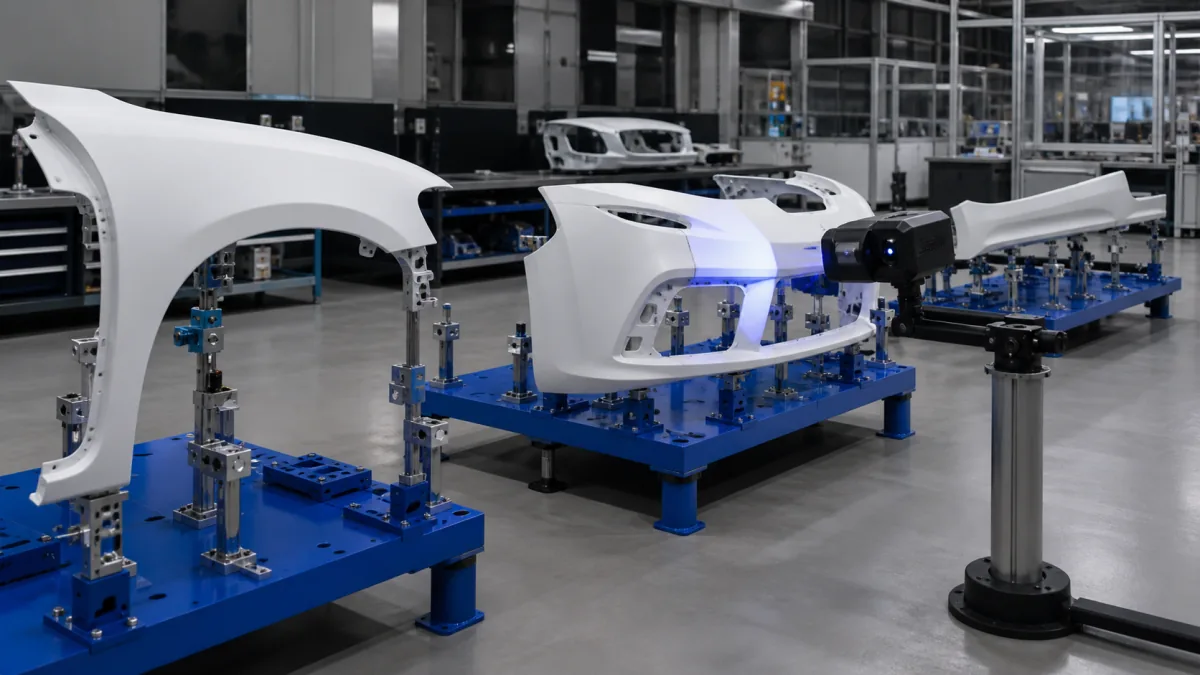
For surface quality, specify acceptable waviness, pinhole criteria, sink and print-through limits, and paint prep standards by visible zone. For assembly accuracy, define datum hierarchy, gap/flush targets, and thermal behavior expectations at operating temperatures relevant to U.S. climates from Arizona heat to Midwest winter. For styling consistency, maintain master references and digital inspection loops across all batches, not just PPAP lots.
| Quality Dimension | Typical Target Range | Measurement Method | Frequency | Common Failure Mode | Corrective Approach |
|---|---|---|---|---|---|
| Panel Gap | 3.0–4.5 mm by zone | Feeler + digital gauge | Every assembly lot | Uneven visual rhythm | Fixture re-calibration, mounting update |
| Flushness | ±0.5 to ±1.0 mm | Laser scan cross-sections | Daily sampling | Step surfaces | Datum correction and shim tuning |
| Surface Waviness | Controlled by class-A zones | Light tunnel + profilometer | Per paint batch | Reflection distortion | Tool polish and process stabilization |
| Pinhole Density | Near-zero in primary visual zones | Visual + magnification | 100% final check for premium trims | Paint defects | Resin process and finishing correction |
| Edge Crispness | Consistent radius by design spec | Template and scan overlay | First article + periodic audit | Soft character lines | Tool edge refinement |
| Color/Gloss Match | Within defined delta range | Spectrophotometer | Every paint lot | Panel mismatch | Paint process balancing |
| Thermal Dimensional Stability | No functional misfit across cycle | Thermal chamber + fit check | DV/PV cycles | Seal leakage and noise | Material stack and mount redesign |
This table should become part of your sourcing package. If a supplier cannot quantify these items, quality outcomes will depend on individual craftsmanship rather than a reliable system. That is risky when you scale from 50 units to 2,000 units annually.
How Lightweight Materials Influence EV Efficiency, Integration, and Brand Positioning in Competitive Markets
Lightweighting in EV programs is about system-level value, not simply mass reduction. Every kilogram removed can influence range, acceleration feel, tire wear, and suspension tuning flexibility. In U.S. use cases such as urban delivery cycles, regional fleet routes, and lifestyle adventure vehicles, the vehicle’s operating profile determines whether lightweight panels deliver measurable economic return.
FRP and related composites are often chosen because they balance low tooling burden, corrosion resistance, form freedom, and strong aesthetic potential for low-to-mid volume runs. They can also simplify integration of complex geometries that would require multiple stamped parts and secondary joining operations. This matters for EV architectures with battery packaging constraints and tight thermal management channels.
Brand positioning is equally important. Lightweight materials can support visually differentiated forms, cleaner shut-lines, and signature surfaces that help emerging EV brands look intentional rather than derivative. In crowded U.S. EV segments, where consumers evaluate innovation cues quickly, exterior coherence and modernity can improve perceived value even before detailed spec comparison.
| Material System | Mass Efficiency | Tooling Cost Profile | Design Freedom | Best Volume Range | Program Fit |
|---|---|---|---|---|---|
| FRP Composite | High | Moderate, scalable | Very high | Prototype to mid-volume | Startups and specialty EVs |
| SMC-like Composite Routes | High | Moderate to high | High | Low to higher mid-volume | Programs with repeatable geometry |
| Aluminum Stamping | Moderate to high | High initial investment | Moderate | Mid to high volume | Scaled OEM platforms |
| Steel Stamping | Lower | Very high initial investment | Moderate | High volume | Mature high-volume lines |
| Thermoplastic Exterior Panels | Moderate | Moderate to high | High | Mid-volume | Complex fascia systems |
| Hybrid Multi-Material Assemblies | Very high potential | Variable | Very high | Program specific | Performance-focused EVs |
| Natural Fiber Composite Blends | Moderate | Emerging | Moderate | Pilot to niche | Sustainability-led concepts |
Use this comparison to align material choice with business model. If your 24-month outlook is uncertain, high-capex stamping may weaken your cash runway. If demand is highly predictable and large, traditional high-volume routes may become economical. The key is to match process to realistic demand, not aspirational forecasts.
The bar chart shows why flexible material and tooling routes matter: demand is distributed across multiple industries rather than concentrated in one predictable segment.
When Custom Panels Are Better Than Conventional Stamping for Emerging or Niche Vehicle Programs
Custom panels outperform conventional stamping when program uncertainty is high, launch speed is strategic, volumes are moderate, or styling differentiation is central to market entry. In the United States, this is common for electric delivery vans, purpose-built service vehicles, airport and campus shuttles, emergency response EVs, low-speed neighborhood EV fleets, and enthusiast off-road platforms.
Conventional stamping offers excellent economics at scale, but the break-even point can be farther out than startup business plans expect. If your annual volume starts in the hundreds or low thousands, and you anticipate geometry revisions after field feedback, custom panel routes are often more resilient. They allow learning cycles without writing off massive hard-tool investments.
Applications where custom solutions frequently win include pilot fleets with city-specific requirements, body variants for municipal programs, and special-access configurations for healthcare, education, and industrial logistics. Case examples seen in U.S. markets include short-wheelbase EV utility vehicles requiring custom roof and door geometry, and lifestyle EVs using distinct body shells to create premium identity in crowded regional markets like California and Texas.
From an engineering perspective, custom panels also help when integrating non-standard battery enclosures, rooftop equipment, ADAS sensor housings, and modular service doors. Stamping can eventually support these needs, but the upfront timing and cost may not align with early business phases.
How to Control Tooling Investment and Development Time Without Sacrificing Product Quality
The strongest approach is phased tooling with quality gates. Instead of committing all capital to final-production tools immediately, divide development into stages: concept tooling, functional prototype tooling, bridge tooling for pilot production, then production-optimized tooling once demand confidence rises. This strategy preserves cash and keeps your engineering options open.
At each stage, define technical exit criteria: dimensional conformance, finish capability, assembly repeatability, and process stability. If criteria are not met, do not progress tooling class. This discipline prevents the common failure mode where teams accelerate to production tools before interface logic is frozen.
Program timing can also be reduced by running parallel tracks: finalize critical mounting datums while surface refinements continue in non-critical zones; release long-lead materials early; and conduct supplier fixture alignment workshops before pilot lot completion. U.S. teams often reduce launch risk by coordinating these activities with domestic assembly partners in Midwest and Southeast manufacturing corridors.
| Stage | Main Objective | Typical Duration | Capital Intensity | Quality Gate | Go/No-Go Decision |
|---|---|---|---|---|---|
| Stage 0: Concept Feasibility | Validate package and design direction | 2–4 weeks | Low | Feasible interfaces confirmed | Approve prototype preparation |
| Stage 1: Prototype Tooling | Generate first physical parts quickly | 6–12 weeks | Low to moderate | Basic fit and functional checks pass | Authorize design refinement |
| Stage 2: Engineering Validation Build | Confirm dimensional behavior and assembly logic | 8–14 weeks | Moderate | Gap/flush and durability trend stable | Enter pilot readiness |
| Stage 3: Bridge Tooling for Pilot | Support low-volume preproduction output | 10–16 weeks | Moderate | Defect ppm and cycle consistency acceptable | Release market pilot |
| Stage 4: Production-Optimized Tooling | Increase efficiency and repeatability | 12–20 weeks | High | Stable quality and demand visibility | Scale volume responsibly |
| Stage 5: Continuous Improvement | Refine cost, quality, and service performance | Ongoing | Variable | Quarterly KPI targets met | Expand variants/regions |
| Stage 6: Variant Expansion | Add trims, fleets, or region-specific bodies | 8–18 weeks per variant | Controlled incremental | Reuse and interoperability verified | Approve portfolio growth |
The framework above works because it connects capital release to verified quality. It also helps procurement teams negotiate milestone-based supplier contracts with measurable outcomes instead of vague timing promises.
This area trend illustrates how quickly low-to-mid volume EV programs are shifting toward flexible lightweight panel strategies as design cycles compress and buyers demand visible differentiation.
Procurement Risks to Watch When Sourcing EV Body Components from Overseas Manufacturers
Overseas sourcing can deliver cost and capacity advantages, but it introduces risk layers that must be managed proactively. For U.S. buyers, critical risk categories include specification mismatch, hidden quality variability, logistics disruption, tariff volatility, certification gaps, and change-control delays across time zones.
Ports and inland logistics matter more than many first-time buyers realize. A delay at Los Angeles/Long Beach or Savannah can ripple into missed build windows if safety stock and contingency planning are weak. Transit damage and packaging strategy are also major concerns for high-finish exterior components. A flawless part can become unusable after poor crate design or humidity exposure.
Another common risk is unclear acceptance criteria. If your contract does not define quality thresholds numerically, disputes become subjective and expensive. Include pre-shipment inspection protocols, third-party dimensional audits where needed, and explicit remediation responsibilities.
Financial and legal controls are equally important. Tie payment milestones to measurable deliverables, secure IP and data protections, and maintain dual-source contingency for critical components where feasible. For startups, a single overseas failure can absorb months of runway if no backup plan exists.
The comparison chart reflects a recurring market pattern: integrated partners that support concept through production usually outperform fragmented supplier chains on speed, change execution, and dimensional stability.
Final Recommendations for Startups and Vehicle Builders Seeking a Flexible Custom Parts Partner
If you are launching a new EV platform in the United States, prioritize a supplier strategy that protects both speed and product quality. Start by defining which components truly require customization for market impact and which can remain standardized. Then select partners based on lifecycle capability, not lowest piece price.
Recommended decision path:
- Define your 24-month realistic volume envelope and variant roadmap.
- Freeze critical interfaces early: mounts, seals, datums, service zones.
- Run phased tooling with strict quality gates before capital escalation.
- Validate surface and assembly criteria with measurable specifications.
- Build procurement contracts around milestone evidence and response SLAs.
- Use dual-path logistics planning for imported components to protect launch timing.
Our company approach for U.S. programs: We support EV builders from concept through production with custom FRP solutions engineered for durability, premium appearance, and repeatable fit. On the technological capability side, we provide DFM collaboration, lightweight structural-adjacent design support, and process controls tailored to complex exterior geometries. On the manufacturing capability side, we execute staged tooling, prototype-to-mid volume output, and controlled finishing workflows that align with demanding visual standards. On the service capability side, we maintain fast engineering communication, milestone-based project management, and flexible support for evolving vehicle programs entering U.S. markets.
For startups and specialty builders, the winning formula is not maximum customization everywhere. It is targeted customization where it creates measurable value: faster validation, stronger visual identity, lower program risk, and better integration with real-world operating requirements.
Market Outlook, U.S. Supplier Geography, and 2026+ Trends
Looking ahead from 2026, three forces will shape custom EV body programs in the United States. First, policy and sustainability pressure will continue to reward lower lifecycle emissions, material efficiency, and repair-friendly design. Second, software-driven vehicle updates will increase demand for exterior architectures that can accept hardware revisions without full body redesign. Third, buyer expectations around premium perceived quality will rise even in utility-focused EV categories.
U.S. supplier geography will remain distributed. Engineering and integration strength in Detroit and surrounding Midwest clusters, design and pilot activity around California, fleet and commercial program growth in Texas and Georgia, and port-linked logistics operations near Los Angeles, Houston, Savannah, and Newark will continue to influence sourcing architecture. Smart buyers will align supplier location, shipping routes, and assembly destination early rather than after design freeze.
Technology trends likely to accelerate include digital twins for panel fit prediction, inline optical quality analytics, hybrid fiber systems for localized reinforcement, low-VOC finishing systems, and broader use of recyclable composite streams. Programs that pair these innovations with disciplined procurement and staged capital release will be best positioned for margin resilience.
Industry Applications and Short U.S. Case Snapshots
Commercial delivery EVs: Custom roof caps, door modules, and rear access structures improve route ergonomics and loading efficiency. Lightweight closures reduce daily cycle fatigue and can lower maintenance burden over high-frequency stop-and-go operations.
Municipal and campus fleets: Exterior panel customization helps integrate local safety markings, service hatches, and utility-specific layouts. Smaller deployment volumes make conventional stamping less attractive during early procurement phases.
Recreational and off-road EVs: Distinctive body shells and fender systems support brand storytelling while enabling modular accessory integration. Rapid design iteration is valuable as customer preferences evolve.
Premium niche passenger EVs: Styling consistency and surface quality become central to brand credibility. Custom panel routes can preserve design intent without requiring full high-volume tooling economics before demand is proven.
Case snapshot 1: A regional U.S. fleet builder launched a pilot urban cargo EV using custom composite roof and door shells. By staging tooling and validating assembly interfaces early, the program reduced time-to-pilot and avoided premature capex on hard stamping tools.
Case snapshot 2: A specialty mobility brand developing a lifestyle EV used custom outer shell sections to differentiate from mainstream designs while keeping low-volume feasibility. Early gap/flush targets and digital scan controls improved perceived quality at launch events in California and Nevada.
Case snapshot 3: A shuttle program serving airports in the Southeast integrated lightweight side panels and modular service access points. The design enabled faster maintenance access and reduced downtime compared with heavier legacy body systems.
Frequently Asked Questions (FAQ)
1) What annual volume usually justifies custom panels over traditional stamping?
There is no single cutoff, but many programs in the hundreds to low-thousands per year prefer custom lightweight solutions, especially when design changes are still likely.
2) Can custom FRP body components meet premium visual standards?
Yes, with the right process controls. Success depends on explicit surface specs, tool quality, finishing discipline, and consistent inspection methods.
3) How should U.S. buyers handle overseas shipping risk?
Use validated packaging standards, port-aware buffer planning, milestone-based release terms, and contingency logistics. Never rely on one route without backup options.
4) What should be frozen first in development?
Freeze critical interfaces first: mounting points, seal geometry, and datum systems. These drive assembly stability and reduce costly downstream redesign.
5) Is it possible to move from prototype to low-volume production with one partner?
Yes, and it is often preferred. It reduces knowledge transfer loss and helps preserve dimensional and styling consistency across development stages.
6) How do lightweight materials support brand positioning?
They enable distinctive forms, cleaner design execution, and better dynamic efficiency messaging. For emerging brands, this can strengthen market differentiation.
7) What are the first documents procurement should request?
Request DFM reports, quality control plans, tooling stage definitions, sample inspection records, ECO process maps, and project response SLAs.
8) What 2026+ sustainability factors matter most?
Material recyclability pathways, lower-emission processing, repairability, and verified lifecycle performance will increasingly influence purchasing and policy alignment.
By combining disciplined sourcing, measurable quality standards, and flexible custom manufacturing routes, EV startups and specialty builders can launch faster, protect brand quality, and scale with less financial risk in the United States.