Why United States Industrial Buyers Need Custom Enclosures for Protection, Branding, and Tight Space Planning
Direct answer: most industrial buyers in the United States choose custom covers, cabinets, and protective outer housings when standard catalog boxes cannot meet equipment geometry, safety requirements, environmental exposure, maintenance access, branding goals, or production economics. A good custom enclosure program does more than “wrap” a machine. It aligns structural fit, operator workflow, service intervals, wiring and airflow paths, finishing quality, and repeatable production. When buyers compare suppliers correctly, they lower lifecycle cost, reduce field failures, improve uptime, and protect their brand image in front of customers and regulators.
The U.S. market has made this decision even more important. Plants in Houston, Detroit, Chicago, Phoenix, and Charlotte are modernizing lines while dealing with labor constraints and stricter uptime expectations. Port and logistics corridors such as Los Angeles/Long Beach, Savannah, Newark, and Seattle-Tacoma have expanded handling systems that need weather-resistant housings and quick-service access. Data center growth in Northern Virginia, Dallas, and Columbus is increasing demand for generator canopies, control enclosures, and acoustic protection. Across these regions, enclosure decisions now sit at the intersection of engineering, procurement, operations, compliance, and sustainability.

United States Market Outlook: Demand, Capacity, and 2026 Direction
From 2026 onward, enclosure sourcing is shifting from “lowest piece price” to “best operating result.” Buyers now prioritize corrosion resistance, fast maintenance access, modularity, digital documentation, and lower carbon manufacturing routes. This is especially visible in food processing, EV battery lines, water treatment, and power backup infrastructure. Procurement teams are also evaluating supplier resilience: domestic production options, shorter lead chains, and second-source tooling strategies.
In practical terms, this means the supplier must understand how enclosures behave through the full product life: installation, vibration cycles, chemical cleaning, UV exposure, operator interaction, and retrofit upgrades. A design that appears cheap at PO stage can become expensive after 12 months if hinges fail, paint chips, panel warpage affects sealing, or service labor time is excessive.
| Market Signal | What Buyers Are Seeing | Design Impact | Procurement Impact | Risk If Ignored | Recommended Action |
|---|---|---|---|---|---|
| Higher uptime targets | Plants reducing unplanned shutdown windows | Tool-less service doors, clear access zones | Specify maintenance-time KPIs in RFQ | Long repair cycles | Request service simulation before production |
| Corrosion-heavy environments | Coastal, chemical, washdown exposure increasing | Material/coat upgrades, sealed interfaces | Include environmental test requirements | Premature enclosure degradation | Define NEMA/IP and chemical resistance scope |
| Electrical safety scrutiny | More internal and customer audits | Grounding strategy, controlled openings | Require compliance documentation package | Rework and certification delays | Align design and compliance early |
| Labor constraints | Technician availability remains tight | Faster access, fewer fastener types | Evaluate service labor in total cost model | Higher lifetime maintenance cost | Design for easy field service |
| Domestic lead time pressure | Teams want reduced schedule volatility | Modular tooling and repeatable parts | Assess batch flexibility from supplier | Stockouts and delayed launches | Use phased capacity commitments |
| Sustainability goals | Corporate reporting expectations rising | Durability, repairability, lower scrap design | Ask for material utilization reporting | ESG nonconformity in audits | Track embodied carbon and waste rates |
This table matters because it links market reality to engineering specifications. Buyers who encode these points in RFQs get fewer surprises after SOP.

Which Types of Industrial Equipment Most Commonly Require Custom Covers, Cabinets, and Protective Outer Housings
The most common equipment categories are systems with unusual geometry, harsh process exposure, strict operator access needs, or visible customer-facing placement. For example, packaging machines with moving assemblies often need curved multi-piece covers for safety and visibility. Process skids require corrosion-resistant housings around pumps, valves, and instrumentation. Generator systems need weather and sound mitigation structures that remain serviceable in emergency conditions.
Typical demand clusters in the United States include: automated lines in the Midwest manufacturing belt, water and wastewater infrastructure in Texas and California, food and beverage processing in the Southeast, and power/backup assets in logistics parks around Memphis and Inland Empire facilities. In all cases, enclosures are not generic “boxes”; they are functional systems integrated with mechanical, electrical, and human factors.
| Equipment Type | Main Protection Need | Access Requirement | Common U.S. Environment | Preferred Build Direction | Frequent Failure if Poorly Designed |
|---|---|---|---|---|---|
| Packaging and labeling machines | Operator shielding and debris control | Daily quick-open panels | Midwest and Southeast food plants | Lightweight composite or formed metal hybrid | Misalignment at hinges and rattling panels |
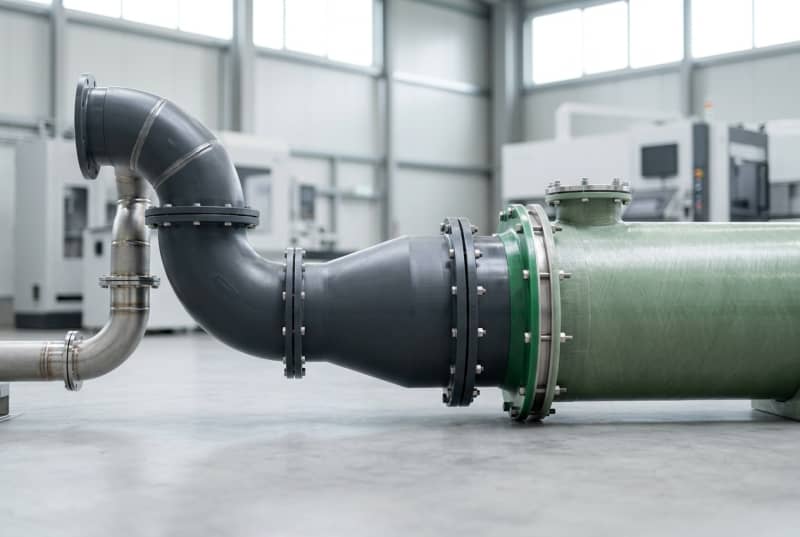
| Pump and process skids | Chemical and splash resistance | Valve and gauge visibility | Houston petrochemical corridor | FRP or coated metal with sealed joints | Corrosion at cut edges |
| Control cabinets | Electrical compartment integrity | Cable entry and service front | Utility and municipal projects nationwide | Engineered cabinet with integrated mounting points | Heat buildup and gasket leaks |
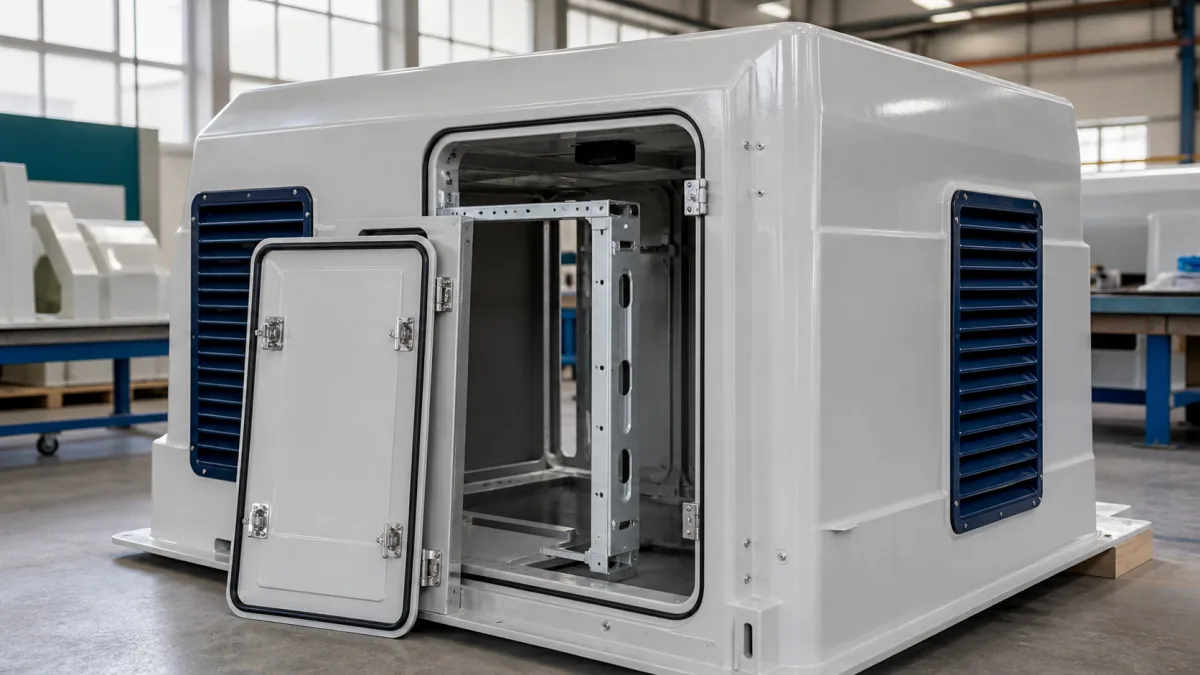
| Generator sets | Weather, noise, and impact protection | Fuel and maintenance side doors | Data centers in VA, TX, OH | Acoustic canopy with reinforced frame | Difficult servicing and hot spots |
| Instrument stations | Dust and moisture exclusion | Frequent calibration access | Ports and outdoor yards | Precision molded cover with stable sealing | Seal compression loss |
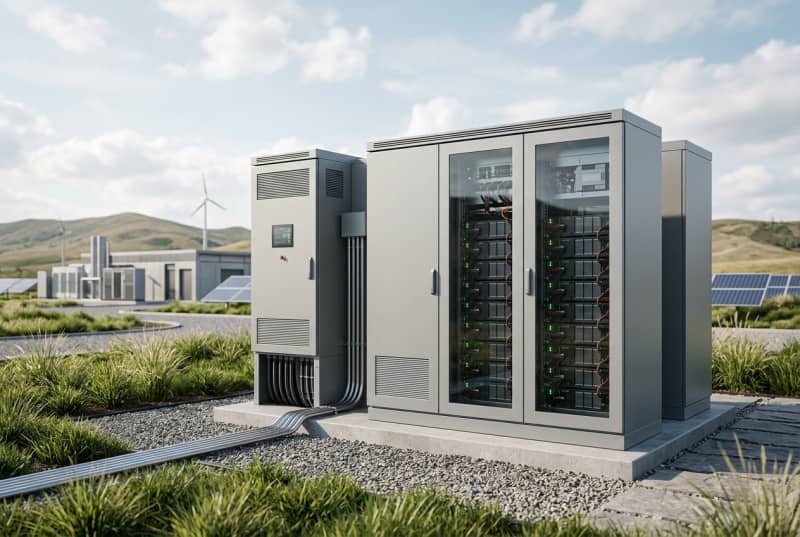
| Battery and energy systems | Thermal control and electrical safety | Controlled authorized access | EV and storage projects | Vent-ready modular housing | Thermal stress and condensation |
| Conveyor and sorting modules | Mechanical guard and debris management | Jam clearing and routine inspection | Major fulfillment hubs | Segmented removable covers | Excessive maintenance downtime |
For projects needing instrument and machine shielding, buyers often start with geometry and access constraints by reviewing custom machine and instrument cover options that can be adapted to line-specific footprints.
How to Identify a Manufacturer That Understands Structural Fit, Maintenance Access, and Batch Production Requirements
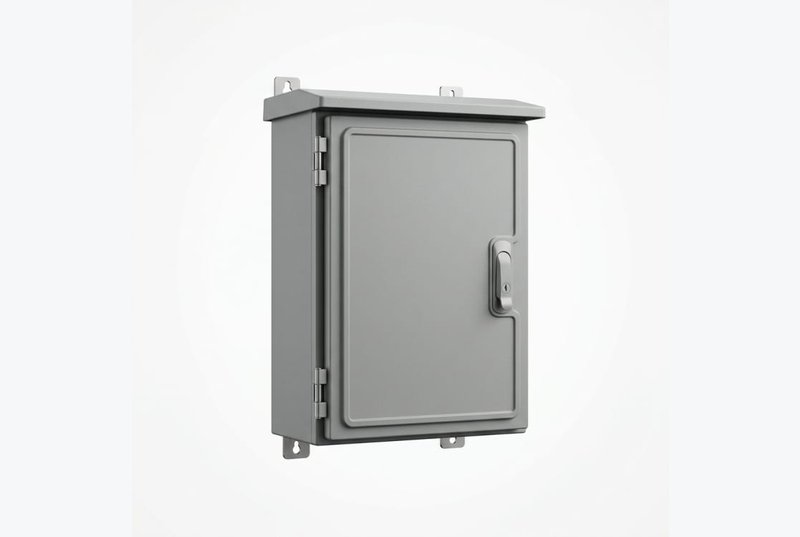
Many suppliers can fabricate parts, but fewer can engineer a housing system that fits in the real world. A capable manufacturer asks for installation context, not only 2D dimensions. They request mating points, mounting loads, shock/vibration conditions, service pathways, operator reach distances, and batch schedule assumptions. If a supplier does not ask these questions early, buyers should expect change orders later.
Structural fit means the enclosure remains dimensionally stable across production batches and environmental cycles. Maintenance access means technicians can remove, inspect, and reinstall parts fast without damaging seals or finishes. Batch production capability means the supplier can economically deliver pilot runs, bridge volumes, and steady demand without changing quality profile. U.S. buyers should request proof through first-article reports, gauge strategy, and process capability data rather than promises.
| Evaluation Point | What Strong Suppliers Provide | How to Verify | Warning Sign | Why It Matters | Score (1-5) |
|---|---|---|---|---|---|
| Design intake quality | Structured design review checklist | Review kickoff documents | Only asks for CAD file and quantity | Prevents scope gaps | |
| Serviceability engineering | Maintenance access simulation | Witness digital or physical mock-up | No field-service validation | Reduces downtime | |
| Tolerance control | Defined critical-to-fit dimensions | Inspect first-article report data | No CTQ measurement plan | Ensures repeat assembly | |
| Batch flexibility | Pilot-to-volume transition plan | Check lead times at 3 volume levels | Single fixed MOQ model | Supports demand volatility | |
| Change management | ECR/ECO workflow and revision traceability | Ask for sample revision log | Informal email-only control | Avoids mixed revisions | |
| Production documentation | Work instructions with checkpoints | Audit sample traveler packet | Operator memory-driven production | Consistency across shifts | |
| On-time execution | Historical OTD by program type | Request anonymized KPI trend | No measurable performance data | Protects launch schedules |
This matrix should be used before quote award, not after. It gives procurement and engineering a shared scoring language.
When buyers need broader packaging for mechanical and electrical subsystems, they can evaluate custom equipment housing programs that include fit-for-assembly planning rather than only shell fabrication.
What Buyers Should Compare When Choosing Between Composite, Sheet Metal, and Plastic for Industrial Enclosures
Material selection should follow application physics, not habit. Composite (especially fiberglass-reinforced systems), sheet metal, and thermoplastics each perform well in specific use cases. The right choice depends on structural loads, corrosion profile, required finish, electromagnetic considerations, production volume, and lifecycle maintenance model.
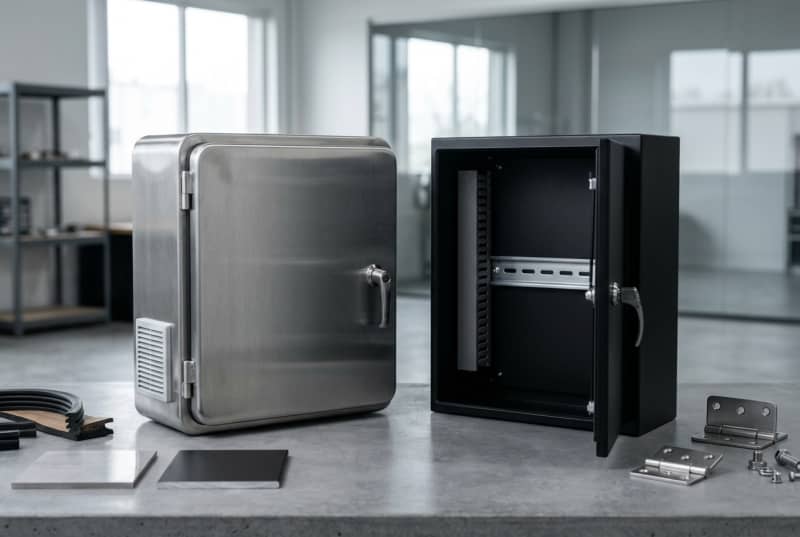
Composite enclosures are often selected for corrosion resistance, design flexibility for complex shapes, and good stiffness-to-weight behavior. Sheet metal remains strong in high-precision mounting and conductive applications, especially when geometry is simple and volumes justify tooling or forming flow. Plastic solutions can be effective for lightweight, non-structural, and high-volume applications where heat and chemical exposure remain within limits.
| Criteria | Composite (FRP) | Sheet Metal | Industrial Plastic | Best-Fit Scenarios | Buyer Notes |
|---|---|---|---|---|---|
| Corrosion resistance | Excellent in many chemical and marine settings | Good with coating, vulnerable at damage points | Varies by resin and chemical type | Coastal and washdown projects | Verify chemical compatibility list |
| Weight | Low to moderate with strong rigidity options | Higher weight depending on gauge | Typically light | Mobile assets and rooftop systems | Include mounting load checks |
| Complex geometry | Strong design freedom for contours | Limited by bend and weld strategy | Good in molded high-volume parts | Brand-styled machine covers | Assess tooling economics early |
| Impact and structural durability | Good with proper layup and reinforcement | High structural confidence | Moderate; can crack under cold impact | Industrial floor traffic areas | Request impact testing criteria |
| Thermal behavior | Stable with correct resin system | Conductive and heat-spreading | Can soften at elevated temperatures | Outdoor sun and mixed climates | Model max service temperature |
| Surface finish | Can be smooth, branded, UV-stable | Excellent with powder coat/paint | Good cosmetic finish in molded runs | Customer-visible equipment | Define finish acceptance standards |
| Volume economics | Balanced across low to medium batches | Strong at medium to high repeat builds | Best at high-volume standardization | Phased product launch programs | Quote 3 volume scenarios |
This comparison is most useful when tied to a 3-year total cost model that includes maintenance labor, coating repairs, part replacement rates, and downtime exposure.
How Environmental Exposure, Corrosion Risk, and Service Conditions Affect Enclosure Design Decisions
Environmental exposure should drive early design choices. A cabinet in inland dry air and a canopy near the Gulf Coast are different engineering problems. Coastal salt, chemical vapors, UV intensity, freeze-thaw cycling, dust, washdown chemistry, and mechanical vibration all change material behavior and sealing performance over time.
Buyers should define service condition classes in the RFQ and link each class to design requirements: coating or resin chemistry, gasket type, fastener grade, drainage strategy, wall thickness, and inspection interval. In high-risk zones, details such as edge sealing, bonded inserts, and controlled water pathways can determine whether an enclosure lasts 3 years or 12 years.
| Service Condition | Typical U.S. Location Context | Primary Risks | Design Response | Inspection Frequency | Typical Upgrade Worth Considering |
|---|---|---|---|---|---|
| Coastal salt exposure | Gulf Coast, Atlantic ports, Pacific terminals | Surface attack and fastener corrosion | Corrosion-resistant materials, sealed hardware zones | Quarterly | Upgrade fasteners and edge protection |
| Chemical washdown | Food and pharma processing plants | Seal degradation, finish damage | Chemical-tolerant gasket and resin/coat system | Monthly | Validated chemical resistance protocol |
| High UV and heat | Arizona, Nevada, inland California | Color fade, thermal stress, warpage | UV-stable surface and thermal expansion controls | Quarterly | Higher UV package and vent design |
| Cold and freeze-thaw | Northern Midwest and Mountain states | Brittle behavior, seal contraction | Material validation at low temperature range | Seasonal | Cold-rated gasket and latch system |
| Dust and particulate | Cement, aggregate, bulk handling sites | Ingress and abrasion | Ingress management and abrasion-focused surfaces | Monthly | Additional filtration interface features |
| High vibration duty | Mobile equipment and near heavy rotating assets | Fastener loosening, fatigue cracks | Reinforced mounting zones and retention strategy | Monthly | Anti-vibration hardware package |
| Emergency standby operation | Hospitals, data centers, utility support | Intermittent high-load thermal conditions | Airflow planning and fail-safe access points | Per test cycle | Thermal monitoring ports |
This table helps procurement translate site reality into engineering requirements before supplier quoting begins.
For electrical systems where exposure and reliability are both critical, teams often benchmark FRP control cabinet enclosure solutions that combine corrosion resistance with stable compartment protection.
The Role of Tooling, Tolerance Control, and Assembly Integration in Successful Industrial Housing Projects
Tooling strategy determines whether a program scales cleanly from prototypes to repeat production. Too little tooling control causes dimension drift and poor cosmetic repeatability. Too much tooling investment too early can trap buyers in high NRE before demand is stable. The best approach is staged tooling: prototype fixtures, pilot tooling, then production-hardening based on confirmed volumes and CTQ performance.
Tolerance control should focus on function-critical dimensions: mounting interfaces, latch/hinge alignment, seal compression zones, and assembly stack-up. Buyers should require a tolerance tree and a measurement plan that identifies CTQs, gauges, sample frequency, and reaction plans when data trends toward limits.
Assembly integration is where many projects fail silently. If the enclosure supplier cannot coordinate with harness routing, cooling hardware, displays, brackets, and service doors, assembly labor expands and field reliability drops. Good suppliers involve manufacturing engineering early, build pilot assemblies with real components, and document installation sequence.
In this area, technological capability is decisive. Strong programs use 3D CAD collaboration, digital interference checks, and pilot fit validation before locking production tools. For buyers developing premium fiberglass housings, the difference between a fabricator and an engineering-led partner appears in these early integration steps.
Where power reliability and weather exposure intersect, buyers should also review custom FRP generator canopy programs that integrate structural reinforcement, acoustic targets, and maintenance access in one housing platform.
How to Judge a Supplier’s Engineering Support Instead of Looking Only at Price Per Piece
Unit price matters, but engineering support determines whether the program succeeds in the field. To evaluate support quality, buyers should measure response depth across concept, design validation, production launch, and post-launch improvement. Ask suppliers to show how they handled a difficult geometry fit, a seal leakage issue, or a batch consistency challenge. Real engineering support appears as methodical root-cause action, not just “we fixed it.”
Three capability layers are especially important:
- Technological capabilities: CAD collaboration, DFM analysis, tolerance simulation, and test planning. These tools shorten iteration cycles and improve first-pass yield.
- Manufacturing capabilities: Controlled processes, stable work instructions, repeatable finishing, and capacity for low-to-mid batch transitions without quality swings.
- Service capabilities: Fast revision handling, practical communication, pilot support, and after-delivery responsiveness when field conditions change.
A supplier with strong support may quote slightly higher piece price but can lower total program cost through fewer revisions, less installation rework, and reduced downtime. For U.S. projects spread across multiple states, this support gap is often larger than the quoted part-price gap.
Common Hidden Costs in Custom Enclosure Procurement and How to Control Them Before Production Starts
Hidden costs usually come from assumptions left undefined: unclear tolerances, vague finish criteria, missing service requirements, uncontrolled revision changes, packaging damage, and field rework. These costs rarely appear in initial quotes but emerge during pilot builds and first deployment waves.
Manufacturing capability is the best cost-control lever here. Suppliers with disciplined process control can provide consistent dimensional output, stable cycle times, and lower scrap. Buyers should ask for quality trend data, defect categories, and corrective action timing. They should also align acceptance criteria and inspection plans before release.
| Hidden Cost Trigger | How It Appears | Typical Cost Impact | Pre-Production Control | Owner | Timing |
|---|---|---|---|---|---|
| Incomplete dimensional definition | Unexpected fit issues in pilot assembly | Rework labor and schedule slip | CTQ map and tolerance agreement | Engineering + Supplier QA | Before tooling release |
| Undefined finish acceptance | Cosmetic disputes at incoming inspection | Sorting, returns, and replacement parts | Approved finish standard sample | Quality + Procurement | Before pilot build |
| Late access changes | Service door and hinge redesign | Tool modification cost | Maintenance task simulation | Operations + Design | Concept freeze stage |
| Weak packaging method | Transit scratches or deformation | Scrap and emergency shipments | Pack test and lane-specific packaging spec | Logistics + Supplier | Pilot shipment phase |
| Uncontrolled revision flow | Mixed versions in field installation | Site confusion and reinstallation | Formal ECO gate and revision labels | Program Management | Throughout launch |
| No spare strategy | Long downtime during minor failures | Production interruption losses | Critical spare list and stocking rules | Maintenance + Supply Chain | Before go-live |
| Underestimated installation labor | Extended commissioning time | Contractor overrun and delay penalties | Assembly time trial with actual team | Site Project Manager | Pre-SOP validation |
This table is a practical cost firewall. It shifts preventable expenses from field stage back to design stage, where fixes are cheaper.
Case Studies: How Better Enclosure Decisions Lowered Risk in U.S. Projects
Case 1: Gulf Coast pumping station retrofit. A municipal team replaced painted metal covers that were failing from salt and humidity exposure. By shifting to corrosion-focused composite housings with improved sealing and service access, they reduced annual maintenance interventions and cut unplanned enclosure replacements. The key success factor was defining chemical-cleaning routine and access sequence at design review, not after installation.
Case 2: Midwest packaging line upgrade. A food processor needed safer machine guarding while keeping rapid daily sanitation cycles. The chosen custom housing used smooth external contours, controlled fastener count, and quick-open service points. Result: shorter maintenance stoppages and fewer panel alignment issues across repeat batches.
Case 3: Data center standby generation in the Southeast. The operator required weather resilience, acoustic control, and rapid service access during testing cycles. The final canopy package integrated reinforced structural zones, drainage logic, and panelized access architecture. Commissioning time fell because enclosure assembly steps were validated in pilot stage with actual maintenance technicians.
How to Assess Local Suppliers and Regional Logistics in the United States
Locality matters when schedules are tight. Buyers should map supplier location against installation regions, freight lanes, and damage risk. For example, projects serving Gulf states may prioritize rapid support from southern manufacturing nodes; West Coast programs may optimize around Los Angeles/Long Beach and inland logistics hubs; Northeast projects may value proximity to Newark and Mid-Atlantic job sites.
Evaluate local suppliers on more than distance: engineering depth, batch flexibility, packaging standards for long-haul transit, and field issue response time. A closer supplier with weak process control is often more expensive than a slightly farther partner with stable quality and proactive support.
How Future Trends in 2026 and Beyond Will Influence Enclosure Strategy
Several trends are already shaping buyer requirements:
- Smart maintenance integration: More projects include sensor-ready panel designs for vibration, temperature, and door status monitoring.
- Sustainability pressure: Buyers are asking for longer service life, repairable components, and lower manufacturing waste.
- Policy and compliance attention: Procurement specifications increasingly reference domestic sourcing resilience, electrical safety alignment, and environmental reporting expectations.
- Modularity: Product teams want one enclosure family configurable across multiple equipment variants, reducing tooling duplication.
- Faster iteration cycles: Pilot-to-production timelines are shrinking, requiring suppliers with disciplined change control.
The practical takeaway is clear: design for adaptability. Programs launched in 2026 should assume future retrofit needs, sensor additions, and service model updates.
Our Approach for United States Buyers: Engineering-Led FRP Custom Enclosure Delivery
For buyers who need durable fiberglass solutions from concept to production, our approach centers on three connected capabilities.
Technological capabilities: We begin with application-focused engineering: structural fit analysis, access-driven layout reviews, and material-system selection based on real service conditions. We support complex geometry, integrated mounting regions, and repeatable quality targets suitable for industrial duty.
Manufacturing capabilities: We operate with controlled production methods designed for stable batch output, whether programs start at pilot quantities or grow into ongoing repeat orders. Our team aligns tooling strategy, tolerance checkpoints, and finishing consistency so every enclosure series performs predictably in the field.
Service capabilities: We support U.S. customers through responsive project communication, revision coordination, and practical problem-solving during launch and after installation. The goal is not just to ship parts, but to protect uptime and lower long-term program risk.
If your project includes custom protective shells, cabinets, or integrated housings, this model helps move from drawing-stage uncertainty to dependable production performance.
Final Checklist for Sourcing Custom Industrial Covers and Enclosures with Lower Risk
- Define equipment function and real installation environment before requesting quotes.
- Classify exposure risks: corrosion, UV, washdown chemistry, dust, vibration, and temperature extremes.
- Document service tasks and target maintenance time; convert them into access requirements.
- Specify critical-to-fit dimensions and acceptance tolerances, not only overall envelope size.
- Request staged tooling and validation plans from prototype through stable production.
- Compare materials using lifecycle cost, not only initial piece price.
- Require batch flexibility data at low, medium, and forecasted future volumes.
- Audit revision control process (ECR/ECO) before supplier selection.
- Set finish standards with approved visual samples to avoid cosmetic disputes.
- Validate packaging design for domestic freight lanes and handling points.
- Include spare parts strategy and response SLA in procurement terms.
- Use a cross-functional supplier scorecard: engineering, quality, operations, and sourcing.
- Run pilot assembly with actual components and technicians, then close gaps before SOP.
- Plan for 2026+ upgrades such as sensor integration and modular expansion.
- Select the supplier that delivers best total program outcome, not lowest quote alone.
FAQ for United States Industrial Buyers
1. When is a standard enclosure still a good choice?
Standard products can work when geometry is simple, environmental exposure is mild, and maintenance access is not constrained. Once any of those conditions become demanding, custom usually provides better lifecycle value.
2. Is composite always better than sheet metal?
No. Composite is strong for corrosion-prone and complex-shape applications, while sheet metal can be excellent for structural precision and conductive requirements. Choose by service conditions and total cost.
3. What batch size justifies custom tooling?
There is no single number. It depends on geometry complexity, finish requirements, and projected lifecycle volume. A staged tooling roadmap is often the safest route for uncertain demand curves.
4. How can procurement and engineering align faster?
Use one shared RFQ package: environment class, CTQs, access requirements, finish criteria, batch forecast, and validation plan. This prevents quote comparisons based on different assumptions.
5. What is the most common mistake buyers make?
Choosing by piece price before defining maintenance access and tolerance requirements. This often leads to redesign, installation delays, and high field labor cost.
By applying the framework in this guide, United States buyers can compare manufacturers, materials, and production capability with greater clarity, lower risk, and stronger long-term performance.