Custom Medical and Laboratory Housings: Supplier Checklist
A buyer checklist for custom medical housings: OEM drawings, access panels, cleaning surfaces, finish samples and inspection responsibilities.

Across U.S. markets such as Boston, Minneapolis, San Diego, Houston, and Raleigh-Durham, equipment makers are expanding decentralized diagnostics, compact lab systems, and connected patient-care platforms. These shifts increase demand for precision housings that are lightweight, cleanable, chemically resistant, and structurally stable. Fiberglass-reinforced plastic (FRP) has become a practical option for many analyzer and clinical platforms because it combines strong durability with high design freedom for curves, wall thickness control, and integrated mounting features. It is especially useful when brands need premium appearance, lower tooling risk than some alternatives, and flexibility across pilot-to-scale production stages.
The line chart above reflects how custom housing demand has expanded as hospitals and labs adopt specialized instruments instead of one-size-fits-all platforms. Buyers who build a robust sourcing model early usually reduce redesign loops and shorten commercialization risk during scale-up.
Which Analyzer, Monitoring, and Treatment Devices Most Often Require Custom Housing Development for Commercial Use
Analyzer systems are the highest-frequency category for custom projects: hematology, chemistry, immunoassay, molecular diagnostics, and sample-prep platforms. Monitoring equipment follows closely, including bedside modules, compact patient monitors, and portable multi-parameter systems used in outpatient centers. Treatment-adjacent devices - such as endoscopy consoles, infusion support electronics, and therapy control interfaces - also require custom housings when brands need integrated mounting, cleaner geometry, and premium external finish for hospital buyers. In point-of-care growth segments, housing design increasingly supports workflow speed: easy wipe-downs, intuitive touch-point placement, and rapid access for preventive service.
The following table summarizes which product types most often need custom housing work and why U.S. commercial teams prioritize it:
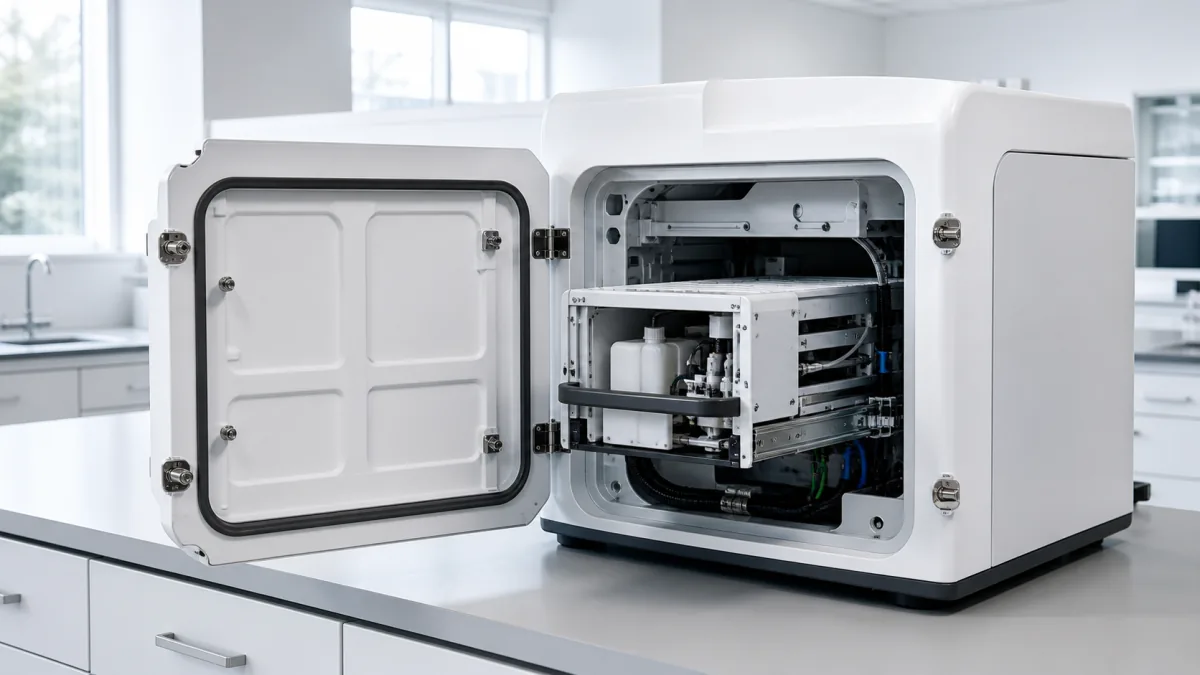
For teams exploring FRP options, it helps to review practical geometry examples already used in similar products. A relevant U.S.-focused reference for blood testing platforms is this FRP blood analyzer housing solution, which illustrates how external aesthetics and internal architecture can be developed together instead of as separate workstreams.
The bar chart highlights why suppliers need broad process capability, not just one-off prototype experience: demand is distributed across multiple end-use environments with different cleaning, durability, and service expectations.
How to Select a Supplier That Can Support Appearance Quality, Internal Fit, and Functional Integration
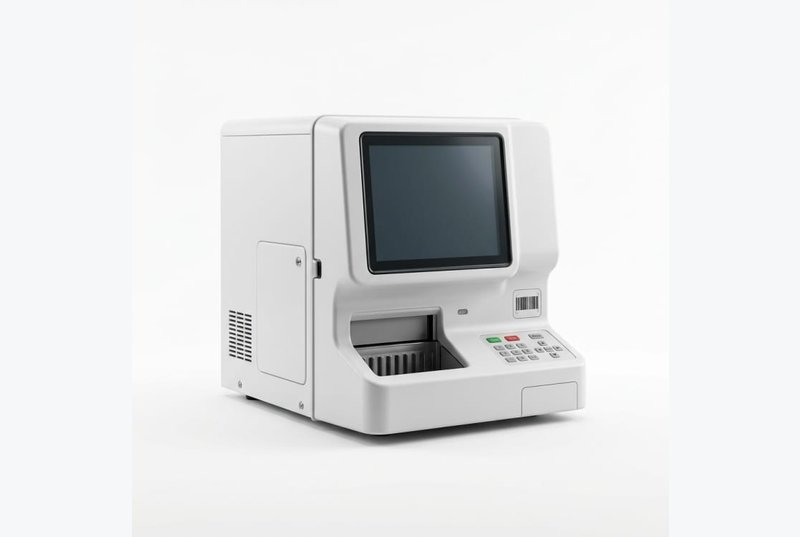
Supplier selection should begin with a capability audit, not a price-first quote round. In precision medical and laboratory programs, the lowest quote often hides rework, weak documentation, and unstable repeat quality. U.S. buyers usually get better outcomes by evaluating suppliers against three integrated layers: visual execution, engineering fit, and production repeatability.
Visual execution includes surface uniformity, edge quality, color consistency, logo integration, and seam strategy. Engineering fit includes mounting boss accuracy, tolerance control, shielding provisions, cable and connector windows, fan/filter access, and assembly ergonomics. Production repeatability means the supplier can maintain all of the above from pilot batches to ongoing orders without quality drift. Ask for objective evidence: incoming inspection plans, dimensional reports, process control checkpoints, defect taxonomy, and corrective action closure records.
For laboratory platforms, internal fit is often where projects fail. A housing may look excellent externally but force stress on PCBs, fluidics, or optical modules after thermal cycling or transport. To avoid this, require joint DFM reviews and tolerance stack-up analysis before tooling freeze. If your device roadmap includes variants, ask how the supplier handles platform architecture: shared structural cores with adaptable panels, doors, and accessory modules can save major cost during line expansion.
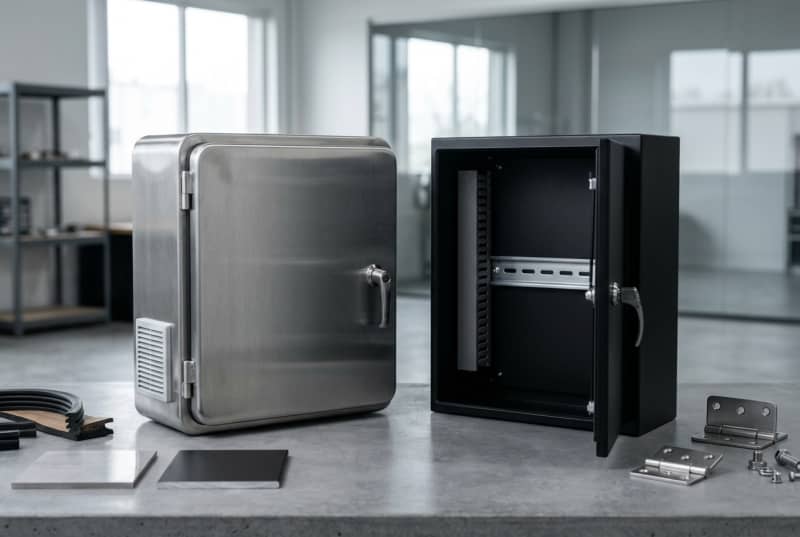
For teams in diagnostics programs, a useful technical benchmark is this FRP laboratory analyzer housing example, where clean external form is developed alongside internal module fit and maintenance access. In buyer interviews across U.S. hubs like Minneapolis and San Jose, this integrated development model repeatedly correlates with fewer redesign cycles after EVT.
What Buyers Should Know About Surface Finish, Clean Geometry, and Brand Presentation in Medical Device Enclosures
In healthcare markets, appearance is functional. A surface that looks clean but traps residues around sharp transitions can create long-term risk. A housing with high gloss but uneven texture can reduce trust in premium equipment categories. For U.S. buyers, especially those selling to integrated delivery networks, enclosure presentation influences both clinical confidence and procurement scoring.
Surface finish strategy should start from end-use cleaning protocol. What disinfectants will be used daily? Are abrasive wipes common? Will the equipment be moved frequently through tight corridors? For many analyzer and monitoring products, a balanced semi-matte finish performs better than extreme gloss because it hides minor handling marks while preserving a high-value visual impression. Clean geometry means deliberate corner radii, reduced dirt traps, controlled seams, and simplified wipe paths. Brand presentation then builds on this: stable color matching across batches, crisp logo placement, and consistent panel alignment across the full product family.
A frequent procurement mistake is approving only one “hero sample” under controlled lighting. Instead, evaluate finish consistency across at least three production-lot samples and inspect under neutral white light and clinical ambient conditions. Also check edge response after packaging and transit simulation. If your program targets multiple U.S. channels - hospital central purchasing in Chicago, distributor-led expansion in Dallas, and direct installation in Los Angeles - visual consistency becomes a brand asset that directly supports repeat sales.
How Sampling, Design Revision, and Validation Affect the Timeline of a Custom Laboratory Housing Project
Timeline failures usually come from underestimating design revision loops, not from fabrication speed alone. In custom medical and laboratory housings, a realistic project plan must include staged sampling, cross-functional feedback, and controlled validation gates. When teams skip these gates, they often recover with urgent rework that costs more time than proper planning.
A practical U.S. timeline model includes: concept freeze, DFM review, first sample build, fit verification, appearance refinement, functional validation, pilot run, and pre-production release. Each stage needs defined entry and exit criteria. For example, moving from first sample to revision should require dimensional closure on critical interfaces, not just visual approval. For programs with multiple internal teams in different time zones - such as engineering in Boston, procurement in Phoenix, and integration testing in Seattle - digital documentation discipline is essential to avoid version confusion.
For many U.S. teams, total cycle time lands between 9 and 20 weeks depending on complexity and revision count. The best schedule compression comes from early issue visibility, not from forcing late-stage speed. In programs with treatment consoles and dense interfaces, early mock-up validation of cable exits, port depth, and service clearances can prevent major launch delays.
What Makes a Good Supplier Relationship for Ongoing Medical Equipment Programs and Product Line Expansion
Custom housing sourcing should be managed as a long-term technical partnership, not a sequence of independent purchase orders. The relationship model directly influences speed, quality, and product line scalability. A strong supplier relationship has clear governance: regular engineering reviews, documented KPI tracking, escalation paths, and predictable communication cadence.
In the United States, program continuity is especially important for equipment lines sold through multi-year hospital procurement cycles. If your supplier cannot maintain part consistency, documentation quality, and change responsiveness, your sales team may face delayed installations and service complexity. Good partners support lifecycle thinking: they help plan variant launches, accessories, and cosmetic refreshes without destabilizing core structural performance. They also align with your after-sales realities - replacement parts availability, packaging stability, and consistent finish matching for field repairs.
Service capability is a major differentiator. Beyond manufacturing, the supplier should provide fast feedback during pre-production, structured change-control support, and transparent issue response. Teams that win in this category usually run bilingual technical communication where needed, maintain controlled document repositories, and provide decision-ready weekly updates rather than fragmented email threads. This approach is critical when coordinating between U.S. teams and overseas plants through ports and trade routes like Long Beach, Savannah, and Newark.
For endoscopy and treatment-adjacent systems, this FRP endoscopy console housing example demonstrates how iterative collaboration can align thermal, interface, and visual goals while preserving maintenance practicality.
Service capabilities that strengthen long-term programs
Effective service support includes pre-project requirement mapping, rapid quote clarification, sampling plan transparency, structured revision logs, and proactive risk alerts when schedules or specs shift. For U.S. buyers managing expanding product families, this service layer often matters as much as fabrication quality because it determines how quickly new variants can be commercialized with confidence.
Quality Risks That Commonly Appear in Precision Housings and How Professional Manufacturers Control Them
Precision enclosure programs repeatedly face a similar risk pattern. The risks are manageable, but only if they are identified early and controlled with process discipline. Common defects include warpage, inconsistent wall thickness, pinholes, poor edge continuity, misaligned insert locations, unstable color matching, and post-assembly stress points that appear after transport or thermal cycling. In medical and laboratory applications, these issues can affect both aesthetics and function.
Professional manufacturers use layered controls: incoming material checks, mold maintenance schedules, in-process dimensional control, surface inspection criteria, and final fit verification against critical components. They also define specific response plans for nonconformities, including root-cause analysis and corrective action effectiveness checks. For U.S. procurement teams, the key question is not whether defects ever occur, but how quickly and transparently the supplier detects and prevents recurrence.
Manufacturing capability is where strong suppliers stand out. They combine controlled process engineering, stable tooling practice, and repeatable finishing methods to deliver both durability and premium appearance. For FRP programs, this includes disciplined lamination control, mold lifecycle management, repeatable trimming operations, and validated final finishing workflow designed for medical-clean environments.
How to Compare Overseas Suppliers on Communication, Documentation, and Repeat Production Consistency
Overseas sourcing can be highly effective for custom medical and lab housings, but only when communication and documentation are treated as technical controls, not administrative extras. Many U.S. buyer frustrations come from assumptions that are never written clearly. A supplier may deliver acceptable prototypes but struggle with repeat orders because revision history, inspection criteria, and packaging instructions were never standardized.
When comparing overseas candidates, score them on response quality, not speed alone. A quick reply without data has low value. Strong suppliers answer with structured details: clarified assumptions, risk notes, proposed countermeasures, and clear next actions. Documentation maturity is equally critical: revision logs, drawing release controls, inspection reports, and traceability records should be easy to audit. If your equipment ships through Los Angeles/Long Beach or East Coast routes via Savannah and Newark, robust packaging and logistics communication should be included in the technical scope because transport stress can affect final appearance and fit.
A More Practical Procurement Framework for Custom Medical and Laboratory Device Housings
A practical framework should connect technical requirements, commercial targets, and scale planning in one decision model. Many teams split these into separate workflows and lose visibility. A stronger method is a staged procurement framework with weighted scoring, milestone gates, and lifecycle planning.
Step 1: Define requirement architecture. Separate must-have requirements from preference items. Must-haves include critical dimensions, cleanability performance, service access, and regulatory-aligned material behavior. Step 2: Run capability screening. Filter suppliers by proven process fit and documentation maturity before RFQ. Step 3: Issue structured RFQ. Request pricing tied to scope assumptions, sample plan, revision handling, quality controls, and ramp scenarios. Step 4: Execute sample and validation gates. Approve progression only when entry criteria are objectively met. Step 5: Contract for lifecycle. Include clauses for revision responsiveness, repeat-lot quality targets, and support for future product variants. Step 6: Establish ongoing governance. Monthly KPI review, quarterly process audit, and annual cost/innovation review.
1) When should we move from prototype enclosures to a custom commercial housing project?
Move when you start preparing for regulated deployment, distributor demonstrations, clinical installation, or service network rollout. At that point, repeatability and cleanability become mandatory, and generic housings usually create downstream cost.
2) How many sample rounds are normal?
Most precision projects need one initial sample and one revision sample. Complex systems with dense internal architecture may need a third iteration. The best way to reduce rounds is clear acceptance criteria at project start.
3) Is overseas sourcing still practical for U.S. medical equipment programs?
Yes, if documentation control, communication discipline, and repeat quality evidence are strong. If these controls are weak, total cost often rises due to delay, rework, and field issues.
4) What should we prioritize first: appearance or fit?
Fit and function first, then appearance refinement in parallel. A premium finish cannot compensate for internal stress, poor service access, or unstable assembly interfaces.
5) How do we protect brand consistency across a product family?
Define shared visual standards: color targets, surface texture range, seam strategy, edge geometry, and logo placement rules. Audit these standards across multiple lots, not one sample.
6) What are the top contractual terms we should include?
Revision control protocol, sample acceptance criteria, repeat-lot quality targets, corrective action timelines, packaging requirements, and support obligations for future variants.