Why Medical Device Brands Need Custom Housings Instead of Standard Enclosures for Modern Equipment Design
Guide for United States buyers on custom medical equipment covers, shells, and panels: materials, prototyping, mold control, lead time, and quality checks.
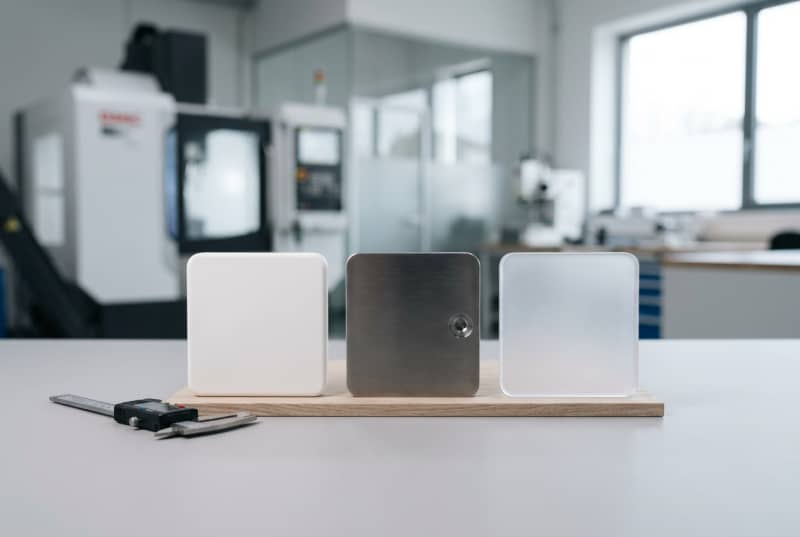
In the United States, medical device teams are under pressure from multiple directions at once: stronger infection-control expectations, faster product refresh cycles, stricter documentation, and rising user experience standards from clinicians and patients. Standard off-the-shelf enclosures can work for early engineering demos, but they usually fail when a product moves into clinical settings where cleanability, durability, cable management, ergonomics, branding, and service access all matter at the same time.
The direct answer is simple: custom medical equipment housings reduce long-term risk and total lifecycle cost when the design is matched to your exact device architecture, cleaning protocol, and regulatory pathway. Whether you are developing imaging systems, dialysis devices, or diagnostic carts, custom external covers, shells, and structural panels help control weight, reduce assembly complexity, improve safety perception, and protect electronic modules from daily clinical wear.
For sourcing teams comparing OEM and ODM partners, the most successful projects follow a stage-gated model: application definition, material strategy, prototype sampling, verification build, tooling validation, and controlled volume launch. Buyers that skip these gates often see late design changes, cosmetic inconsistency, and delayed approvals. Buyers that manage the gates early can secure stable quality, predictable lead time, and stronger margins in the United States market.
If you are evaluating fiberglass-based options for healthcare equipment, you can review practical solution examples such as custom medical equipment housing solutions that focus on durable structure, smooth finishes, and product-specific geometry.
United States Market Outlook for Medical Equipment Housings Through 2030
The U.S. market continues to shift toward portable, connected, and patient-centered equipment. This shift increases demand for custom housing programs because device form factors are no longer uniform. Hospital systems in cities such as Boston, Houston, Chicago, Los Angeles, and New York are replacing aging equipment with modern platforms that combine digital interfaces, remote monitoring, and easier serviceability. That creates opportunities for enclosure suppliers with strong mold engineering and surface consistency control.
Trade and logistics conditions also influence sourcing decisions. Import programs routed through Los Angeles/Long Beach, Savannah, and New York/New Jersey remain common for finished housings and semi-finished parts, while domestic integration hubs in Texas, Ohio, and North Carolina are often selected for final assembly and testing. Buyers increasingly use dual-sourcing models that balance offshore cost efficiency with U.S. inventory buffers to reduce disruption risk.
The trend line above shows why buyers should treat enclosure sourcing as a strategic category rather than a simple component purchase. Growth is driven by outpatient expansion, home-use devices, and higher aesthetic expectations for visible care equipment.
Which Medical Equipment Categories Commonly Need Custom Covers, Shells, and Structural Panels
Custom housings are most common in product categories where hygiene, impact resistance, frequent handling, and user-facing design must coexist. In these categories, enclosure choices affect both performance and market acceptance. For example, imaging systems require larger curved shells with tight tolerance around moving assemblies, while bedside devices require compact covers that support repeated disinfection and occasional impact from carts or beds.
The table below maps common equipment categories to housing priorities and sourcing concerns. It helps product and procurement teams identify where custom development delivers the strongest return.
| Equipment Category | Typical Housing Components | Primary Performance Need | Common Cosmetic Requirement | Regulatory and Cleaning Focus | Sourcing Priority |
|---|---|---|---|---|---|
| MRI support modules and accessory units | Outer shells, side panels, access doors | Dimensional stability and vibration tolerance | Large smooth surfaces, low seam visibility | Frequent wipe-down with strong disinfectants | Mold precision for large panels |
| Ultrasound consoles | Control console housing, monitor backs, cable covers | Lightweight mobility and ergonomic hand contact | Consistent color and touch-friendly texture | Crevice control around controls and handles | Surface finish repeatability |
| Dialysis machines | Front covers, side shells, structural frames | Chemical resistance and impact durability | Professional clinical appearance | Fluid splash management and easy sanitation | Assembly compatibility with pump modules |
| Patient monitors and bedside systems | Top shells, rear enclosures, mounting interfaces | Drop resistance and secure fastening points | Compact and modern industrial design | Continuous cleaning in ICU and ER settings | Fast prototype iteration |
| Infusion and medication delivery units | Protective covers, cartridge compartment panels | Precision fit around fluid pathways | Readable labels and anti-glare surfaces | Contamination control at access points | Documentation-ready change control |
| Laboratory analyzers | Instrument shells, access lids, sub-panels | Chemical tolerance and service access | High-end finish for lab environments | Cross-contamination prevention | Modular tooling strategy |
| Portable diagnostic carts | Corner guards, rear panels, battery covers | Mobility and daily impact resistance | Brand-forward styling | High-frequency cleaning across departments | Short lead time for refresh models |
| Rehabilitation and therapy devices | Protective shells, curved fairings, hand-contact panels | User safety and long-term durability | Consumer-like quality appearance | Skin-contact friendly surfaces | Balanced cost-performance material mix |
Buyers developing imaging and renal-care platforms can explore specialized enclosure references such as FRP MRI equipment cover options and FRP dialysis machine housing solutions when comparing geometry complexity and cleaning expectations.
The bar chart highlights where sourcing complexity is concentrated. The largest shares are usually in categories with high product visibility, complex internal packaging, and strict hospital cleaning routines.
What Buyers Should Verify Before Choosing a Medical Equipment Housing Manufacturer for OEM or ODM Programs
Supplier selection should begin with a structured capability audit, not a price quote. A low initial quote can quickly become expensive if the supplier lacks process controls for mold correction, color consistency, or assembly fixture design. U.S. buyers should run a cross-functional review involving engineering, quality, procurement, and regulatory teams before awarding tooling.
Technological capabilities: evaluate CAD/CAE integration, mold-flow simulation discipline, tolerance stack-up analysis, and ability to co-design mounting interfaces with your electronics and mechanical teams. A capable partner should manage DFM feedback early and clearly explain where geometry changes reduce sink marks, warpage, or stress concentration. For projects needing premium fiberglass solutions, it is valuable to work with a team that can move from concept modeling to engineered FRP part architecture without handoff gaps.
For ultrasound programs, teams often need enclosure designs that integrate operator ergonomics, cable routing, and maintainability. Reviewing a dedicated ultrasound console housing project approach can help buyers set realistic expectations for usability and finish quality.
Commercial and project controls: ask for a stage plan with explicit entry and exit criteria for each phase. Confirm who owns revision history, how ECNs are approved, and how cosmetic standards are locked before pilot production. In OEM mode, your design authority remains primary; in ODM mode, verify who controls critical dimensions, material substitutions, and qualification evidence.
Compliance readiness: while enclosure suppliers may not hold final device responsibility, they must still support your documentation needs. Confirm material traceability, incoming inspection records, process validation where applicable, and nonconformance handling. Delays often happen because documentation is assembled after production starts rather than built into the workflow from day one.
How Material Selection Influences Cleanability, Durability, Appearance, and Regulatory Readiness in Healthcare Enclosures
Material selection is one of the most strategic decisions in a medical housing program. Teams commonly compare FRP, PC/ABS, ABS, sheet metal, and aluminum composites, but the correct choice depends on the device environment, expected cleaning chemistry, mechanical load, and appearance target. A high-quality housing material must survive real cleaning cycles, not just pass a short lab wipe test.
In U.S. hospital networks, disinfectant exposure can include quaternary ammonium compounds, diluted bleach, alcohol-based solutions, and peroxide systems. Materials that discolor, craze, or lose gloss too quickly can trigger premature field complaints. Beyond chemistry, consider thermal cycling, accidental impact, and UV exposure in clinics with strong ambient light.
| Material | Cleanability Performance | Durability Profile | Appearance Potential | Weight Impact | Regulatory Documentation Ease |
|---|---|---|---|---|---|
| FRP (Fiberglass Reinforced Plastic) | Very good with proper gel coat and sealed finish | High stiffness and impact tolerance | Premium curved forms with stable finish | Moderate | Strong when resin system and process are controlled |
| PC/ABS | Good; can vary by additive package | Balanced impact and formability | Good texture and color matching | Light | Widely used, documentation usually straightforward |
| ABS | Moderate; may degrade with harsh chemicals | Good general toughness | Easy cosmetic processing | Light | Common but must verify chemical compatibility carefully |
| Sheet Metal (Coated) | Good when coatings remain intact | High structural strength | Industrial look; less sculpted geometry | Heavy | Good traceability; coating process control is critical |
| Aluminum | Good with proper anodizing or coating | Strong with low corrosion risk | High-end metallic appearance | Medium | Well documented; surface treatment consistency required |
| SMC/BMC Composites | Good to very good depending on formulation | Strong and heat-stable | Good for larger rigid panels | Medium | Requires supplier control of compound variation |
| TPU Overmold Systems | Good for touch surfaces | Excellent localized impact absorption | Soft-touch user contact areas | Light to medium | More complex due to multi-material validation |
| Hybrid FRP + Metal Inserts | Very good when sealing is robust | Excellent for load-bearing interface zones | High design flexibility | Medium | Strong if insert bonding process is validated |
For brands seeking durable, premium fiberglass parts, an integrated FRP development route can reduce mismatch between design intent and production output. The strongest suppliers align resin, reinforcement, molding route, and finishing process with your cleaning protocol and visual standards before tooling release.
The area chart reflects a broader design trend for 2026 and beyond: medical brands are increasingly choosing composite or hybrid structures that combine appearance quality, stiffness, and optimized weight.
The Difference Between Prototype Sampling, Small-Batch Validation, and Volume Production for Medical Covers
Many delays happen because teams assume one successful prototype guarantees production readiness. In reality, each stage has a different purpose and acceptance criteria. Prototype sampling proves design intent. Small-batch validation proves process repeatability. Volume production proves supply chain and quality system stability at scale.
Manufacturing capabilities: a reliable supplier should handle all three stages with controlled transitions, including fixture updates, process parameter locking, and formal first-article review. This is especially important for custom FRP programs where hand-finishing variability can affect consistency if work instructions are not standardized.
| Stage | Main Objective | Typical Quantity | Tooling Level | Quality Focus | Common Buyer Mistake |
|---|---|---|---|---|---|
| Prototype Sampling (EVT) | Confirm fit, function, and industrial design direction | 5-30 units | Soft tools or temporary molds | Geometry, ergonomic review, early cleanability checks | Approving cosmetic standards too early |
| Design Validation Build (DVT) | Verify engineering robustness and interface stability | 30-100 units | Refined tools with partial hardening | Tolerance stack-up and assembly alignment | Skipping worst-case tolerance testing |
| Process Validation Build (PVT) | Confirm repeatable manufacturing route | 100-300 units | Production-intent tooling | Cp/Cpk trends, cosmetic defect rates | Not freezing process parameters before pilot run |
| Small-Batch Clinical or Market Validation | Collect field feedback with controlled release | 200-800 units | Production tooling with minor tuning | Serviceability and packaging durability | Changing design and process simultaneously |
| Ramp to Volume | Increase output without quality drift | 1,000+ units/month equivalent | Hardened and maintained production tools | Yield stability, supplier lot consistency | Insufficient preventive mold maintenance |
| Steady Volume Production | Sustain cost, quality, and delivery performance | Program dependent | Full production ecosystem | Change control, field issue response, traceability | Weak revision control across global sites |
This phased approach is essential for U.S. launch timelines, especially when products must move quickly from engineering sign-off to hospital deployment across multiple states.
How to Evaluate a Supplier’s Mold Development, Surface Finish Control, and Assembly Compatibility
Tooling and finishing are where many projects either succeed quietly or fail publicly. A visually inconsistent housing can harm product perception even when the electronics perform perfectly. Buyers should audit the supplier’s mold development flow from DFM review through trial correction and preventive maintenance planning.
Ask to see how the supplier controls gate design, venting, warpage correction, and mold wear tracking. For complex curves and larger shells, evaluate whether they use consistent reference datums for trimming and drilling. Surface finish control should include documented standards for gloss level, texture reproduction, color deviation tolerance, and allowable blemish zones by viewing distance.
Assembly compatibility deserves equal attention. The housing supplier should understand your torque limits, insert pull-out requirements, gasket compression windows, and cable routing constraints. If the housing requires post-mold machining, confirm fixture repeatability and burr control. If the assembly includes mixed materials, verify galvanic and chemical compatibility where fasteners or inserts contact composite surfaces.
Service capabilities: strong partners do more than ship parts. They support design updates, PPAP-style submissions where needed, issue containment, and field corrective actions. For global brands, clear communication cadence, fast engineering feedback, and transparent issue reporting are major advantages over suppliers that only provide transactional quoting.
The comparison chart shows why process maturity matters. Small performance gaps in tooling and cosmetic control can become large commercial losses when scaled to multi-site deployment.
Common Design Mistakes That Increase Cost or Delay Approval in Medical Equipment Housing Projects
Most cost overruns do not come from raw material price changes alone. They come from preventable design mistakes that force rework late in development. The best way to reduce total cost is to remove ambiguity at the design stage, then lock high-risk details before tooling release.
| Common Mistake | Typical Consequence | Cost Impact | Timeline Impact | Prevention Strategy | Owner |
|---|---|---|---|---|---|
| Ignoring draft angles in visible areas | Surface drag marks and demolding defects | Medium | 2-5 weeks | Run DFM review with finish requirements early | Industrial design + tooling engineering |
| Overly complex part splits | Long assembly time and tolerance stack issues | High | 3-8 weeks | Consolidate parts and simplify datum strategy | Mechanical engineering |
| Late changes to mounting bosses | Mold modification and fixture rework | High | 4-10 weeks | Freeze interface dimensions before pilot build | System engineering |
| Insufficient chemical exposure testing | Field discoloration or cracking | High | Potential recall risk | Validate with real cleaning protocol profiles | Quality + regulatory |
| Unclear cosmetic acceptance criteria | Shipment disputes and high rejection rates | Medium to high | Ongoing delays | Create approved limit samples and visual maps | Quality + supplier quality |
| No service access planning | Difficult maintenance and higher lifecycle cost | Medium | Post-launch service delays | Include service team in design reviews | Product management |
| Single-source critical tooling without backup | Production stoppage if tool failure occurs | High | Unpredictable | Define backup mold and spare-part policy | Procurement + operations |
When these mistakes are addressed early, device approvals and launch plans are easier to protect. Engineering teams should keep a running risk register tied to design revisions and supplier actions.
How Global Buyers Can Compare Lead Time, Communication, and Quality Systems Before Placing an Order
Global sourcing for the United States market is not just about factory capacity; it is about communication reliability and quality system execution under real deadlines. Buyers should compare suppliers using a weighted scorecard that includes lead-time performance, engineering response speed, CAPA discipline, audit readiness, and logistics resilience.
In practical terms, request historical on-time delivery data by quarter, not only annual summaries. Confirm the supplier’s plan for port congestion, customs delay, and inland transport disruption. Programs shipping to U.S. distribution points near Chicago, Dallas, Atlanta, and Newark should have documented contingency routes and inventory buffer policies. If your timeline is strict, ask whether the supplier can support split shipments for pilot and volume lots.
| Evaluation Dimension | Why It Matters | How to Measure | Target for U.S. Buyers | Warning Signal | Suggested Weight |
|---|---|---|---|---|---|
| Lead Time Predictability | Protects launch schedule | On-time delivery by phase | >95% on-time in last 4 quarters | Frequent expedited shipments | 20% |
| Engineering Communication | Reduces change-cycle delays | Average technical response time | <48 hours for design questions | Unclear revision ownership | 15% |
| Quality System Maturity | Supports regulatory confidence | CAPA closure quality and audit outcomes | Consistent closure with root cause evidence | Repeated issue recurrence | 20% |
| Mold and Process Control | Stabilizes cosmetic and fit quality | Tool maintenance logs and Cp/Cpk trends | Documented preventive program | Reactive tooling repairs only | 15% |
| Supply Chain Resilience | Prevents material disruption | Dual-source critical inputs | Backup suppliers for key materials | Single-point material dependency | 10% |
| Documentation Readiness | Speeds approvals and audits | Traceability package completeness | Lot-level traceability with change records | Missing revision history | 10% |
| After-Sales Support | Reduces field disruption | Containment and corrective action speed | Containment within 24-72 hours | Slow issue acknowledgment | 10% |
This scorecard model helps procurement teams defend supplier choices internally and aligns technical and commercial priorities into one decision framework.
Applications and Industries Driving Housing Innovation in 2026
In 2026, three trends are shaping housing design decisions: intelligent equipment integration, policy-driven sustainability, and decentralized care delivery. Intelligent integration means more screens, sensors, and connectivity modules in compact spaces, which raises thermal, EMI, and cable-management requirements. Sustainability goals are driving demand for longer-life housings, lower rework rates, and materials with better lifecycle profiles. Decentralized care creates demand for lighter, quieter, and more user-friendly enclosures in outpatient and home-adjacent settings.
Industries beyond traditional hospitals are also increasing demand, including ambulatory surgery networks, specialty diagnostics, long-term care providers, and digital health service integrators. Buyers serving these segments often prioritize fast model updates and branded appearance consistency across product families, making modular tooling strategies more attractive than one-off enclosure projects.
Case Studies: Typical U.S.-Focused Sourcing Scenarios
Case 1: Imaging accessory platform launch in California and Texas. A medical brand needed large curved shells with consistent gloss and low seam visibility. Early DFM feedback reduced part count, improved assembly speed, and prevented late tool revisions. Pilot lots were routed through Los Angeles for West Coast integration and then expanded to a Texas assembly line for national distribution.
Case 2: Dialysis equipment refresh for multi-state clinic networks. The team replaced a legacy enclosure with a chemically robust composite design. During small-batch validation, service teams requested easier access to filters and pumps. The supplier updated panel geometry before volume launch, reducing field maintenance time and improving user feedback in high-throughput clinics.
Case 3: Ultrasound console modernization for outpatient settings. The product owner prioritized ergonomic contact surfaces and cleaner cable paths. Prototype sampling focused on operator usability, then process validation locked color and texture standards for market consistency. The result was a premium-looking console that supported both clinician workflow and brand differentiation.
Local Supplier vs Global Supplier Strategy for United States Buyers
U.S. buyers do not need to choose only one model. The most resilient approach is often a hybrid strategy: global manufacturing for cost efficiency plus local U.S. support for validation, inventory buffering, and service response. Local partners can accelerate urgent engineering loops, while global partners can provide scalable production economics for multi-year programs.
When evaluating local options, look for proximity to medical clusters in Minnesota, Massachusetts, California, and North Carolina, where engineering and quality talent for healthcare manufacturing is dense. For global options, prioritize partners with established shipping routines into major U.S. ports and clear customs documentation processes. The right mix depends on forecast volume, launch urgency, and risk tolerance.
Our Approach to Long-Term Custom FRP Medical Housing Programs
For healthcare brands that require durable, premium fiberglass structures, our approach is built around full-cycle customization rather than isolated part production. We support concept translation, technical development, and production execution so housing design, tooling logic, and manufacturing outcomes stay aligned from start to finish.
On the technical side, we focus on converting design intent into manufacturable FRP architecture with careful attention to stiffness, weight, cleaning performance, and appearance control. On the manufacturing side, we structure process windows for repeatability and cosmetic consistency at both validation and volume stages. On the service side, we support project communication, revision management, and quality follow-up to protect launch timelines and long-term supply stability for U.S. customers.
Final Sourcing Checklist for Healthcare Brands Seeking a Long-Term Custom Housing Supplier
Before placing a final order, use a checklist that ties technical, commercial, and quality decisions together. This prevents late surprises and improves cross-team alignment.
| Checklist Item | What to Confirm | Evidence to Request | Decision Threshold | Owner Team | Status |
|---|---|---|---|---|---|
| Application Fit | Supplier understands your use environment | Requirement review record | All critical use cases mapped | Product + engineering | Open/Closed |
| Material Strategy | Material matches cleaning and durability needs | Chemical resistance and mechanical test data | Pass on all high-risk agents | Engineering + quality | Open/Closed |
| Prototype Gate | Fit and cosmetic targets validated | First-article and visual approval report | Critical dimensions approved | Engineering | Open/Closed |
| Pilot Process Stability | Process is repeatable for launch quantities | Pilot yield and defect trend report | Stable defect rate and closure plan | Operations + SQE | Open/Closed |
| Tooling Control | Mold maintenance and backup planning | Tool maintenance schedule and spare plan | Preventive plan signed | Supplier quality | Open/Closed |
| Cosmetic Standard | Appearance acceptance rules are clear | Limit samples and defect map | Cross-team signoff complete | Quality + marketing | Open/Closed |
| Assembly Compatibility | Interfaces match system-level build process | Assembly trial and torque validation records | No critical rework required | Manufacturing engineering | Open/Closed |
| Lead Time and Logistics | Delivery plan supports U.S. launch windows | Production schedule and logistics route plan | On-time target commitment documented | Procurement + planning | Open/Closed |
| Documentation Package | Traceability and change control are complete | Lot traceability template and ECN workflow | Audit-ready package available | Quality + regulatory | Open/Closed |
| Service and Corrective Action | Post-shipment issue handling is defined | Containment SLA and CAPA format | Response window contractually defined | Supplier management | Open/Closed |
Using this checklist before PO release helps U.S. healthcare brands reduce approval delays, control lifecycle cost, and build stronger long-term supplier partnerships.
FAQ for United States Buyers of Custom Medical Equipment Housings
1. Should we start with OEM or ODM for a new medical platform?
Choose OEM if your engineering team already owns key design architecture and regulatory strategy. Choose ODM if you need faster concept-to-market support and the supplier has proven medical housing development discipline. Many successful programs blend both models across different project phases.
2. How early should we involve the housing supplier?
Involve the supplier before design freeze, ideally during architecture definition. Early involvement reduces tooling corrections, shortens validation loops, and improves assembly compatibility.
3. Is FRP suitable for visible clinical equipment?
Yes, when process and finish controls are robust. FRP can provide premium appearance, strong structural performance, and good durability in high-cleaning environments, especially for larger curved or custom-shaped panels.
4. What is the biggest risk in global sourcing for U.S. launches?
The biggest risk is not distance itself; it is weak process communication and poor change control. Clear milestones, documentation discipline, and logistics contingency plans are more important than geography alone.
5. How do we prevent late cosmetic disputes?
Define cosmetic standards with approved samples, viewing-distance rules, and defect classification maps before pilot production. Do not rely only on descriptive text in the purchase agreement.
6. What 2026 trend should buyers plan for now?
Plan for sustainability and serviceability requirements becoming stronger in buying decisions. Durable housings with lower replacement rates, cleaner disassembly paths, and traceable material strategies will be increasingly favored by healthcare procurement groups.
7. How can we compare suppliers quickly without missing critical details?
Use a weighted scorecard that combines technical capability, quality system maturity, communication speed, and logistics resilience. Then validate the top candidates with a pilot phase before committing to full volume.
8. What defines a long-term housing partner?
A long-term partner offers technical depth, stable manufacturing execution, and responsive service support. They help you move from concept to production while keeping quality, cost, and timeline aligned across product generations.