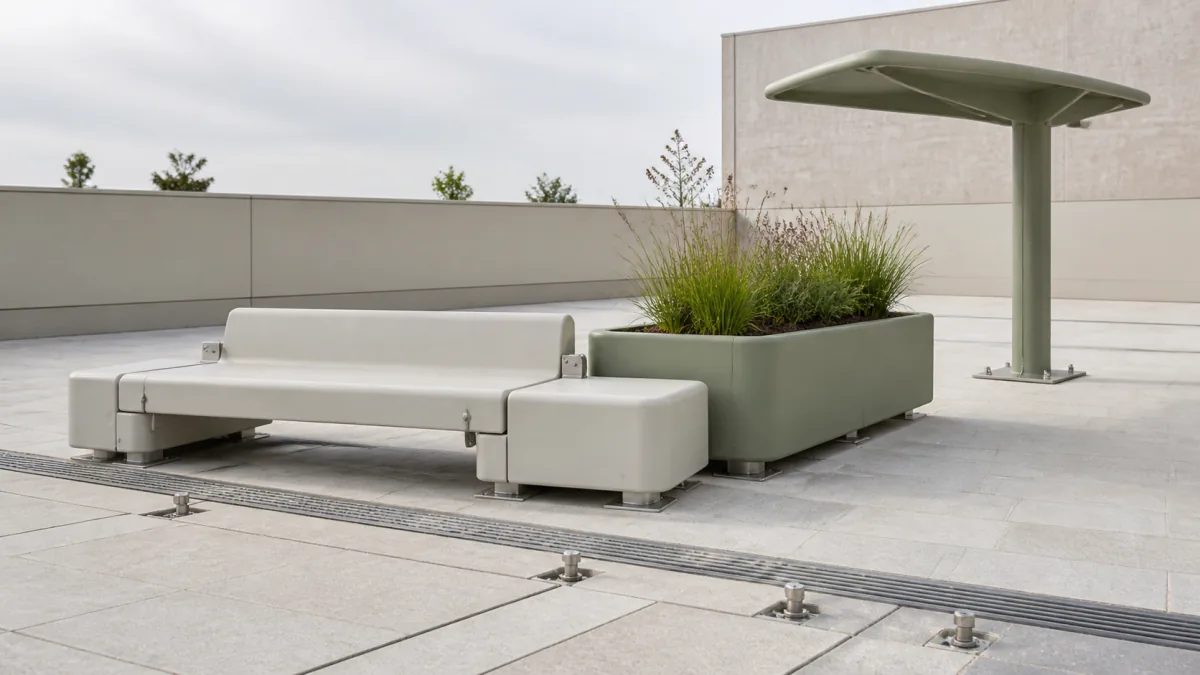
Sourcing Custom FRP Furniture for Public Spaces
Plan custom benches and landscape structures around site drawings, drainage, fixings, maintenance and repeated-unit production.
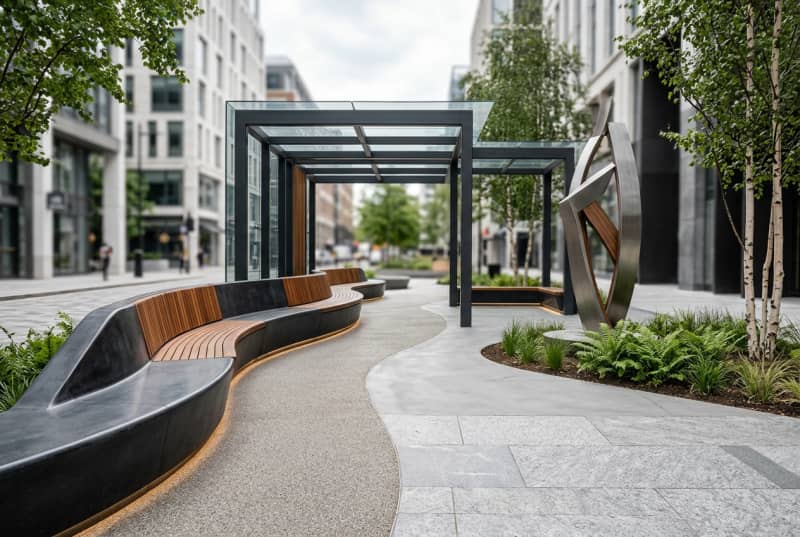
Custom outdoor urban furniture is no longer a niche design decision in the United States. It is now a practical procurement strategy used by municipalities, mixed-use developers, transportation authorities, universities, healthcare campuses, and hospitality operators that need public spaces to perform well and look distinctive over many years. A standard catalog bench may work for a low-use pocket park, but high-traffic plazas in New York City, waterfront promenades in Miami, transit corridors in Los Angeles, and civic campuses in Chicago often require site-specific dimensions, code-aware detailing, and coordinated installation planning. For buyers, the question is not whether customization is possible; the real question is how to source it without schedule overruns, quality drift, or maintenance headaches.
The growth pattern above reflects a broader shift in U.S. capital projects: owners increasingly treat outdoor public spaces as long-term assets that influence property value, tenant retention, walkability, and civic brand. For procurement teams, this means supplier selection must go beyond unit price and include lifecycle performance, reliability of repeated production, and field coordination capability.
Which Public Space Products Are Most Commonly Customized for Parks, Streetscapes, Gardens, and Commercial Landscapes
In the United States, customization demand is highest in product categories where standard sizes fail to match site geometry, pedestrian flow, or visual identity goals. Linear streetscape benches may need radius adjustments along curved curb lines. Planter walls may require integrated seating edges at ADA-compliant heights. Screen panels may double as wayfinding backdrops, privacy elements, or wind filters. Shelters often need custom spans for bus stops, trailheads, or campus waiting areas where off-the-shelf solutions do not fit circulation clearances or architectural language.
For parks and civic plazas, the most frequently customized elements include curved benches, modular seat clusters, shade structures, decorative screens, and sculptural landscape accents. For mixed-use and commercial landscapes, developers often customize integrated furniture systems that combine seating, branding, lighting interface points, and planting boundaries. This allows repeated forms across multiple buildings while preserving a coherent identity. For example, a developer with properties in Dallas, Phoenix, and Atlanta may specify the same design family but with climate-adjusted finishes and anchoring details.
Below is a practical overview of product categories that are most often customized in U.S. projects and why buyers choose them.
Buyers in the United States often begin with one signature element and then expand to a coordinated family. For example, many projects start with a custom seating form and later add matching screens, shelters, and edge details. A practical way to evaluate options is to review project-based solutions such as a curved park bench system for flowing landscape geometry, a street furniture cluster for high-density pedestrian zones, a bench and shelter combination for weather protection, and a decorative screen panel for privacy and identity. These examples show how repeated forms can support both aesthetics and operations.
How to Choose a Supplier for Outdoor Furniture Based on Durability, Form Complexity, and Project Coordination
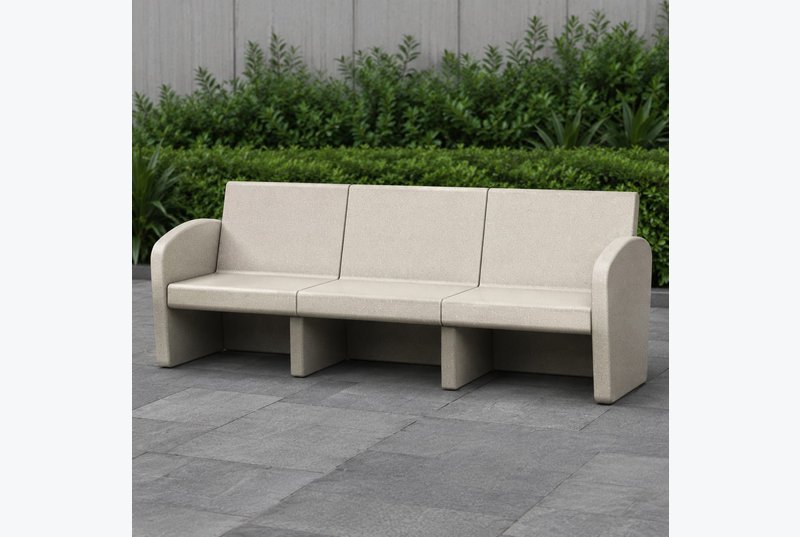
Supplier selection in U.S. public projects should be treated as a technical and operational decision, not only a pricing event. The best supplier for a simple rectangular bench may not be the right partner for a multi-zone project with curved forms, integrated screen systems, phased installation, and strict municipal submittal requirements. Start by defining your project complexity: number of unique shapes, number of repeated units, number of stakeholders, exposure conditions, and schedule constraints. Then evaluate suppliers against these realities.
A robust selection process includes design translation capability, structural and material engineering support, prototype quality, manufacturing repeatability, logistics planning, and after-installation service. In cities with tight installation windows such as San Francisco, Washington, D.C., or downtown Chicago, schedule precision and staged delivery often matter as much as product performance. If your project is near major logistics corridors such as the Ports of Los Angeles and Long Beach, Port Houston, Port Savannah, or the New York/New Jersey port complex, supplier shipping strategy can significantly reduce lead-time risk.
Technological Capabilities Buyers Should Verify
For complex forms, verify whether the supplier can move from concept files to production-ready models with dimensional discipline. Advanced suppliers should support parametric interpretation, mold strategy for repeated geometry, tolerance planning at connection points, and finish system mapping by exposure zone. If your project includes curved seating, perforated screens, and shelter interfaces, ask for a digital coordination package showing how each component resolves in manufacturing and on site. This is where technical capability protects design intent.
The scorecard above helps procurement teams create a weighted selection process that reflects project reality. A supplier may not have the lowest initial price, but higher performance in engineering, quality control, and coordination usually lowers total risk and lifetime cost.
Demand concentration by industry helps buyers understand where supplier capacity may tighten seasonally. If your project overlaps peak public infrastructure procurement cycles, early prequalification and release packages are essential.
What Buyers Should Consider About Weather Resistance, Surface Aging, Cleaning, and Long-Term Maintenance
Weather resistance in the United States is not one condition; it is many. Coastal Florida and Gulf Coast zones bring humidity, salt exposure, and UV stress. Northern states face freeze-thaw cycling, de-icing chemicals, and snow removal impacts. Desert regions such as Arizona and inland California see intense sun, thermal expansion, and dust abrasion. A material-finishing system that performs well in one region can fail early in another if procurement assumptions are copied without adjustment.
When evaluating custom urban furniture, buyers should assess four maintenance realities: how surfaces age visually, how easy they are to clean, how quickly replacement parts can be supplied, and how predictable long-term upkeep costs are. In heavy-use public projects, maintenance labor often exceeds initial purchase differences over time. This is why procurement decisions should include operations teams, not only design and construction teams.
For U.S. public and commercial landscapes, buyers should define acceptable appearance change over time. Some projects accept natural patina; others require stable color and gloss for brand consistency. Set this expectation before finalizing finish specs. Also specify cleaning protocols in bidding documents, including approved chemicals, pressure limits, and frequency assumptions. A product that appears low-maintenance in marketing content may still require regular care if placed under trees, near food service, or in areas with high airborne pollutants.
How to Balance Design Freedom and Installation Practicality in Benches, Screens, Shelters, and Decorative Elements
Design teams in the United States increasingly pursue expressive outdoor forms that reinforce place identity, but constructability often becomes the deciding factor in project success. A beautiful curved bench that requires excessive field trimming or unplanned shims will create schedule friction and quality inconsistency. A high-pattern screen that looks elegant in rendering may trap debris and raise maintenance burden if perforation strategy is not tested against local conditions. Balance comes from integrating design freedom with installation logic early.
The most reliable method is modular complexity: maintain a bold overall visual language while limiting the number of unique molds, connectors, and anchoring conditions. Repeated modules lower fabrication risk and accelerate field installation. For example, a serpentine seating layout can appear fully custom while using three repeatable module families and controlled transition pieces. Likewise, decorative screens can vary in orientation and spacing while sharing standard frame interfaces.
Before issuing final construction documents, conduct a design-for-installation review involving landscape architects, structural engineers, the selected supplier, and field installers. This step should validate lifting points, rigging access, anchor tolerances, joint sequencing, and tolerance stack-up at corners and curves. In dense urban sites such as Manhattan, Boston Back Bay, or downtown San Diego, crane windows and street closure permits can determine whether your design is practical, regardless of product quality.
The trend shift shows why installation practicality must now be considered a design criterion. As project teams demand both visual distinction and maintenance efficiency, suppliers that can engineer repeatable complexity become strategic partners rather than commodity vendors.
The table illustrates a key procurement principle: design ambition and field practicality are not opposites. They are variables to be tuned together through early supplier engagement and module strategy.
The Importance of Matching Material Performance to Public Use Frequency and Environmental Conditions
Material selection should begin with use frequency, not appearance alone. A waterfront promenade that receives thousands of users per day requires different surface resilience and structural expectations than a low-traffic corporate garden. In the United States, this distinction is often underestimated, leading to under-specification in transit and tourism-heavy areas. Material performance should be mapped to actual occupancy patterns, misuse risk, cleaning frequency, and exposure profile.
For high-use zones such as transit centers, school campuses, and downtown pedestrian corridors, prioritize impact resistance, abrasion tolerance, easy-clean surfaces, and replaceable subcomponents. For medium-use commercial landscapes, balance aesthetics with moderate maintenance targets and clear replacement part logic. For low-use garden settings, design teams may prioritize refined form and finish, but still need weather-resilient details at connections and base conditions.
How to Plan Procurement for Multi-Unit Public Projects with Repeated Shapes and Tight Delivery Schedules
Multi-unit procurement is where many projects in the United States either scale successfully or lose control. Repeated components across parks, corridors, and campuses can generate major cost and schedule efficiencies, but only if design data, mold strategy, release sequencing, and logistics are coordinated from day one. The key is to separate what must be unique from what should be standardized. This allows bulk manufacturing without sacrificing local fit.
Start by defining a product architecture: core modules, optional modules, finish variants, and site-specific adapters. Then structure procurement in release packages. Package 1 can lock geometry and structural assumptions. Package 2 can confirm finish schedules and anchoring details. Package 3 can trigger full production by zone. This staged approach supports permit uncertainty and construction phasing, especially in complex metro projects where civil work and utility relocations can shift timelines.
Manufacturing Capabilities That Reduce Schedule Risk
Reliable suppliers should demonstrate scalable production planning for repeated shapes, quality checkpoints across batches, and packaging systems that protect finished surfaces during cross-country transport. For projects serving multiple U.S. regions, ask whether the supplier can sequence shipments by installation priority rather than by production completion date. This improves site readiness and avoids storage damage. Manufacturing maturity is not just factory size; it is the ability to deliver consistent units on a practical schedule.
The timeline above is a planning tool for projects with repeated products and tight milestones. It helps all stakeholders assign ownership early and prevent avoidable handoff delays.
Common Design-to-Production Issues in Landscape Projects and How to Prevent Them Through Early Supplier Input
Most public landscape production failures are predictable. They usually come from incomplete geometry definitions, ignored tolerance zones, unclear anchoring assumptions, late finish changes, or inadequate site readiness. In U.S. projects, these issues are amplified when teams work across separate offices, consultants, and contractors without a single technical coordination rhythm.
Early supplier input works best when it is structured, not informal. At minimum, hold a pre-submittal technical workshop covering geometry lock points, connection strategy, transport limits, field assembly logic, and maintenance requirements. Require action logs with accountable owners and due dates. If a project includes multiple cities or phased rollouts, repeat this workshop for each phase because site conditions and installer teams often change.
Case pattern from U.S. projects: a commercial waterfront project specified expressive seating with tight curves but did not define anchor plate tolerances relative to uneven concrete substrates. Result: field adjustments caused delays and finish damage. Prevention: supplier-led tolerance mapping and shim strategy during design development. Another pattern: a campus screenscape project selected beautiful perforation patterns but ignored leaf and debris accumulation in local climate. Result: high cleaning burden after opening. Prevention: maintenance simulation during prototype review.
This issue-prevention framework is especially useful for projects in high-visibility urban corridors where delays are expensive and politically sensitive. Early technical coordination is usually the fastest path to design confidence and delivery certainty.
Final Buyer Checklist for Ordering Custom Urban Furniture and Outdoor Landscape Components
The final stage of procurement should translate strategy into a clear execution checklist. In the United States, successful buyers combine design ambition with practical governance: documented requirements, prequalified suppliers, quality gates, logistics planning, and long-term service clarity. Use the checklist below before issuing purchase orders for benches, screens, shelters, and decorative components.
Service Capabilities That Protect Long-Term Value
Strong service support is as important as strong manufacturing. Buyers should confirm response times for technical questions, availability of replacement components, maintenance guidance, and escalation paths for field issues. A supplier that can support your team from concept to production and through post-installation operations provides measurable risk reduction over the full project lifecycle.
- Confirm final design intent with locked dimensions, approved finishes, and clear interface details.
- Classify each installation zone by exposure type: coastal, freeze-thaw, UV-heavy, high-touch, or landscaped moisture.
- Set acceptance criteria for surface aging, color tolerance, and allowable wear at year 1, year 3, and year 5.
- Require prototype approval for all unique modules before full production release.
- Define batch-level quality checks and delivery inspection protocol before shipping.
- Align freight sequencing with actual site readiness to avoid storage damage and double handling.
- Coordinate with local code and ADA requirements by jurisdiction within the United States.
- Establish a maintenance manual tailored to your operations team capacity and budget.
- Secure written commitments for replacement lead times and support contacts.
- Create a change-control process so late design requests do not disrupt production.
Local Supplier Strategy in the United States
Whether you source nationally or regionally, build a dual lens: technical fit and logistics fit. A technically capable supplier may still create risk if delivery lanes are unreliable for your schedule. For projects in the Northeast, Mid-Atlantic, Gulf Coast, West Coast, and Midwest, compare route options, installation windows, and weather-related risk buffers. Local or regional staging can be helpful for multi-phase programs, while centralized production can improve consistency for repeated forms. The right model depends on your project footprint and handover timing.
FAQ
1) How early should we involve a custom outdoor furniture supplier?
In most U.S. projects, involve the supplier during design development, before construction documents are fully locked. Early input prevents tolerance, anchoring, and maintenance issues.
2) Is custom always more expensive than standard catalog products?
Initial unit price can be higher, but lifecycle value may be better when customization reduces rework, improves durability, and simplifies maintenance in high-use environments.
3) What is the most common reason custom projects go off schedule?
Late design changes after technical approvals. Use phased release packages and strict change control.
4) How can we compare suppliers fairly?
Use a weighted scorecard covering durability, engineering capability, production repeatability, coordination quality, logistics reliability, and post-installation service.
5) What should we test in prototypes?
Geometry accuracy, finish consistency, touch comfort, anchoring interface, drainage behavior, and cleaning response under realistic site conditions.
6) Which components are best for phased rollouts?
Modular benches, repeatable screen panels, and standardized shelter interfaces with limited adapter sets by substrate type.
8) What should be included in the final purchase package?
Approved drawings, finish standards, QC criteria, delivery sequence, installation guides, maintenance manual, warranty terms, and service contacts with response timelines.
When buyers in the United States align design goals with material performance, manufacturability, and coordination discipline, custom outdoor urban furniture becomes a reliable asset rather than a risky exception. The best outcomes come from early technical collaboration, realistic lifecycle planning, and supplier partnerships built around execution quality as much as visual impact.