Sourcing FRP Covers, Ducts and Tank Components
Clarify chemical exposure, resin selection, joints, access openings and inspection criteria before ordering custom FRP process components.
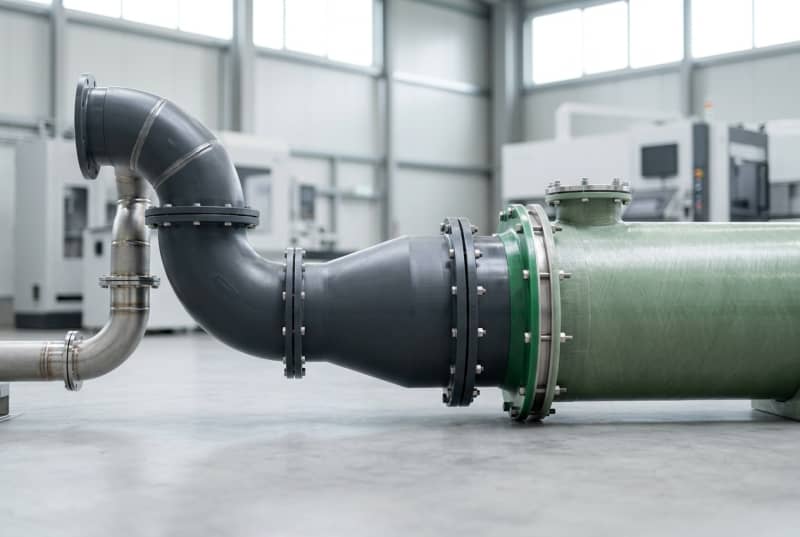
For U.S. project owners, engineers, and procurement teams, the short answer is simple: custom corrosion-resistant components should be purchased based on full life-cycle performance, not lowest bid. In aggressive environments such as chemical dosing rooms, wastewater headworks, bleach storage areas, and acid exhaust lines, failures rarely come from one dramatic event. They usually come from a chain of small mismatches: wrong resin chemistry, underbuilt thickness, weak reinforcement transitions, poor edge sealing, no access planning, or installation interfaces that were never fully coordinated with civil and mechanical teams.
That is why corrosion resistance becomes a procurement priority in chemical, water treatment, and exhaust handling systems across the United States. Whether the site is along the Houston Ship Channel, in a municipal district near Chicago, in a coastal plant outside Tampa, at a refinery corridor in Louisiana, or near high-humidity treatment assets around Newark and Philadelphia, buyers need a sourcing model that aligns performance requirements, fabrication realities, and delivery risk. Custom FRP is often the right answer, but only when design intent and manufacturing execution are tightly connected.
This guide gives a practical framework for buyers ordering ducts, tank covers, utility enclosures, and related molded components for harsh service. It covers what to buy, how to evaluate material fit, how to compare suppliers, how to reduce rework and failure risk, and how to plan total cost beyond initial unit price.
Which Custom Parts Are Most Ordered for Corrosive Environments, Including Ducts, Tank Covers, and Utility Enclosures
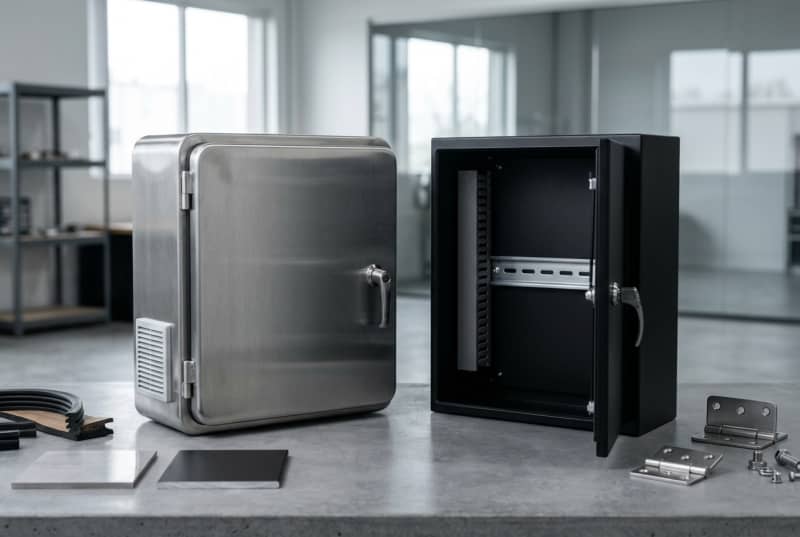
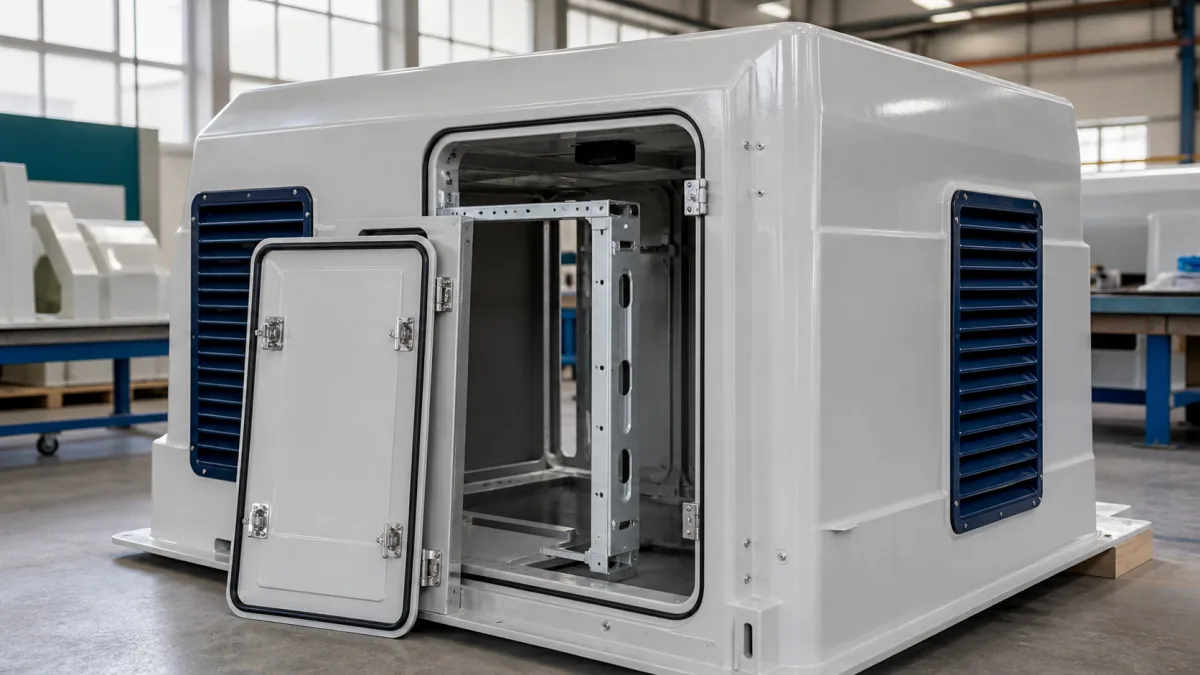
Across U.S. industrial and municipal projects, the most commonly ordered corrosion-resistant custom parts fall into a few recurring groups. The first group handles air movement and fume capture: exhaust ducts, elbows, stacks, dampers, transition sections, and hood interfaces. The second group protects fluid-processing zones: tank covers, hatch lids, vent domes, and splash barriers. The third group protects controls and equipment: pump station enclosures, valve station covers, electrical kiosk housings, and secondary containment accessories.
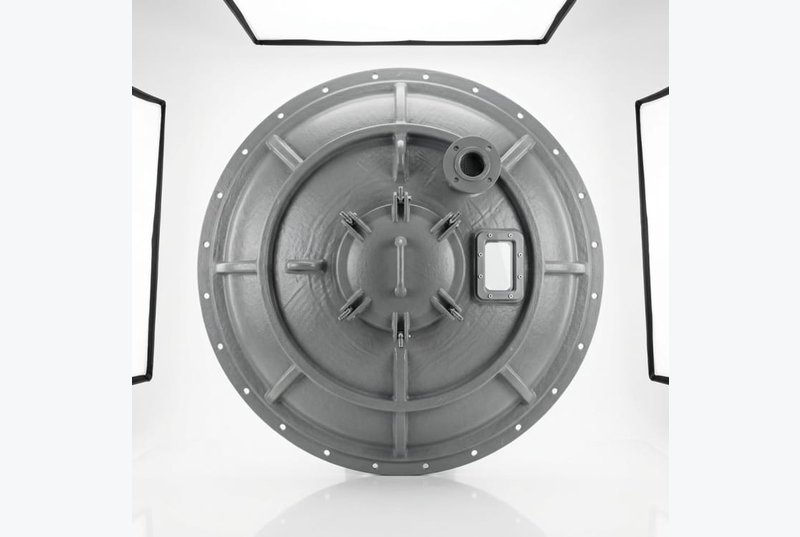
When these parts are engineered as a coordinated package, owners gain better chemical resistance, fewer shutdowns, and more predictable maintenance. For example, teams upgrading odor-control or scrubber lines can specify custom FRP exhaust duct systems for corrosive air streams to avoid rapid decay seen in coated metal systems under acidic condensate cycling. Similarly, process groups managing chlorine, caustic, or mixed-chemical tanks often choose FRP chemical process tank covers with integrated access and venting for lightweight handling and broad chemical compatibility.
In water and wastewater infrastructure, utility hardening frequently includes FRP valve station covers for outdoor corrosion-prone control points and custom FRP pump station enclosures for humid, high-exposure operations. These components are not isolated purchases; they are part of broader reliability planning tied to safety, uptime, and labor efficiency.
The growth trend reflects higher replacement spending, stricter reliability targets, and climate-driven resilience upgrades, especially in coastal and high-humidity regions.
Demand concentration in water, wastewater, and chemical processing means buyers in those sectors have strong leverage if they use clear technical specifications and disciplined supplier qualification.
How to Evaluate Material Suitability by Chemical Exposure, Humidity, Outdoor Service, and Maintenance Demands
Material suitability is the central decision that determines service life. In U.S. practice, teams often start with “FRP” as a category, but performance depends on the full laminate system: resin chemistry, corrosion barrier construction, reinforcement type, veil strategy, cure control, and post-fabrication finishing. A part designed for intermittent sodium hypochlorite mist is not equivalent to one that sees continuous acidic condensate at elevated temperature, even if both are labeled fiberglass.
A good evaluation sequence includes five layers: chemical concentration and contact mode (liquid immersion, vapor, splash, condensate), thermal profile (normal and upset), UV/weathering exposure, mechanical load, and maintenance interaction frequency. For outdoor service from Southern California to the Gulf Coast and Atlantic seaboard, UV and thermal cycling can be as important as chemistry.
What Makes One Supplier Better Than Another for Corrosion-Resistant Fabrication and Project Delivery
Two suppliers can quote the same drawing and be far apart in actual project risk. The best supplier is not just the one with competitive price and fast lead time; it is the one that can repeatedly translate process requirements into manufacturable, verifiable components with minimal field surprises. In U.S. markets where shutdown windows are short and labor costs are high, schedule reliability and fit-up quality usually matter more than minor unit-price differences.
A strong supplier evaluation should include technical depth, manufacturing control, quality documentation, and service responsiveness. Ask how they handle chemical exposure mapping, how they validate laminate schedules, what inspection checkpoints they run, and how they manage dimensional control on complex molded or fabricated geometry. Also ask whether they can support retrofit conditions where existing steel, concrete, and piping are rarely perfectly square or level.
Use the scorecard with weighted scoring across bidders to reduce subjective decisions. In many U.S. bids, technical review capability and dimensional accuracy are underweighted even though they are major drivers of installation risk and rework cost.
A comparison view helps procurement teams explain award decisions to internal stakeholders, especially when selected suppliers are not the lowest bidder but clearly deliver lower execution risk.
How to Balance Structural Performance, Service Life, and Fabrication Complexity in Harsh Industrial Environments
Balancing structural performance with service life and manufacturability is where experienced project teams separate reliable assets from expensive problems. The temptation in aggressive environments is to “overbuild everything.” Overdesign can improve durability, but it may also increase part weight, complicate lifting plans, reduce maintainability, and create longer lead times due to fabrication complexity. Underdesign, on the other hand, drives early cracking, creep deformation, and premature replacement.
A better approach is targeted robustness: reinforce where stress and chemical attack are concentrated, simplify where loads are low, and standardize interfaces where practical. For example, on tank covers, reinforce around nozzles, hinges, and frequent walk zones while keeping panel modules manageable for maintenance crews. On duct systems, focus reinforcement at elbows, branch connections, and support transitions where both mechanical and chemical stress overlap.
This framework helps owners avoid “blanket design rules” that may be expensive but not truly protective. The right balance is project-specific and should be validated during pre-fabrication review with both engineering and installation stakeholders present.
Key Questions to Ask About Molded Shapes, Access Points, Thickness, Reinforcement, and Installation Interfaces
Most field failures can be traced back to a handful of unanswered questions at the purchasing stage. Buyers should force these questions early, before final release, because post-fabrication changes are expensive and often less reliable than first-pass design.
Owners that use this checklist during technical bid alignment usually reduce scope ambiguity and field change orders. It also improves schedule confidence because suppliers can plan production without late design uncertainty.
How Project Owners Can Reduce Failure Risk Through Sampling, Specification Alignment, and Quality Inspection
Failure risk drops when owners treat procurement as a controlled process rather than a one-time transaction. Three practices are especially effective: pre-production sampling, specification alignment workshops, and staged inspection with clear acceptance criteria.
Sampling can be lightweight but high value: a representative laminate coupon, a corner mockup with reinforcement detail, or a single interface module tested against existing field dimensions. For complex projects, a first-article approach allows teams to validate dimensions, hardware, and finish before full production. In U.S. retrofit markets, first-article validation is often cheaper than one day of delayed shutdown labor.
Specification alignment is equally important. Many bid packages contain mixed standards from different projects, copied notes, and conflicting assumptions. Owners should align chemical service data, temperature ranges, load assumptions, and inspection definitions into one clean basis of design. This avoids supplier interpretations that look compliant on paper but diverge in real service.
Quality inspection should be staged: incoming raw material verification, in-process checks for laminate buildup and cure control, and final dimensional plus visual acceptance. For critical parts, include witness points and hold points. Remote inspections can work for standard components, but high-risk geometry and tight interfaces benefit from in-person verification.
Consider three practical U.S. case patterns:
- A Gulf Coast chemical site reduced replacement frequency by moving from generic duct specification to chemistry-specific laminate schedules with reinforced elbows and documented cure checks.
- A Midwestern wastewater authority cut installation delays by requiring field-verified interface dimensions for all enclosure base frames before production release.
- An East Coast utility avoided repeated valve cover hinge failures by standardizing hardware compatibility and adding maintenance-cycle reinforcement around access points.
These are not exotic solutions. They are disciplined procurement habits that convert design intent into stable field performance.
Cost Factors That Matter More Than Initial Unit Price in Corrosion-Resistant Component Procurement
Initial unit price is visible, but it is rarely the dominant cost in harsh environments. The true cost structure includes installation time, commissioning risk, maintenance burden, replacement cycle length, and shutdown exposure. In many U.S. facilities, one avoidable outage can exceed the savings from choosing a lower-cost but less reliable part.
Buyers should quantify cost in at least five buckets: acquisition, installation, operation and maintenance, downtime risk, and end-of-life replacement. Procurement teams that adopt this total-cost view can defend higher-quality selections with clear financial logic.
The practical takeaway is that buyers should evaluate value per operating year, not only price per delivered unit. This is especially true where downtime impacts production, permits, or municipal service continuity.
A Better Sourcing Approach for Buyers Ordering Custom Industrial Parts for Aggressive Environments
A better sourcing approach combines engineering rigor, manufacturing discipline, and service continuity. For U.S. buyers, the recommended workflow is: define service envelope, align specifications, prequalify suppliers with a weighted scorecard, validate critical details through sampling, release with hold points, inspect with evidence-based criteria, and capture lessons for future packages.
How to Evaluate Local Suppliers and Regional Logistics
Regional delivery matters. Projects near Los Angeles/Long Beach, Houston, New Orleans, Savannah, Newark, Seattle, and inland intermodal hubs can face very different freight timelines and handling constraints. Ask suppliers about packaging standards, route risk, oversize-load planning, and contingency lead time. A technically strong supplier that cannot reliably deliver to your site windows may still be a poor project fit.
Step-by-Step Sourcing Playbook for Buyers
- Define full service envelope: chemicals, concentrations, temperature range, UV/weather exposure, and maintenance frequency.
- Map every interface: flanges, anchors, penetrations, clearances, lifting points, and access envelope.
- Create a weighted supplier scorecard and prequalify based on technical and delivery evidence.
- Require first-article or representative sampling for high-risk geometry and critical interfaces.
- Use staged QC hold points with agreed acceptance criteria before final shipment.
- Capture startup and maintenance feedback and fold it into future specifications.
Industries and Applications That Benefit Most
This sourcing model is especially effective in wastewater plants, chemical processing units, marine terminals, industrial utilities, semiconductor support systems, and food process chemical-handling zones. Applications include exhaust handling, tank-top protection, utility enclosure hardening, and retrofit transitions where conventional materials have shown repeated corrosion failure.
FAQ
Q1: Is FRP always better than coated steel for corrosive service?
Not always. It depends on chemistry, temperature, mechanical load, and maintenance profile. In many corrosive vapor and humid outdoor settings, well-specified FRP can deliver longer life with lower maintenance.
Q2: What is the biggest buyer mistake?
Treating all FRP as equivalent and awarding by lowest price without validating chemical compatibility, laminate schedule, and interface accuracy.
Q3: How much detail should be in the purchase order?
Enough to define service conditions, acceptance criteria, hold points, documentation requirements, and installation interfaces. Ambiguous purchase orders create expensive field changes.
Q4: Are samples worth the extra time?
Yes, especially for complex geometry and retrofit tie-ins. Sampling often prevents schedule delays and rework during shutdown windows.
Q5: How can multi-site owners improve outcomes?
Standardize high-performing designs, hardware packages, and inspection protocols while keeping room for site-specific interface adjustments.
When procurement teams combine clear specifications, supplier discipline, and lifecycle cost thinking, custom corrosion-resistant ducts, covers, and enclosures become long-term reliability assets rather than recurring maintenance liabilities.