Understanding Fiberglass and Why It Remains a Top Material Across U.S. Industries
Explore how fiberglass beats metal, wood, and plastic, why custom FRP parts deliver lightweight strength and durability, and what U.S. buyers should plan first.
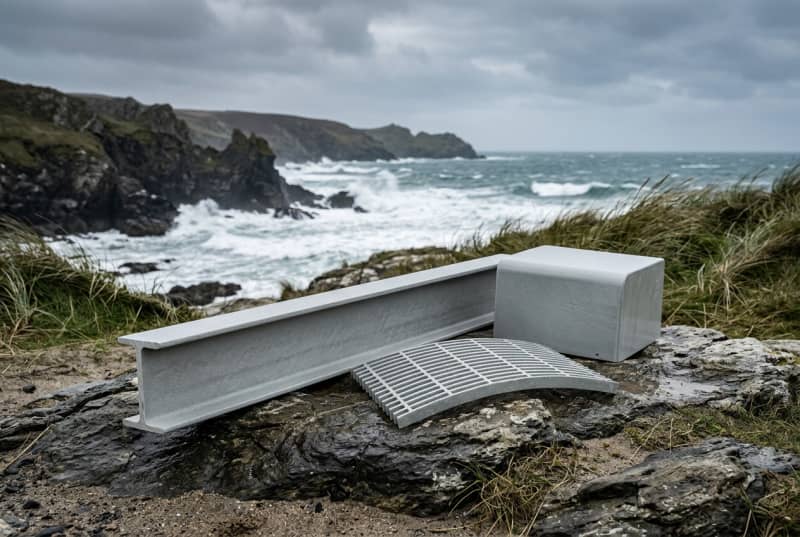
Fiberglass, often specified as FRP (fiber-reinforced polymer), is a composite made by combining glass fibers with resin systems such as polyester, vinyl ester, or epoxy. The result is a material that gives engineers and buyers a practical balance of low weight, high structural efficiency, corrosion resistance, and design flexibility. In the United States, fiberglass remains widely used because it solves real project constraints: coastal humidity in Florida, freeze-thaw cycles in the Midwest, salt exposure near ports, chemical environments in Gulf Coast processing plants, and repetitive handling demands in logistics centers from Southern California to New Jersey.
Direct answer: fiberglass is still widely used today because it is not just one product, but a customizable material platform. It can be engineered for strength, stiffness, thermal behavior, electrical insulation, fire performance, and visual finish at the same time. That makes it suitable for building envelopes, equipment housings, transit furniture, architectural features, utility components, and specialty industrial parts where metal rusts, wood warps, or commodity plastics crack under load or UV stress.
For decision-makers in the United States market, fiberglass also supports practical business goals: lowering installation costs due to lighter components, reducing replacement frequency in harsh environments, improving safety with non-conductive and slip-resistant options, and enabling custom forms that are difficult or expensive to machine from metal. This guide explains how FRP compares with traditional materials, where it performs best, which product types are common, and how to scope a custom fiberglass project for long-term value.
How Fiberglass Compares with Metal, Wood, and Plastic in Real Projects
When buyers compare materials, the best choice depends on life-cycle performance rather than only initial price per part. Fiberglass occupies a middle ground between structural metals and commodity polymers while avoiding many weaknesses of each. In U.S. project contexts, this comparison is especially important for infrastructure, commercial construction, public spaces, and industrial operations where maintenance labor is expensive and downtime has a direct cost.
Metals such as steel and aluminum are familiar and often strong, but steel can corrode and aluminum can dent or fatigue under repeated stress. Wood is easy to shape but can absorb moisture, split, or degrade when coatings are not maintained. Standard plastics are affordable and easy to mold, yet many grades creep under sustained load, become brittle in sunlight, or lose dimensional stability with heat fluctuations. FRP can be designed to avoid these failure modes through fiber orientation, resin choice, and protective gel coats.
The table below summarizes common field-level differences that buyers in the United States typically evaluate before issuing RFQs.
| Performance Factor | Fiberglass (FRP) | Metal (Steel/Aluminum) | Wood | Commodity Plastic |
|---|---|---|---|---|
| Corrosion Resistance | Excellent with proper resin and finish | Steel requires coatings; aluminum better but not universal | Can rot or stain without sealing | Varies; some grades degrade with chemicals |
| Weight | Low to moderate, often easier to install | Usually heavier | Moderate | Low |
| Strength-to-Weight Ratio | High when fibers are engineered for load path | High absolute strength but heavier | Moderate and anisotropic | Low to moderate |
| Design Freedom | Can form curved and integrated geometries | Requires welding, machining, forming | Good but limited for complex weatherproof shapes | Good for molded parts, lower structural capability |
| Outdoor Durability | Strong UV and moisture resistance with right system | Coating-dependent | Maintenance intensive | Can chalk, crack, or fade |
| Electrical Conductivity | Non-conductive in many formulations | Conductive | Low conductivity | Usually non-conductive |
| Maintenance Frequency | Low to moderate | Moderate to high in corrosive zones | High in wet climates | Moderate, grade-dependent |
| Life-Cycle Cost Potential | Strong in corrosive or high-maintenance settings | Can be high due to upkeep and repainting | Can be high due to replacement cycles | May rise with premature failure |
Interpretation: FRP is rarely chosen because it is the cheapest line item on day one. It is selected because it reduces risk over years of service, especially where weather, moisture, cleaning chemicals, or repeated handling can shorten the life of alternatives. In bid-sensitive U.S. projects, this long-term value argument is often the deciding factor when procurement teams compare total ownership cost instead of first cost.
Why Fiberglass Is Valued for Lightweight Design and High Strength-to-Weight Performance
Fiberglass gets attention for being “lightweight,” but the critical engineering advantage is strength-to-weight performance. A well-designed FRP panel, cover, or shell can carry expected loads while lowering dead weight and simplifying installation logistics. For teams operating across large U.S. geographies, reduced weight translates directly into easier transport, lower handling equipment requirements, shorter install windows, and improved worker safety on site.
This matters in real conditions. A contractor in Chicago retrofitting rooftop components during a narrow weather window benefits from lighter, crane-friendly fiberglass housings. A municipal parks department in Phoenix can replace corroded site furniture with FRP units that are easier to move and anchor. Port-adjacent facilities in Houston or Norfolk can shift to fiberglass components to reduce corrosion-related failures while keeping structural efficiency.
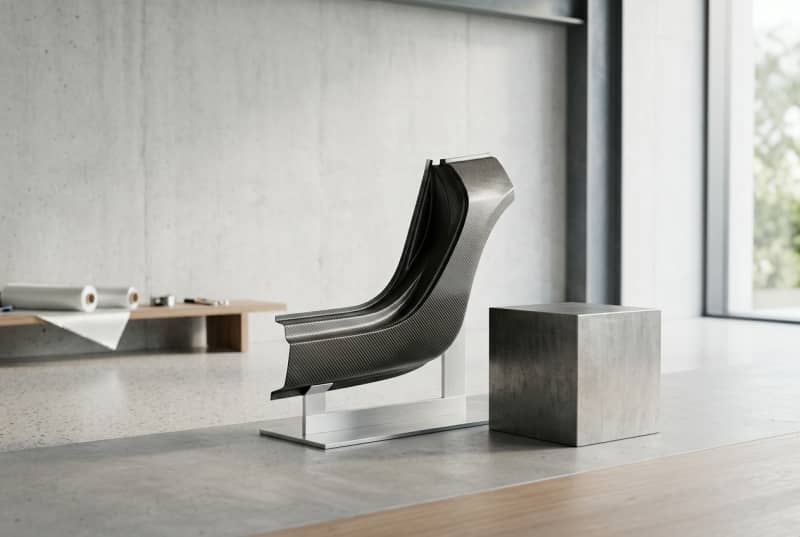
Strength-to-weight is also highly tunable. Fibers can be oriented to reinforce expected stress directions, and laminate thickness can be increased only where needed. This material efficiency is difficult to achieve in all-metal assemblies where every strength increase tends to add considerable weight. In custom projects, this means engineers can target performance precisely rather than overbuilding the entire part.
Below is an illustrative planning model showing how U.S. fiberglass demand has grown in sectors where weight, durability, and maintenance reduction matter most. Values are directional for strategic planning.
For buyers, the practical takeaway is simple: when two options meet code and design intent, the lower-weight material with stable long-term performance often wins on installation speed, maintenance planning, and operational continuity. FRP frequently checks all three boxes.
How Fiberglass Performs in Outdoor, Industrial, and Moisture-Heavy Environments
Performance in harsh environments is where fiberglass often justifies itself fastest. In the United States, many assets face one or more of these stressors: UV radiation, rain and humidity, coastal salt spray, industrial washdown cycles, chlorine exposure, chemical vapors, and thermal cycling between seasons. FRP can be designed for these realities by pairing the right resin chemistry with suitable reinforcement and topcoat systems.
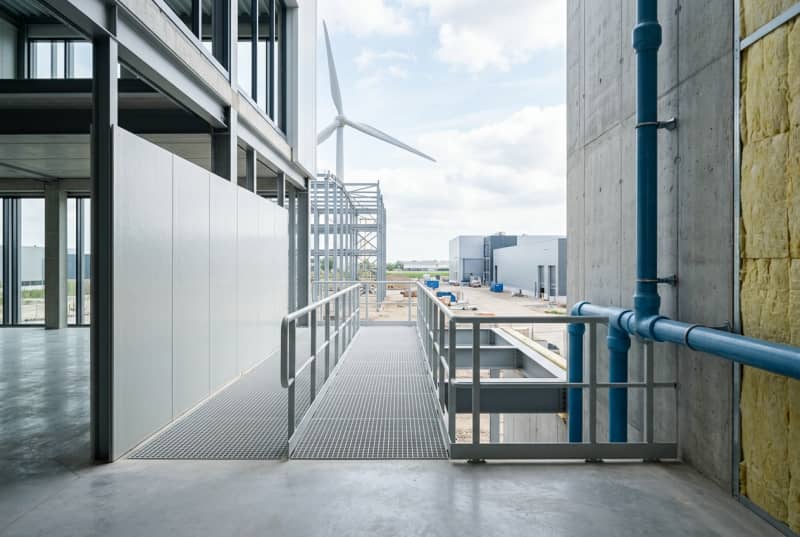
In outdoor architectural use, UV-stable gel coats help limit chalking and color shift. In industrial facilities, vinyl ester systems can improve chemical resistance. In moisture-heavy environments, closed laminates and quality finishing reduce water ingress risk. For public-facing projects, anti-slip textures and easy-clean surfaces can improve safety and operational efficiency.
Consider regional U.S. context:
- Gulf Coast plants around Houston and Baton Rouge value corrosion-resistant FRP enclosures and covers for humid, chemically active environments.
- Pacific corridor projects near Los Angeles and Long Beach often prioritize lightweight components that lower handling effort in dense logistics and transit zones.
- Southeast municipalities around Savannah, Jacksonville, and Miami use FRP in coastal public infrastructure where salt and moisture accelerate metal degradation.
- Northeast and Great Lakes regions evaluate freeze-thaw durability and low-maintenance finishes for public assets exposed to winter conditions.
The next table compares outdoor and industrial stress factors against common FRP mitigation methods used in custom project specifications.
| Environmental Stress | Typical U.S. Use Context | FRP Design Response | Expected Benefit | Buyer Checkpoint |
|---|---|---|---|---|
| UV Exposure | Southwest and high-sun facades | UV-resistant gel coat and pigment package | Improved color retention and surface life | Ask for weathering test basis |
| Salt Spray | Coastal infrastructure and ports | Corrosion-resistant resin and sealed edges | Lower rust-related maintenance | Confirm resin grade by environment |
| High Humidity | Southeast public spaces | Low-porosity laminate and protective finish | Reduced moisture-related degradation | Review finish and sealing detail |
| Chemical Washdown | Food, utility, and industrial plants | Vinyl ester-rich corrosion barrier | Longer service in aggressive cleaning cycles | Provide chemical list to supplier |
| Thermal Cycling | Midwest/Northeast seasonal swing | Laminate schedule tuned to expansion behavior | Reduced cracking risk at interfaces | Coordinate mounting and tolerances |
| Abrasion/Impact | Transit and equipment zones | Local reinforcement and tougher outer layers | Better impact durability | Define impact criteria early |
| Public Contact/Vandal Risk | Parks, campuses, streetscapes | Robust geometry and reparable surface systems | Lower replacement frequency | Specify maintainability requirements |
As a trend in 2026 and beyond, more U.S. projects are combining durability and sustainability goals. FRP designs increasingly emphasize longer service life, reduced repaint cycles, and fewer replacements, which can lower resource use over time even when the initial component cost is higher. Policy pressure for resilient infrastructure and lifecycle accountability is pushing this shift in both public and private procurement.
Common Fiberglass Product Types in Construction, Equipment, and Public Spaces
Fiberglass is used across a wide range of product categories in the U.S. market, especially where designers need shape freedom plus durability. In building exteriors, FRP can create architectural panels with controlled texture and weather resistance. In industrial settings, it protects machines and instruments with custom-fit covers. In civic and landscape projects, FRP supports public furniture and infrastructure elements that tolerate weather and heavy use.
For example, designers looking for façade solutions can evaluate FRP exterior wall feature panels for U.S. architectural projects where visual consistency and low maintenance are both priorities. Equipment teams can apply custom machine and instrument covers to shield sensitive systems while keeping service access practical. Urban planners and landscape architects can review curved FRP park bench designs for durable public seating with flexible forms.
The table below shows product families and why each is commonly selected.
| FRP Product Type | Typical U.S. Application | Main Value Driver | Customization Potential | Maintenance Profile |
|---|---|---|---|---|
| Exterior Feature Panels | Commercial facades, campuses, civic buildings | Weather durability plus design freedom | High: size, texture, color, curvature | Low to moderate cleaning |
| Machine/Instrument Covers | Factories, utilities, processing lines | Corrosion resistance and safer enclosure | High: openings, hinges, service access | Low with periodic inspection |
| Curved Public Benches | Parks, transit plazas, waterfronts | Shape flexibility and outdoor longevity | High: ergonomic forms and finishes | Routine cleaning |
| Utility Enclosures | Electrical/telecom roadside assets | Non-conductive and weather-resistant shell | Medium to high | Low |
| Architectural Screens | Parking structures and sun-control facades | Weight reduction and visual identity | High | Low to moderate |
| Transit Components | Shelters, seating, protective covers | Durability in high-contact public use | Medium to high | Moderate, easy replacement strategies |
| Water-Adjacent Structures | Boardwalk accessories, marina elements | Moisture and corrosion resistance | Medium | Low |
Industry demand is not uniform. The chart below models where demand concentration is strongest in current U.S. procurement activity.
This distribution highlights why FRP suppliers in the United States usually need cross-sector expertise. A fabricator supporting architectural facades may also serve utility, transportation, and industrial customers, each with different compliance and performance expectations.
Why Many Businesses Choose Custom Fiberglass Parts Instead of Standard Catalog Items
Standard fiberglass components work well for common dimensions and low-variation uses. However, many U.S. buyers move to custom FRP when the application has site constraints, unique load conditions, equipment interfaces, branding requirements, or installation sequence limitations. In these situations, custom design prevents field modifications that can increase labor time, weaken performance, and create warranty confusion.
Custom parts are especially valuable in retrofit projects where existing structures are irregular. A transit authority upgrading station assets in Boston, a manufacturing plant modernizing lines in Detroit, or a mixed-use development team in Dallas often faces non-standard geometries and tight construction windows. A custom FRP part can integrate mounting features, service cutouts, and finish requirements in a single manufactured unit, reducing on-site adjustments.
A second reason is risk control. With custom fiberglass, buyers can define performance criteria clearly at the design stage: impact level, fire behavior expectations, UV resistance, color consistency, tolerance bands, and attachment method. This specification clarity improves quality outcomes and lowers dispute risk after installation.
The trend shift chart below illustrates how U.S. projects are moving from off-the-shelf solutions toward engineered customization in higher-value applications.
From a procurement standpoint, custom does not always mean slower or more expensive in total. If the part installs faster, lasts longer, and avoids repeated fixes, total project cost can be lower than “cheap” standard options that do not match field reality.
What Buyers Should Evaluate Before Launching a Custom Fiberglass Project
A successful custom FRP program begins with a complete requirement definition. Many cost and schedule problems come from vague scopes, not from manufacturing complexity. Before requesting quotations, buyers should align internal teams on use conditions, performance expectations, installation method, and acceptance criteria. This helps suppliers provide accurate recommendations on resin systems, reinforcement structure, mold strategy, and finish process.
In the United States, project teams often include design consultants, general contractors, facilities operators, and procurement managers. Early cross-functional alignment prevents downstream change orders and keeps lead times realistic. It is also wise to map logistics from factory to site, especially for large-format components moving through key trade corridors such as Los Angeles/Long Beach, Houston, Savannah, and Port Newark.
The checklist below can be used in pre-bid meetings and supplier qualification sessions.
| Buyer Preparation Item | Why It Matters | Common Risk if Missing | Recommended Action | Owner |
|---|---|---|---|---|
| Operational Environment Definition | Drives resin and finish selection | Premature corrosion or UV wear | Document temperature, moisture, chemicals, UV | Engineering + Operations |
| Load and Safety Criteria | Controls laminate design and reinforcement | Overdesign or underperformance | Provide static/dynamic load requirements | Engineering |
| Dimensional Tolerances | Affects fit-up and install quality | Field rework and delays | Define critical dimensions and interface points | Design Team |
| Installation Method | Determines embedded features and hardware | On-site modification costs | Specify anchors, brackets, lifting points | Construction Team |
| Finish and Appearance Standard | Impacts process choice and QC thresholds | Color mismatch and rejection | Set gloss, color, texture samples | Architect/Brand Team |
| Code/Compliance Requirements | Supports legal and safety acceptance | Approval delays | List required test reports and standards | Compliance Manager |
| Lead Time and Batch Strategy | Optimizes tooling and production schedule | Missed milestones | Forecast quantities by phase | Procurement |
| Maintenance Plan | Protects long-term performance | Unexpected life-cycle costs | Define inspection and cleaning cadence | Facilities Team |
Explanation: this framework reduces uncertainty and helps suppliers quote accurately. It also strengthens negotiation quality, because teams compare bids on equal technical footing rather than only unit price. In many projects, this single step saves weeks of redesign and avoidable site labor.
How a Reliable Manufacturer Converts Design Intent into Practical Products
Even a strong design concept fails without capable execution. Reliable fiberglass manufacturing partners combine engineering judgment, process discipline, and responsive project management to move from concept to production without losing performance intent. This is where company capability matters more than brochure claims.
Technological Capabilities That Improve Outcomes
A dependable FRP partner starts with technical translation: converting sketches, CAD files, or conceptual drawings into manufacturable geometry. This includes design-for-manufacturing reviews, laminate strategy recommendations, reinforcement placement planning, and simulation-informed adjustments where needed. For complex parts, early prototype cycles can validate fit, stiffness, access openings, and surface quality before full-scale tooling investment.
Advanced suppliers also help material-match to environment: selecting resin families for coastal exposure, chemical washdown, electrical insulation, or fire-related performance requirements. This is essential in U.S. sectors with strict operational constraints, such as transportation, utilities, and industrial processing.
Manufacturing Capabilities That Support Scale and Consistency
Execution quality depends on controlled mold fabrication, repeatable layup practices, curing discipline, trimming accuracy, and final inspection standards. Strong manufacturers can support both low-volume custom runs and staged production, which is critical for projects rolling out across multiple states or phases. Consistency across batches matters for architectural appearance, component interchangeability, and installation speed.
A capable production partner should also provide practical packaging and shipping strategies. Large FRP components often move through U.S. freight corridors connecting inland hubs like Chicago, Dallas, and Atlanta with coastal gateways. Proper packaging design helps prevent transit damage and protects schedule integrity.
Service Capabilities That Reduce Buyer Workload
From concept through production, service quality can be the difference between a smooth project and a costly sequence of corrections. Strong service typically includes coordinated communication, realistic milestone planning, transparent change management, documentation support, and post-delivery technical guidance. Buyers benefit when one accountable team can guide development from initial idea to finished product delivery.
For procurement teams, this integrated model shortens decision loops. Instead of managing separate design consultants, tooling vendors, and production shops, buyers work with a partner that aligns technical, manufacturing, and service workflows under one project framework.
The following comparison chart and table help evaluate supplier fit for custom fiberglass projects.
| Supplier Evaluation Criterion | What to Ask | Strong Indicator | Warning Sign | Project Impact |
|---|---|---|---|---|
| Front-End Engineering Depth | Can you review drawings for manufacturability? | Provides detailed DFM feedback and revisions | Quotes without technical review | Higher first-pass success |
| Prototype Capability | What is your prototype timeline and method? | Structured prototype and validation path | No prototype option for complex parts | Reduced fit and function risk |
| Process Control | How do you control quality batch to batch? | Documented QC checkpoints and records | Inconsistent acceptance criteria | Stable production quality |
| Material Transparency | Which resin/fiber systems are proposed and why? | Clear material rationale by environment | Generic material naming only | Longer service life |
| Delivery Reliability | How do you package and ship large parts? | Project-specific logistics and protection plan | Standard packaging for all shipments | Fewer transit delays/damages |
| Post-Delivery Support | Do you support installation and field adjustments? | Defined support window and response process | Support ends at shipment | Lower startup friction |
Case study perspective: a U.S. buyer replacing corroded metal equipment covers in a humid Gulf Coast plant selected custom FRP units with integrated access points and reinforced mounts. Installation labor dropped because field cutting was eliminated, and maintenance calls decreased due to improved corrosion resistance. In another scenario, a municipal park renewal program in the Southwest used curved FRP seating to achieve sculptural form with lower upkeep than coated metal benches exposed to strong sun and occasional irrigation overspray.
Final Guidance for Selecting the Right Fiberglass Solution for Long-Term Value
If your goal is long-term performance rather than short-term procurement convenience, fiberglass can be one of the most strategic material choices available. The right FRP solution combines proper engineering, environment-specific material selection, reliable manufacturing, and clear service coordination from concept through delivery. For U.S. buyers balancing durability, appearance, budget, and schedule, this integrated approach is usually more important than chasing the lowest unit price.
When selecting suppliers, compare capability depth, not just catalogs. Confirm that the team can guide design decisions, manufacture consistently, and support implementation across your timeline. This is especially important for multi-site rollouts across the United States where logistics, climate differences, and installation conditions vary by region.
U.S. Market Outlook Through 2026 and Beyond
Future demand will likely be shaped by three forces: resilience, sustainability, and customization. Resilience priorities are pushing owners toward materials that hold up in coastal, humid, and industrial settings. Sustainability programs are increasing focus on service life extension, lower maintenance cycles, and smarter replacement planning. Customization demand is rising as owners seek precise fit, stronger branding, and faster installation outcomes. Fiberglass aligns with all three directions when engineered correctly.
Policy and procurement trends are also encouraging lifecycle thinking. Public agencies and private operators are increasingly asking not only “What does this cost now?” but also “How often will we repair this, and what is the operational risk?” FRP solutions that demonstrate durability, low maintenance, and predictable long-term behavior are well-positioned in this environment.
Common Industries and Application Paths
Industries that frequently benefit include commercial construction, utilities, manufacturing, transportation, public infrastructure, and coastal development. Applications range from façade elements and equipment housings to benches, enclosures, and specialty protective covers. In each case, value comes from matching laminate design and resin chemistry to real operating conditions.
Practical Buyer Roadmap
- Define operating environment and load conditions in writing.
- Align internal stakeholders on appearance, compliance, and install method.
- Request design-for-manufacturing feedback before finalizing specifications.
- Validate key dimensions and service access through prototype review when needed.
- Choose suppliers with proven engineering, production, and service integration.
- Track lifecycle performance after installation to inform future procurement.
Frequently Asked Questions
| Question | Short Answer | Why It Matters |
|---|---|---|
| Is fiberglass always stronger than metal? | Not in absolute terms, but FRP often delivers better strength-to-weight for targeted designs. | Material choice should follow load case and lifecycle goals. |
| Can FRP be used outdoors in all U.S. climates? | Yes, with the correct resin system and UV-protective finish specification. | Environment-specific design is critical for durability. |
| Does custom fiberglass always cost more? | Initial pricing may be higher, but total ownership can be lower through reduced maintenance and faster installation. | Evaluate lifecycle cost, not just unit price. |
| How long does a custom project take? | Timing depends on complexity, tooling, and batch size; early requirement clarity shortens lead time. | Planning quality strongly affects schedule reliability. |
| What documents should buyers prepare? | Environmental conditions, load criteria, tolerance requirements, finish standards, and installation details. | Clear documentation reduces change orders. |
| Can FRP match architectural aesthetics? | Yes, custom colors, textures, and curved forms are common in façade and public-space work. | Design flexibility is a major FRP advantage. |
| Is support available after delivery? | With the right partner, yes - installation guidance and post-delivery coordination are standard services. | After-sales support lowers implementation risk. |
Final thought: the best fiberglass solution is never generic. It is the result of a disciplined process that turns your design goals, environmental constraints, and operational targets into a practical, durable product. For organizations building for long service life in the United States, well-executed custom FRP remains one of the smartest paths to resilient, efficient, and visually strong outcomes.