Why Standard Products Are Not Always Enough for Specialized Industrial and Commercial Needs
Learn how buyers in the United States should prepare for custom fiberglass quotes, prototypes, tooling, lead times, MOQs, and supplier selection.
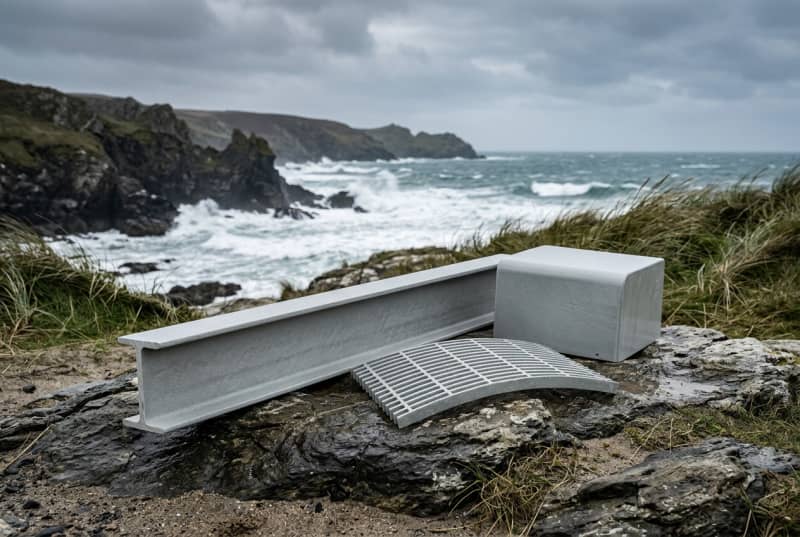
Standard fiberglass components work well for many routine installations, but they often fall short when a project involves unusual dimensions, environmental exposure, branding requirements, weight limits, or integration with other equipment. In the United States, buyers in sectors such as energy storage, water treatment, transportation, marine, telecom, agriculture, and public infrastructure increasingly need fiberglass parts and assemblies that match a specific operating environment rather than a generic catalog specification. That is why custom fiberglass products have become a practical solution for companies that need a better fit, longer service life, and more efficient field performance.
Custom fiberglass, often referred to as custom FRP manufacturing, gives buyers more control over geometry, laminate structure, surface finish, fire performance, UV resistance, chemical resistance, and installation details. Whether the goal is a corrosion-resistant enclosure for a Gulf Coast facility, a lightweight housing for a mobile system moving through Chicago and Dallas, or a durable architectural feature for a public installation in Los Angeles, the project outcome depends heavily on the information shared before production begins. Many budget overruns and schedule delays happen not because fiberglass is the wrong material, but because the design scope and manufacturing assumptions were not aligned from the start.
For U.S. buyers, this is especially important because projects often involve multiple decision makers, engineering approvals, transport constraints, and regional compliance considerations. A battery enclosure shipped through the Port of Houston may face different logistics and weather concerns than a fan housing delivered to a processing plant near Savannah or a display structure assembled for an exhibition center in Las Vegas. Buyers who understand the quote process, prototype stage, tooling logic, and supplier capabilities are in a much stronger position to avoid rework and get a fiberglass product that performs as intended.
This guide explains what to know before starting a custom fiberglass project, how cost and feasibility are influenced by design choices, and how to choose a manufacturer that can support your program from concept through production. It also includes practical tables, market charts, application examples, and a final checklist to help purchasing teams, engineers, and project managers in the United States make better sourcing decisions.
What Information Buyers Should Prepare Before Requesting a Custom Fiberglass Quote
A strong custom fiberglass quote starts with complete and usable project information. The more clearly the buyer defines the product, the more accurate the pricing, tooling assessment, and lead time estimate will be. In the United States market, many requests for quote begin with only a rough sketch or a photo of an existing part. That may be enough for an initial discussion, but it is rarely enough for a reliable production plan. Buyers should prepare technical, commercial, and operational details before asking for pricing.
At minimum, a supplier should understand the intended application, dimensions, expected load or structural demands, installation conditions, target quantity, cosmetic expectations, and any compliance requirements. If the product will be exposed to salt spray near Miami, chemicals in a Midwest processing plant, intense UV in Arizona, or freeze-thaw cycles in the Northeast, those conditions affect resin selection and laminate design. If the part mates with metal frames, electrical systems, ducts, or hinges, the manufacturing team must know those interfaces early.
Drawings can range from hand sketches to full CAD files, but they should communicate key geometry and tolerances. If a buyer already has a 3D model, assembly drawing, or sample part, that can significantly improve quote accuracy. Photos from multiple angles are also helpful, especially for replacement parts where the original source is no longer available. Material expectations should be stated clearly as well: not all fiberglass constructions are the same, and the difference between a cosmetic shell and a load-bearing industrial component is substantial.
Commercial details matter just as much as engineering details. A quote request should indicate expected annual volume, prototype needs, target delivery location, and whether the order is a one-time build or part of a long-term program. A unit price for 20 pieces is very different from a unit price for 2,000 pieces because tooling amortization, labor planning, and process selection change with volume.
| Information to Prepare | Why It Matters | Typical U.S. Buyer Example | Impact on Quote Accuracy |
|---|---|---|---|
| Product dimensions | Determines mold size, material usage, and shipping footprint | Outdoor enclosure for a Texas battery site | High |
| Application environment | Affects resin, gel coat, UV, flame, and corrosion requirements | Chemical area in Louisiana | High |
| CAD drawing or sample | Reduces assumptions and improves manufacturability review | Reverse engineering of an old industrial cover | High |
| Required quantity | Guides tooling strategy and process economics | 50 prototypes, then 500 annual units | High |
| Surface finish expectations | Influences labor, mold quality, and finishing time | Visible kiosk housing for a trade show | Medium to High |
| Installation method | Determines inserts, reinforcements, and hole locations | Wall-mounted telecom cabinet | Medium to High |
| Delivery schedule | Helps evaluate realistic production and logistics timing | Deployment before hurricane season | Medium |
The table above shows why incomplete RFQs often create hidden risk. A buyer may think they are requesting only a shell or cover, but if the product also needs mounting points, bonded hardware, sealed openings, or interior structural reinforcement, the manufacturing plan changes immediately. This is one reason experienced suppliers ask more questions than first-time buyers expect.
When preparing a quote package, it also helps to define what is fixed and what is flexible. For example, if the overall width must remain exact but edge radius and finish texture can change, the supplier can optimize cost without affecting function. Buyers in the United States who provide this level of clarity often receive more useful proposals and fewer change orders later in the process.
How Dimensions, Shape, Surface Finish, and Quantity Affect Project Feasibility and Cost
Four design variables have an outsized effect on custom fiberglass project feasibility: dimensions, shape complexity, surface finish, and production quantity. These elements influence nearly every part of the manufacturing process, including mold construction, reinforcement placement, curing, trimming, secondary assembly, packaging, and freight. Understanding how they interact helps buyers avoid designs that are technically possible but commercially inefficient.
Dimensions affect not only material consumption but also handling and logistics. Larger parts may require segmented molds, dedicated lifting fixtures, larger curing space, or special packaging. In the United States, freight costs can rise quickly for oversized parts moving through hubs such as Houston, Long Beach, Newark, or Atlanta. A part that exceeds standard pallet dimensions may need custom crating or LTL coordination, which should be considered during design review.
Shape complexity is another major cost driver. Smooth, open shapes are usually easier to laminate and release from a mold than parts with deep undercuts, sharp inside corners, multiple flanges, or complex internal geometry. Every added feature can increase labor hours, quality control steps, and the risk of cosmetic or dimensional variation. Some complex forms may require multipart tooling or alternative processing methods to be practical.
Surface finish expectations can also change the economics of the project. If the fiberglass part will be hidden inside industrial machinery, a functional finish may be sufficient. If it will be displayed at a customer-facing site, trade event, or branded installation, the buyer may require a high-gloss gel coat, color consistency, smooth seam treatment, or painted surfaces. These finishes involve more process control and more hands-on work.
Quantity often determines whether a project should use hand lay-up, spray-up, resin transfer methods, matched tooling, or another approach. Low-volume projects can tolerate higher manual labor if tooling cost must stay low. Higher-volume programs usually justify better tooling and process refinement because the cost spreads over more units. This is why a supplier may recommend one process for a 25-piece run and a very different one for 2,500 units.
| Design Factor | Low Cost Scenario | Higher Cost Scenario | Why Cost Changes |
|---|---|---|---|
| Dimensions | Compact panel under pallet size | Oversized enclosure with freight restrictions | More material, larger molds, special transport |
| Shape | Simple curved shell | Multiple recesses, flanges, and undercuts | More labor, more tooling complexity |
| Surface finish | Utility-grade industrial finish | High-visibility cosmetic class A style finish | Extra mold prep and finishing work |
| Quantity | Single prototype | Mid-volume annual program | Tooling and process choices shift |
| Tolerance | General fit tolerance | Tight interface tolerance with metal parts | More inspection and control required |
| Assembly content | One molded part | Part with inserts, hinges, and seals | Secondary operations increase labor |
This table highlights the main economic tradeoffs. A custom fiberglass component does not become expensive because fiberglass itself is inherently costly; it becomes expensive when the geometry, finish, tolerances, and assembly requirements demand more labor and better tooling. Buyers can often reduce cost without sacrificing performance by simplifying hidden surfaces, combining similar parts, reducing unnecessary finish requirements, or adjusting parting lines to improve manufacturability.
For example, a U.S. buyer sourcing an industrial FRP fan cowling solution for a manufacturing site in Ohio may prioritize aerodynamic shape and corrosion resistance over showroom-grade cosmetics. In that case, budget can be directed toward structural reinforcement and weather durability instead of a decorative finish. On the other hand, a company planning a branded mobile fiberglass exhibition booth for events in Orlando, Las Vegas, and Chicago may value smooth finish, color matching, and repeatable assembly more than extreme chemical resistance.
The line chart illustrates a realistic upward trend in custom FRP project activity in the United States, driven by infrastructure upgrades, electrification, corrosion-control needs, and modular equipment design. As demand rises, buyers that define feasibility factors early are better positioned to secure production slots and avoid rushed engineering decisions.
Why Prototype Development Is Important Before Moving to Full Production
Prototype development is one of the most valuable stages in a custom fiberglass project because it reduces uncertainty before a larger financial commitment is made. Unlike commodity parts with fixed geometry and standardized tooling, custom fiberglass products often need practical validation in real-world conditions. A prototype can reveal whether the design fits the intended space, performs structurally, meets visual expectations, and can be manufactured consistently at scale.
For U.S. buyers, prototyping is especially important when a component will be installed in the field by another contractor, integrated with mechanical or electrical systems, or exposed to demanding weather conditions. A prototype allows the project team to test mating interfaces, hinge operation, gasket compression, mounting hardware, handling ergonomics, and installation sequence before launching full production. Catching these issues early is almost always less expensive than revising tooling or finished inventory later.
Prototype work is also useful for validating assumptions around wall thickness, reinforcement strategy, finish, and part stiffness. If a battery cabinet door deflects too much, if a fan cowling needs stronger mounting points, or if a public-facing housing requires a smoother exterior than first expected, the prototype gives the buyer and supplier a shared reference point for improvement. This is one of the clearest ways to improve quality and avoid conflict over subjective expectations.
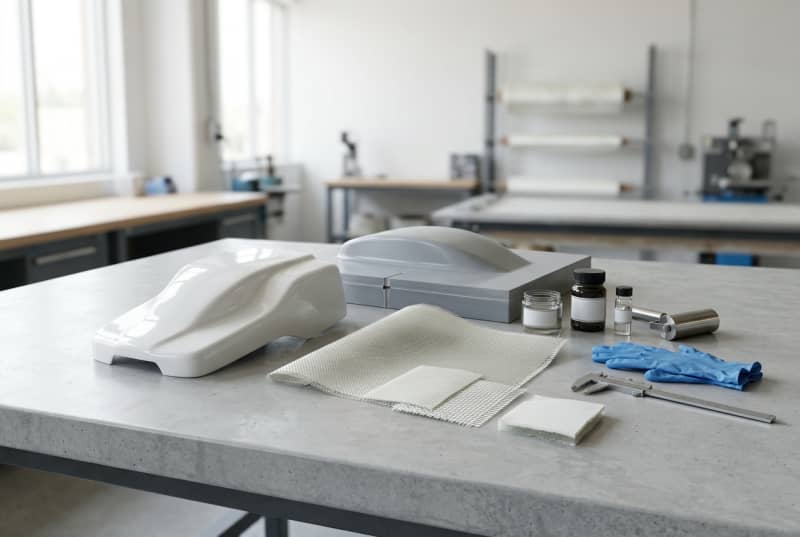
Not every prototype needs full production tooling. Depending on the project, an early sample may be made from soft tooling, temporary tooling, CNC patterns, or modified molds designed for design verification. The best approach depends on expected volume and urgency. What matters most is that the prototype stage is intentional and documented.
| Prototype Goal | What It Confirms | Typical Problem Found | Benefit Before Production |
|---|---|---|---|
| Fit check | Correct dimensions and clearances | Interference with adjacent hardware | Avoids installation rework |
| Structural review | Wall stiffness and load handling | Flexing at support points | Improves durability |
| Finish review | Texture, gloss, color acceptance | Cosmetic standard not aligned | Prevents appearance disputes |
| Assembly trial | Insert placement and hole alignment | Latch or hinge mismatch | Reduces field adjustment |
| Handling review | Weight and installation practicality | Part difficult to lift or mount | Supports safer deployment |
| Process validation | Repeatability for future production | Tooling concept not efficient | Protects long-term unit cost |
The table makes clear that prototypes are not simply a formality. They serve as a control point between design intent and production reality. For a project such as a custom enclosure for an energy installation, a prototype can confirm door alignment, cable access, ventilation features, and maintenance ergonomics before a larger deployment is approved. Buyers evaluating a fiberglass battery storage cabinet can benefit from a prototype stage because outdoor protection, access layout, and reinforcement details all affect performance over time.
Prototype development also improves communication between engineering, procurement, operations, and the supplier. Once physical feedback is available, revision decisions become more objective. That often shortens later approval cycles and creates a cleaner transition to production release.
How to Evaluate a Manufacturer’s Design Support and Production Capability
Choosing a custom fiberglass supplier is not only about comparing unit price. Buyers should evaluate whether the manufacturer can support the project from early concept through repeat production. In the United States, where deployment timelines, compliance expectations, and site conditions vary widely, the best supplier is often the one that can identify risk early, communicate clearly, and build consistent parts under real production controls.
Design support is a key differentiator. A capable supplier should be able to review drawings for manufacturability, recommend laminate and resin options, identify shape issues that may complicate release or trimming, and suggest ways to reduce cost without compromising function. This type of engineering input matters because many custom fiberglass products are based on buyer concepts that were not originally optimized for FRP manufacturing.
From a technological capabilities standpoint, a strong manufacturer should understand how to translate functional requirements into practical FRP structures. That includes material selection, reinforcement planning, mold strategy, and finishing methods suited to the application. Buyers should ask whether the supplier can work from 2D drawings, 3D models, or physical samples, and whether the engineering team can help refine the product before tooling is locked.
Manufacturing capability is equally important. A supplier should be able to explain production methods, quality checkpoints, curing controls, dimensional inspection practices, and assembly capacity. If the program may expand, the supplier should also show how it can move from prototype quantities to stable repeat orders. A manufacturer that offers complete custom FRP solutions from concept to production can be especially valuable because the learning from early development carries directly into volume manufacturing.
Service capability often determines how smooth the project feels from the buyer side. The supplier should be responsive, organized, and clear about lead times, revisions, and documentation. In practice, this means structured communication, practical schedule updates, packaging planning, and the ability to support changes without losing traceability. For buyers shipping to locations such as Seattle, Houston, Charleston, Detroit, or Phoenix, logistics coordination and realistic delivery planning matter almost as much as molding itself.
| Evaluation Area | What to Ask | Good Sign | Warning Sign |
|---|---|---|---|
| Design support | Can you review for manufacturability? | Detailed feedback with suggestions | Quotes without asking technical questions |
| Material knowledge | Which resin and reinforcement suit this use? | Application-specific recommendations | Generic answer for every project |
| Tooling approach | How will tooling match my volume? | Explains tradeoffs clearly | No distinction between prototype and production tooling |
| Production capacity | Can you scale beyond the first run? | Shows process path and scheduling logic | Unclear on batch planning |
| Quality control | How do you inspect consistency? | Defined checkpoints and records | Relies only on visual judgment |
| Project service | Who manages revisions and communication? | Single point of contact and documentation | Scattered responses and changing information |
The table above helps buyers distinguish between a shop that can make fiberglass parts and a supplier that can manage a custom manufacturing program. The difference becomes critical when the project includes repeat shipments, assembly details, multiple stakeholders, or staged approvals.
The bar chart shows where custom FRP demand is especially strong in the United States. Energy storage, water infrastructure, and industrial ventilation continue to create high-value applications for durable, corrosion-resistant custom fiberglass parts. This is why supplier capability should be matched to the buyer’s industry, not viewed as a general commodity decision.
What Common Mistakes Can Delay a Custom Fiberglass Project or Increase the Budget
Many custom fiberglass projects do not fail because of material limitations. They run into trouble because avoidable mistakes are made during scoping, review, or communication. Buyers can reduce risk significantly by recognizing the most common causes of delay and cost growth before the project starts.
One frequent mistake is requesting a quote without enough detail, then expecting firm pricing. Suppliers must make assumptions when dimensions, quantity, finish, or application conditions are unclear. Those assumptions may later prove wrong, causing repricing or redesign. Another common issue is underestimating how much shape complexity affects cost. Deep corners, hidden returns, and integrated features may look efficient on paper but create more tooling and labor than expected.
Buyers also sometimes skip the prototype phase to save time, only to lose more time when installation problems appear in the field. In addition, unrealistic lead-time expectations can create friction. Custom FRP manufacturing is not the same as pulling a standard item from stock. Tooling, sample approval, curing, trimming, finishing, and packaging all require time, especially when quality matters.
Changing specifications after tooling begins is another major budget risk. Even small changes to dimensions, hardware positions, or finish expectations can create new work in tooling, molds, and inspection. Finally, some projects suffer because too many stakeholders are involved without a clear approval chain. If engineering, procurement, operations, and branding each give different feedback at different times, the supplier cannot move efficiently.
| Common Mistake | What Happens | Likely Result | Prevention Method |
|---|---|---|---|
| Incomplete RFQ | Supplier prices based on assumptions | Requote and delay | Provide drawings, use case, and volume |
| Overcomplicated geometry | Tooling and labor increase | Higher unit cost | Review for manufacturability early |
| Skipping prototype | Problems found after production | Rework and schedule impact | Validate fit and function first |
| Late design changes | Tooling or process must be revised | Budget expansion | Lock key specs before tooling release |
| Unclear finish expectations | Quality standard differs between teams | Approval disputes | Use samples and finish references |
| Unrealistic timeline | Production steps get compressed | Stress, rush cost, or missed delivery | Build schedule with milestones |
Each of these mistakes has a direct commercial effect. The good news is that most can be prevented through better preparation and a disciplined approval process. Buyers in the United States often manage projects across multiple sites and departments, so it is wise to appoint one internal owner who can consolidate feedback before communicating with the manufacturer.
How Lead Time, Tooling, and MOQ Influence the Ordering Process
Lead time, tooling, and minimum order quantity are central to how custom fiberglass orders are priced and scheduled. Buyers who understand these factors can plan purchasing cycles more effectively and avoid surprises when moving from prototype to production.
Lead time includes more than molding. It may include design review, tooling fabrication, prototype build, customer approval, production scheduling, finishing, inspection, packaging, and freight coordination. In the United States, final transit time can vary depending on whether the shipment goes to major hubs like Dallas, Memphis, or Newark, or to remote project locations that require additional routing. If the project must align with a shutdown, installation window, or trade event, those milestones should be discussed from the beginning.
Tooling is often misunderstood by first-time buyers. Tooling is not simply an added cost; it is the foundation for dimensional repeatability, finish consistency, and production efficiency. The right tooling level depends on expected quantity, part complexity, and service life of the program. Lower-cost prototype tooling may be sufficient for early testing, while durable production tooling is better for repeat orders and stable quality over time.
MOQ, or minimum order quantity, reflects the economic reality of setup time, material planning, labor efficiency, and shop scheduling. Very low quantity orders can be done, but they often carry a higher unit price because fixed setup work is spread across fewer parts. Once buyers understand this, MOQ becomes less of a barrier and more of a planning tool.
| Ordering Factor | What It Means | Buyer Impact | Practical Advice |
|---|---|---|---|
| Lead time | Total time from review to delivery | Affects project launch date | Share required milestone dates early |
| Prototype tooling | Lower-cost tooling for validation | Faster entry, limited volume efficiency | Use for design confirmation |
| Production tooling | More durable tooling for repeat runs | Better consistency over volume | Best for ongoing programs |
| MOQ | Minimum economical batch size | Changes unit cost and scheduling | Plan purchases around realistic batches |
| Setup cost | Labor and preparation before production | High relative cost on small orders | Combine releases when possible |
| Freight planning | Packaging and shipping arrangement | Affects landed cost | Confirm destination and unload conditions |
This table helps explain why two quotes for the same part can differ so much depending on order structure. A buyer that requests 10 pieces shipped immediately to three different U.S. states will likely see a higher total cost than a buyer that orders 60 pieces in one coordinated batch with consolidated freight. Ordering strategy matters.
The area chart shows a realistic trend in U.S. sourcing behavior: more buyers are adopting a prototype-first approach before committing to full production. This shift is partly driven by product complexity, partly by budget control, and partly by the need to meet stricter reliability expectations.
Why Clear Communication Helps Achieve Better Results in Custom Manufacturing
Clear communication is one of the most overlooked success factors in custom fiberglass manufacturing. Because each project is different, assumptions can quickly turn into quality issues, cost increases, or delays if they are not addressed early. Good communication is not only about responsiveness; it is about creating shared understanding between the buyer and the supplier at every stage.
That includes confirming drawings, revision status, finish standards, quantity forecasts, approval responsibilities, packaging requirements, and shipping destinations. It also includes being transparent when something is still undecided. A buyer who says a specification is under review helps the manufacturer plan more realistically than a buyer who leaves the point unstated and changes direction later.
Service capability plays an important role here. A supplier that supports custom FRP programs well will usually assign clear contacts, track revision history, and explain what information is needed next. This kind of support can be as valuable as technical knowledge because it keeps the project moving in a controlled way. For U.S. buyers managing cross-functional teams, structured communication reduces internal confusion as well.
Communication is also how better solutions are found. When buyers explain the actual use case, not just the requested geometry, suppliers can often suggest improvements. A part may be redesigned to ship more efficiently, assemble faster, drain water better, or use fewer secondary operations. Those gains are hard to discover if the exchange is limited to a drawing and a price request.
| Communication Practice | Why It Helps | Result for Buyer | Result for Supplier |
|---|---|---|---|
| Share latest revision only | Prevents building to outdated files | Less risk of wrong parts | Cleaner production control |
| Define approval owner | Avoids conflicting comments | Faster decisions | Fewer rework loops |
| State use environment clearly | Supports proper material choice | Better durability | More accurate specification |
| Discuss changes immediately | Stops hidden schedule impact | Better budget visibility | Better planning accuracy |
| Confirm packaging needs | Protects product in transit | Lower damage risk | Safer shipment preparation |
| Review milestones together | Aligns prototype, production, and delivery | More reliable launch plan | More stable workflow |
The explanation is simple: custom manufacturing performs best when information flows cleanly. This is particularly true when products are headed to multiple U.S. destinations or need approval from engineering and procurement teams in different locations.
Final Checklist Before Choosing a Custom Fiberglass Supplier
Before selecting a custom fiberglass supplier, buyers should step back and review not only the quote but the entire project fit. The right supplier should be able to support the technical demands of the product, the commercial realities of the order, and the service expectations of the customer. This is where a final checklist becomes useful.
Start by confirming that the supplier understands the application and has asked relevant technical questions. Then verify that the proposed manufacturing method, tooling plan, and quality approach match the expected order volume and use conditions. Buyers should also evaluate whether the supplier can scale beyond the first run and maintain consistency over time.
It is also worth considering the broader U.S. market context. Demand for corrosion-resistant, lightweight, and durable fiberglass products is growing across energy, utility, transportation, and mobile infrastructure applications. Looking toward 2026, several trends are shaping custom FRP sourcing decisions: greater use of digital design review, stronger interest in lighter and more sustainable composite structures, tighter attention to lead-time reliability, and increasing preference for suppliers that can support both engineering refinement and production execution. Sustainability is also becoming more relevant, with buyers asking about waste reduction, longer service life, and materials chosen for maintenance efficiency. Policy and infrastructure funding in the United States continue to support sectors where FRP solutions have a clear performance advantage.
When evaluating our company in that context, buyers often look at three areas. First, technological capabilities: we help transform concepts, CAD data, and application requirements into durable FRP designs suited to real operating conditions. Second, manufacturing capabilities: we support custom fiberglass production from early samples to repeat orders, focusing on dependable quality and practical scalability. Third, service capabilities: we work closely with customers to coordinate specifications, revisions, scheduling, and delivery so projects stay aligned from concept to production. That combination is especially valuable for buyers who need premium fiberglass products tailored to exact specifications rather than off-the-shelf compromises.
The comparison chart reflects the decision factors that matter most when choosing among custom fiberglass suppliers. Price matters, but long-term success usually depends more on communication, engineering support, and production consistency.
| Final Checklist Item | Yes/No Question | Why It Matters | Decision Impact |
|---|---|---|---|
| Application understood | Does the supplier understand where and how the part will be used? | Drives material and design decisions | Critical |
| Design reviewed | Has manufacturability feedback been provided? | Reduces risk before tooling | Critical |
| Tooling matched to volume | Is tooling appropriate for prototype or production needs? | Controls cost and quality consistency | High |
| Quality plan defined | Are finish and inspection standards clear? | Prevents acceptance disputes | High |
| Lead time realistic | Does the schedule include approvals and freight? | Supports better project planning | High |
| Communication structure set | Is there a clear contact and approval path? | Improves execution speed | High |
| Scale potential confirmed | Can the supplier support future growth? | Helps protect long-term sourcing strategy | Medium to High |
The checklist gives buyers a practical way to compare suppliers beyond headline pricing. A slightly lower quote may not be the best value if it comes with weak design input, vague quality control, or an unrealistic schedule.
Frequently Asked Questions About Custom Fiberglass Projects in the United States
How detailed should my quote request be? The more complete the information, the more reliable the quote. At a minimum, provide dimensions, quantity, application, drawings or photos, finish expectations, and delivery location.
Do I always need a prototype? Not always, but prototypes are strongly recommended for new geometry, complex assemblies, visible products, or field-installed components where fit and finish must be verified before larger production.
What affects cost the most? Part size, shape complexity, surface finish, quantity, tooling type, and secondary assembly requirements are usually the biggest cost drivers.
Can custom fiberglass work for harsh U.S. environments? Yes, if the design and material system are chosen correctly. UV exposure, chemicals, salt air, temperature swings, and moisture can all be addressed through proper engineering and manufacturing.
How early should I discuss lead time? As early as possible. Lead time should be treated as a planning input, not a last-minute question, especially if the order must align with construction schedules, plant shutdowns, or event dates.
What should I look for in a supplier? Look for strong design support, practical tooling guidance, manufacturing consistency, responsive service, and the ability to move from concept to production without losing control of quality or schedule.
In short, custom fiberglass products can solve challenges that standard products cannot, but success depends on preparation, disciplined communication, and choosing a supplier with the right technical, manufacturing, and service strengths. For buyers in the United States, that means treating the project as a collaborative development process rather than a simple catalog purchase. When requirements are clear and the manufacturing path is aligned early, custom FRP solutions can deliver long service life, reliable performance, and better overall value across a wide range of industrial and commercial applications.