Why More Buyers Are Comparing Fiberglass with Metal for Industrial and Commercial Projects
Compare fiberglass and metal in the United States for corrosion resistance, weight, design freedom, lifecycle cost, and custom industrial applications.
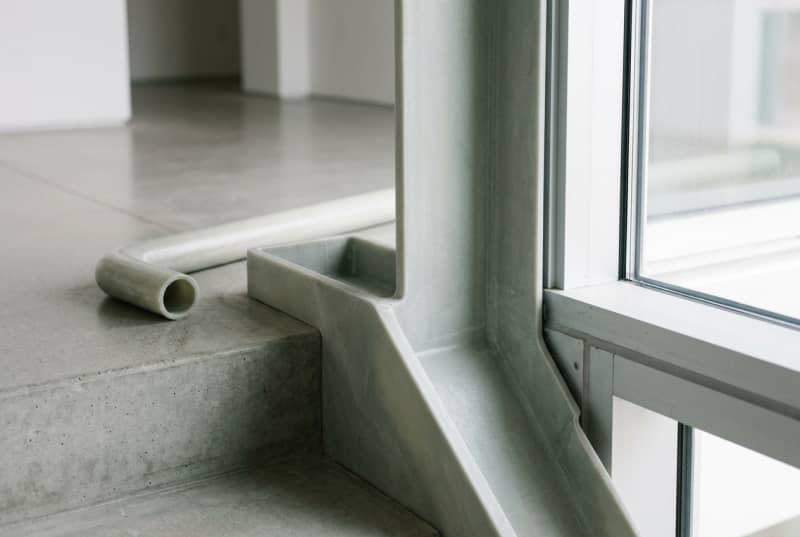
Across the United States, more engineers, purchasing teams, OEMs, contractors, and facility owners are rethinking a long-standing assumption: that metal is automatically the best choice for industrial and commercial enclosures, panels, covers, and exterior structures. In many projects, fiberglass reinforced plastic, often called FRP, offers a more practical answer when corrosion, weight, maintenance, and custom geometry matter more than tradition. Buyers in Houston, Baton Rouge, Chicago, Los Angeles, Savannah, and Newark are increasingly comparing fiberglass against aluminum, carbon steel, galvanized steel, and stainless steel because material performance is no longer judged only by upfront cost. It is judged by service life, ease of installation, field conditions, and total ownership cost.
The direct answer is simple: fiberglass makes more sense when a project faces moisture, salt, chemicals, UV exposure, complex shapes, electrical sensitivity, or a need to reduce installation weight and maintenance. Metal still has clear advantages in high-temperature duty, extreme structural loading, and applications where very high impact resistance or conductivity is required. The smartest decision comes from matching the material to the environment, the fabrication method, and the expected lifecycle of the product.
In the U.S. market, this comparison has become especially relevant in chemical processing, water treatment, HVAC, transportation, marine infrastructure, telecom, food processing, and exterior architectural applications. Product categories where fiberglass frequently replaces metal include equipment covers, ducting, tank covers, utility housings, roof screens, access panels, exterior cladding components, and specialty protective enclosures. For buyers developing a new custom product, fiberglass also opens up design possibilities that are difficult or expensive to achieve in sheet metal fabrication.
United States market context: why this comparison is accelerating
The U.S. industrial market is under pressure from multiple directions. Rising labor costs make difficult field installation more expensive. Coastal projects near the Port of Houston, Port of New Orleans, Port of Long Beach, Port of Savannah, and Port Newark face salt-laden air that shortens the life of exposed metal components. Water and wastewater facilities in states such as Florida, Texas, California, and New Jersey regularly deal with corrosive conditions, high humidity, and chemical exposure. At the same time, owners want longer maintenance intervals and lower lifecycle costs.
Fiberglass has become more attractive because it addresses several of these pain points at once. It resists many corrosive environments without requiring constant repainting or galvanic protection. It is lighter than steel, often making shipping, rigging, rooftop placement, and installation easier. It can also be molded or fabricated into shapes that would require multiple metal parts, welding operations, and secondary finishing steps.
For U.S. buyers sourcing custom components, supplier capability is equally important. A strong FRP partner should offer engineering input, mold and tooling planning, laminate design guidance, and production methods aligned with the actual use case. From early concept through repeat manufacturing, buyers increasingly want a supplier that can deliver durable custom FRP solutions with dependable quality rather than simply quote a material substitution.
| Market Driver | What Buyers Are Seeing | Why Metal Becomes Challenging | Why Fiberglass Gains Attention |
|---|---|---|---|
| Corrosion exposure | More coastal and chemical-duty installations | Rust, staining, coating failure, maintenance cycles | Inherent resistance in many wet and chemical environments |
| Labor cost | Installation crews are expensive and schedules are tight | Heavier parts increase rigging and field time | Lighter parts can reduce handling complexity |
| Customization demand | More projects need non-standard shapes and integrated features | Sheet metal often needs multiple parts and welds | Molded or fabricated FRP allows integrated geometry |
| Lifecycle focus | Owners are comparing total cost over years, not weeks | Recoating and replacement can be frequent | Lower maintenance can improve long-term value |
| Harsh outdoor use | UV, moisture, freeze-thaw, and salt are common | Surface degradation can accelerate over time | Properly designed FRP can remain stable outdoors |
| Electrical considerations | Some housings must avoid conductivity | Metal may require extra insulation strategies | Fiberglass is naturally non-conductive |
This table shows why fiberglass is not just a niche alternative. It is being considered because it solves several common U.S. project constraints at the same time, especially in outdoor, corrosive, or custom-built applications.
The line chart reflects a realistic growth pattern in U.S. buyer interest. The steady increase is driven by corrosion management, maintenance reduction, and custom product development needs rather than by short-term material fashion.
How Fiberglass Can Solve Corrosion, Weight, and Design Flexibility Problems Better Than Metal
Fiberglass often outperforms metal in three practical areas that matter to purchasing teams and engineers: corrosion resistance, lower weight, and design flexibility. These benefits are especially relevant for exposed industrial products, replacement components, and custom equipment housings.
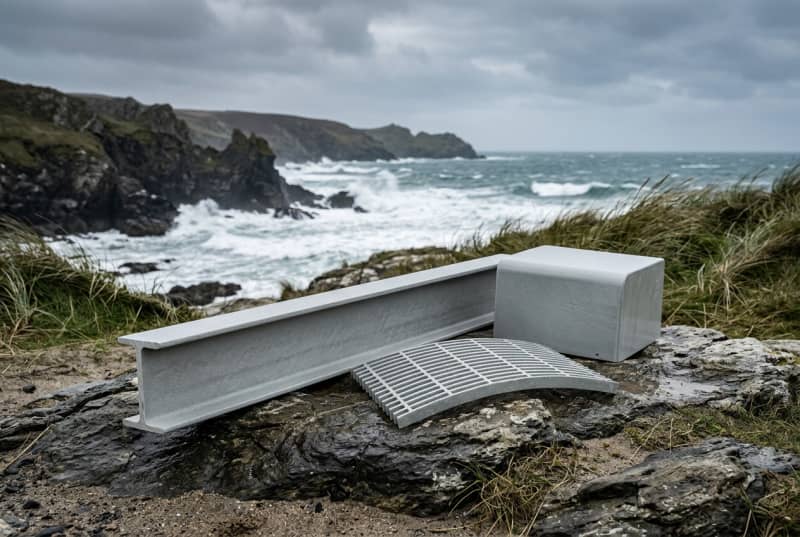
Corrosion is the most obvious advantage. Carbon steel corrodes quickly when coatings are damaged or when exposure is constant. Even galvanized steel can struggle in marine or chemical settings. Stainless steel performs better, but cost rises quickly and not every grade handles chlorides or mixed chemical exposure equally well. A properly engineered FRP laminate can offer durable performance in environments where moisture, vapors, washdown cycles, or salt air make metal maintenance expensive. This is one reason buyers evaluating a custom FRP chemical process tank cover often compare fiberglass first when they expect long-term contact with aggressive process conditions.
Weight is another major reason. Fiberglass parts are usually much lighter than steel and often lighter than thick-gauge metal assemblies designed to achieve similar stiffness. Lower weight can reduce freight costs, simplify rooftop or platform installation, and decrease the need for cranes or heavy rigging. In retrofit projects, lighter components can also reduce load concerns for existing support frames.
Design flexibility is where fiberglass becomes especially valuable in custom product development. Instead of assembling many metal pieces with welds, seams, and brackets, FRP can be designed with molded contours, flanges, ribs, mounting features, drip edges, and smooth aerodynamic or architectural surfaces. For HVAC and mechanical protection, a fiberglass HVAC equipment cover can combine weather protection, access points, and appearance requirements in one integrated structure.
Fiberglass also helps when buyers need thermal insulation benefits, electrical non-conductivity, or non-magnetic performance. Those are not universal requirements, but in certain industrial environments they reduce the need for extra layers of design complexity.
| Decision Factor | Fiberglass | Carbon Steel | Galvanized Steel | Stainless Steel |
|---|---|---|---|---|
| Corrosion resistance | Strong in many wet and chemical environments | Poor without protective coatings | Moderate, depends on zinc layer and environment | Good to excellent, grade dependent |
| Weight | Low | High | High | High |
| Custom shape freedom | High | Moderate | Moderate | Moderate |
| Need for painting or coating | Usually low | High | Moderate | Low to moderate |
| Electrical conductivity | Non-conductive | Conductive | Conductive | Conductive |
| Surface temperature transfer | Lower thermal conductivity | High | High | High |
The comparison does not mean fiberglass wins every category. It means fiberglass solves some of the most frequent field problems better than standard metal choices, particularly where rust, heavy weight, and fabrication complexity drive long-term cost.
In Which Situations Metal Still Has Advantages and When Fiberglass Makes More Sense
Metal still has clear strengths, and responsible material selection should acknowledge them. Steel and aluminum remain the better option for some conditions, particularly where very high structural loads, high temperatures, abrasion, or concentrated impact dominate the design requirements. A buyer should not switch to fiberglass simply to follow a trend. The switch should be based on actual service conditions.
Metal usually has the advantage in high-temperature service. If a component will face sustained heat beyond the resin system limits of FRP, metal is often safer and more predictable. Metal also remains a good fit where the product must carry substantial structural loads over long spans with limited deflection, or where code requirements and legacy specifications strongly favor steel design methods.
Fiberglass makes more sense in moderate-temperature environments where corrosion, wet exposure, salt, chemicals, or maintenance access are bigger concerns than maximum strength-to-volume. It is also attractive for products that need cosmetic consistency, non-conductive behavior, or custom geometry. Covers, hoods, duct housings, splash guards, process enclosures, roof equipment screens, and exterior wall-mounted components are common examples.
Applications in corrosive ventilation are a good illustration. In systems that move acidic or chemical vapors, a corrosion-resistant fiberglass exhaust duct solution can be a better fit than metal because corrosion, condensation, and chemical attack are core design risks.
| Application Condition | Metal Tends to Win | Fiberglass Tends to Win | Reason |
|---|---|---|---|
| Sustained high heat | Yes | No, unless specialized system is validated | Temperature limits are critical |
| Corrosive chemical vapor | Not always | Often yes | FRP can resist chemical attack better |
| Need for low installation weight | No | Yes | Lighter parts reduce handling burden |
| Very high structural load | Yes | Depends on design | Steel has well-known high-load behavior |
| Complex custom geometry | Moderate | High | FRP integrates shapes more easily |
| Electrical insulation requirement | No | Yes | Fiberglass is non-conductive |
This table works as a practical screening tool. If the main risk is heat or major loading, metal usually deserves first consideration. If the main risk is corrosion, weight, or geometry complexity, fiberglass should move to the front of the evaluation.
The bar chart highlights where substitution demand is strongest. Chemical processing and water treatment lead because corrosion is not a cosmetic issue there; it directly affects uptime, safety, and operating cost.
How Outdoor Exposure and Chemical Environments Affect Material Selection Decisions
Outdoor exposure and chemical contact are two of the biggest reasons projects fail when materials are selected by habit rather than environment. A component that performs well indoors in Phoenix may behave very differently on the Gulf Coast, near a fertilizer plant in Iowa, or at a treatment facility in Tampa or Corpus Christi.
Outdoor conditions include UV radiation, temperature cycling, rain, humidity, standing water, airborne pollutants, freeze-thaw stress, and salt spray. In coastal cities such as Miami, Charleston, Galveston, San Diego, and Norfolk, salt exposure can accelerate corrosion on metal fasteners, seams, and cut edges. Fiberglass is not immune to outdoor aging, but a properly designed resin system, UV-resistant surface veil, and protective finish can perform well over long service periods.
Chemical environments require even more careful review. Buyers should consider splash exposure, immersion, vapor contact, cleaning agents, pH range, solvent presence, process temperature, and the possibility of mixed chemicals. Not all fiberglass is the same. Resin selection matters. Vinyl ester, polyester, epoxy-based systems, and specialty corrosion-resistant formulations perform differently depending on the environment. The laminate schedule, barrier layer, and surface construction all influence long-term performance.
This is where technological capability matters. A qualified FRP supplier should not simply offer generic fiberglass. The supplier should be able to recommend resin systems, laminate build-up, wall thickness, reinforcement orientation, and environmental protection based on actual duty conditions. That type of engineering support is essential in demanding U.S. industrial projects.
| Exposure Type | Main Risk | Metal Concern | Fiberglass Design Response |
|---|---|---|---|
| Salt air | Accelerated corrosion | Coating breakdown and rust at edges | Use corrosion-resistant laminate and sealed details |
| UV sunlight | Surface aging | Paint fading and coating deterioration | Add UV-resistant finish and protective veil |
| Chemical vapors | Surface attack and structural degradation | Grade selection may be insufficient | Choose resin system based on chemistry |
| Washdown environments | Frequent wet cycling | Corrosion at joints and welds | Use smooth surfaces and sealed FRP construction |
| Freeze-thaw cycles | Expansion and moisture intrusion | Coating cracks can expose metal | Control laminate quality and edge sealing |
| Mixed industrial pollutants | Unexpected compatibility issues | Localized corrosion can develop quickly | Request compatibility review and testing guidance |
The explanation here is important: material selection is not only about the base material family. It is about how that material is specified, finished, and manufactured for the actual environment. Fiberglass performs best when those details are engineered rather than assumed.
The area chart shows a broad purchasing trend in the United States: more buyers now prioritize lifecycle and environmental durability over the lowest initial material price. That shift strongly favors projects where fiberglass can reduce corrosion-related maintenance.
What Cost Factors Should Be Considered Beyond the Initial Purchase Price
One of the most common mistakes in material selection is comparing fiberglass and metal only on quoted purchase price. That approach can be misleading because the lower initial quote does not always produce the lower lifecycle cost. A fair comparison should include fabrication labor, shipping, installation, coatings, maintenance, downtime, replacement frequency, and field repair complexity.
Metal may appear cheaper on day one, especially if a buyer compares fiberglass to bare carbon steel without accounting for corrosion protection, paint systems, or future recoating. But once the full installed and maintained cost is evaluated, fiberglass often becomes more competitive. In rooftop applications, lower part weight can reduce labor and lifting costs. In corrosive facilities, longer maintenance intervals can offset the higher initial part price. In custom designs, integrating multiple functions into one fiberglass assembly can eliminate secondary parts and labor.
Another hidden cost is disruption. Replacing a rusted metal cover in a plant or on a roof can require shutdowns, permits, safety planning, and labor scheduling. If fiberglass extends service life or reduces intervention frequency, the avoided disruption can be financially significant. This is especially true for process plants, utility infrastructure, and transportation facilities where downtime carries a real operating penalty.
Manufacturing capability also affects cost. A supplier with strong tooling, repeatable molding or fabrication processes, and disciplined quality control can deliver FRP parts with consistent dimensions and finish, which reduces fit-up problems in the field. For buyers launching a new product, production efficiency matters as much as material choice.
| Cost Category | Question to Ask | Metal Cost Risk | Fiberglass Cost Impact |
|---|---|---|---|
| Initial fabrication | How many parts, welds, and finishing steps are needed? | Complex assemblies raise labor cost | Integrated forms may reduce part count |
| Shipping | What does transport cost at actual packaged weight? | Heavier loads cost more to move | Lighter weight can lower freight cost |
| Installation | Will cranes or extra labor be needed? | Handling is often more difficult | Easier placement can save time |
| Protective finishing | What paint, galvanizing, or passivation is required? | Coatings add ongoing cost | Often lower finishing burden |
| Maintenance | How often will repairs or recoating happen? | Corrosion may trigger frequent work | Lower maintenance in many environments |
| Replacement cycle | How long is realistic field life? | Shorter life in harsh environments | Potentially longer service interval |
The lesson from this table is straightforward: buyers should compare delivered value, not only material invoice cost. A higher quote can still be the more economical decision if it reduces labor, maintenance, and replacement over time.
Why Fabrication Freedom Makes Fiberglass Attractive for Custom Product Development
For custom product development, fiberglass offers an advantage that sheet metal often cannot match economically: fabrication freedom. This matters when a part must do more than cover an opening. Many industrial and commercial products now need to combine structure, weather protection, appearance, access, drainage, insulation, and mounting features in one unit.
Fiberglass supports this kind of integration well. Parts can be designed with smooth contours, stiffening ribs, molded flanges, hidden fastening areas, boss locations, equipment cutouts, aerodynamic forms, and surface details that reduce assembly steps. In some cases, what would require several stamped, bent, welded, and coated metal pieces can be simplified into one FRP structure or a smaller number of subassemblies.
That design freedom is especially useful in prototype and low-to-medium volume programs. OEM buyers developing a new enclosure, panel, or protective housing often need flexibility before dimensions are finalized. A fiberglass development path can support iterative improvement while still leading to production-ready parts. This is where manufacturing capability becomes a differentiator. Buyers should look for a supplier that can handle concept support, tooling strategy, sample development, process selection, and repeatable production, not just manual fabrication.
Service capability matters too. The best FRP partners help customers refine drawings, review mounting loads, assess environmental exposure, and move from concept to production without losing design intent. For U.S. buyers, that level of support can shorten launch timelines and reduce the risk of discovering field problems after installation.
Examples of Fiberglass Replacing Metal in Covers, Panels, and Exterior Structures
Fiberglass has already replaced metal in many categories where corrosion resistance and custom shaping matter. In industrial plants, FRP covers are used over tanks, channels, mechanical equipment, and ventilation systems. In commercial facilities, fiberglass can replace metal in rooftop screens, equipment enclosures, wall panels, and specialty architectural exterior components. In infrastructure, fiberglass appears in housings, utility covers, washdown-resistant panels, and protective shrouds.
Consider a coastal wastewater facility near Jacksonville or San Diego. Metal equipment covers may look acceptable at installation but begin to show corrosion at seams, fasteners, and scratches after sustained salt exposure. A fiberglass replacement can reduce repainting and improve service life. In a chemical plant along the Gulf Coast, tank covers and duct systems often face corrosive fumes that make protective coating maintenance a recurring cost. In those conditions, fiberglass is frequently a more stable long-term option.
Exterior structures are another strong example. Roof-mounted screens, architectural housings, and facade-adjacent utility enclosures need weather resistance, low maintenance, and often a clean visual appearance. Fiberglass supports those needs while also allowing curved shapes, integrated edges, and molded consistency that can be difficult with welded sheet metal. In transport and logistics hubs from Atlanta to Dallas to the Inland Empire, fiberglass can also reduce weight where rooftop or elevated installation is a concern.
These replacements do not happen because fiberglass is universally superior. They happen because, in a large number of real applications, fiberglass solves the specific problems metal creates over time.
The comparison chart emphasizes what buyers should value in a supplier relationship. Material alone is not enough. The best project outcomes depend on engineering understanding, manufacturing discipline, and long-term program support.
What Buyers Should Ask Suppliers Before Switching Materials in a New Project
Before switching from metal to fiberglass, buyers should ask suppliers questions that go far beyond price. The first priority is performance validation. Ask what resin system is being recommended, what environment it is designed for, what temperature range it can tolerate, and whether the laminate structure is based on similar field applications. If the part will live outdoors, ask how UV resistance is addressed. If chemicals are involved, ask what exposure assumptions are being used and whether compatibility data exists.
Next, ask about structural and dimensional performance. How is stiffness achieved? What deflection criteria are being used? How are inserts, hinges, fasteners, and mounting points designed? Can the supplier provide guidance on support spacing and installation loads? These questions matter because a successful fiberglass part is engineered differently from a successful metal part.
Then review manufacturing capability. Ask whether the supplier supports prototyping, tooling development, low-volume runs, and scaled production. Ask how dimensional consistency is maintained, how surface finish is controlled, and what quality checks are standard. A supplier that can move from concept review to production planning is often more valuable than one that only quotes from drawings.
Finally, evaluate service capability. Ask about design collaboration, lead times, revision support, packaging, documentation, and communication during project launch. For U.S. buyers, dependable support can be as important as the product itself when schedules are tight and installations are phased across multiple sites.
Industries and applications where fiberglass often makes the most sense
Several industries in the United States consistently see strong value from fiberglass substitution. Water and wastewater facilities benefit because moisture, chemicals, and outdoor exposure are constant. Chemical processing plants gain from corrosion resistance and reduced maintenance around tanks, ducts, and equipment housings. HVAC and mechanical system integrators appreciate lower weight and design flexibility in outdoor covers and rooftop equipment protection.
Marine and port facilities use fiberglass because salt exposure is relentless. Food and beverage facilities may choose it in areas where washdown, hygiene, and durability matter. Telecom and utility applications benefit from non-conductive properties and weather resistance. Commercial building projects use fiberglass in specialized exterior panels and housings where appearance, low maintenance, and custom geometry are essential.
Applications that commonly fit fiberglass include tank covers, ducting, fan housings, exterior equipment covers, rooftop screens, process enclosures, access panels, washdown-resistant housings, utility boxes, protective shrouds, and custom exterior structures. In each case, the material decision should connect directly to the exposure profile, service demands, and installation constraints.
Local supplier expectations in the United States
U.S. buyers often expect faster communication, clearer production planning, and documented quality processes when selecting a custom materials partner. Whether the project serves an industrial corridor in the Midwest, a coastal chemical site on the Gulf, or a commercial development in the Northeast, supplier reliability affects purchasing decisions as much as raw material choice.
When evaluating suppliers, buyers should look for three capability areas. First, technological capability: the ability to recommend suitable resin systems, laminate construction, structural details, and environmental protection based on the actual use case. Second, manufacturing capability: the ability to translate drawings or concepts into repeatable, production-ready fiberglass parts with controlled dimensions, finish quality, and scalable output. Third, service capability: the ability to support design discussion, prototype review, schedule coordination, and problem-solving throughout the project lifecycle.
A supplier that combines these capabilities can help reduce risk when replacing metal with fiberglass, especially in new product development programs where application details evolve during the design process.
Our approach to custom FRP projects
For buyers comparing fiberglass with metal, the most valuable partner is one that can support the full path from concept to production. In practice, that means helping the customer select the right laminate strategy, shape the product for actual field use, and produce durable fiberglass components that align with the project specification and commercial goals.
On the technology side, strong custom FRP development depends on understanding corrosion exposure, structural needs, UV requirements, and the balance between weight and stiffness. On the manufacturing side, it requires disciplined tooling and production methods that create consistent, premium fiberglass products tailored to the application. On the service side, it requires collaboration during design review, prototyping, revisions, and production scheduling so the final part performs as intended in the U.S. market.
That integrated model is often the difference between a fiberglass part that merely replaces metal and one that genuinely improves the project.
FAQ
Is fiberglass always cheaper than stainless steel? Not always on initial quote, but often competitive on lifecycle cost when corrosion, maintenance, and installation weight are considered.
Can fiberglass be used outdoors in the United States? Yes, when the resin system, surface protection, and UV strategy are selected correctly for the climate and exposure level.
Does fiberglass work for custom shapes better than metal? In many cases, yes. It can integrate features and contours that would require multiple metal parts and added fabrication steps.
When should metal remain the first choice? High-temperature service, very high structural loading, and applications requiring heavy impact resistance often favor metal.
What should I send a supplier for evaluation? Provide drawings, dimensions, service temperature, chemical exposure details, outdoor conditions, mounting requirements, target quantities, and any appearance expectations.
Final Thoughts on Choosing Fiberglass as a Long-Term Alternative to Metal
Fiberglass is a practical long-term alternative to metal in many U.S. industrial and commercial applications because it addresses problems that owners repeatedly face in the field: corrosion, weight, maintenance burden, and limited design flexibility. It is not a universal replacement, and metal still deserves preference in some structural and high-temperature situations. But in environments where moisture, chemicals, salt air, outdoor aging, and custom geometry define success, fiberglass often delivers stronger lifecycle value.
Looking toward 2026, several trends are likely to strengthen this shift. More asset owners are adopting lifecycle-based procurement instead of first-cost-only purchasing. Sustainability targets are pushing designers to extend service life and reduce replacement frequency. U.S. infrastructure upgrades in water, utilities, and industrial modernization continue to favor corrosion-resistant materials. At the same time, better design tools, improved resin systems, and more disciplined custom FRP manufacturing are making fiberglass easier to specify with confidence.
For buyers starting a new project, the best approach is simple: evaluate the real environment, define the actual performance requirements, compare total ownership cost, and choose a supplier that can support design, production, and long-term reliability. When those factors are aligned, fiberglass can do more than replace metal. It can solve the reasons the metal part became a problem in the first place.