Why Exterior Projects Need Materials That Resist Weather, Water, and Corrosion
See how fiberglass resists rain, sun, and temperature swings, lowers maintenance, and helps buyers in the United States source durable custom exterior solutions.
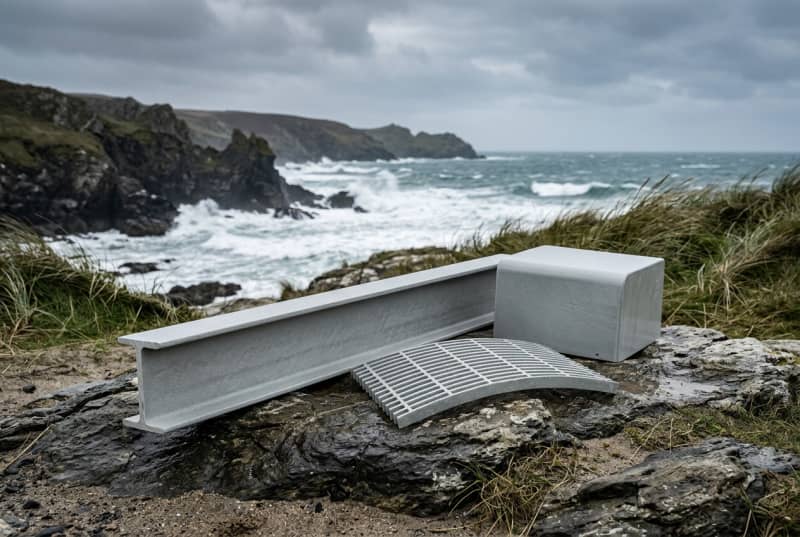
For outdoor architecture and infrastructure in the United States, fiberglass is often the practical answer when teams need durability, design freedom, and predictable long-term operating cost. In direct terms: fiberglass works well outside because it does not rust like steel, it can be engineered to resist UV and moisture, it handles many freeze-thaw cycles, and it can be shaped into custom forms that reduce joints, leaks, and maintenance points. For owners managing public spaces, campuses, mixed-use sites, transit corridors, and branded commercial environments, this combination is hard to match.
Across coastal zones, desert regions, storm-prone states, and northern freeze belts, material choices define not only how a project looks on opening day, but also how it performs 5, 10, and 20 years later. Teams in Miami and Houston think about salt air and humidity. Teams in Phoenix and Las Vegas focus on UV intensity and heat load. Teams in Chicago, Minneapolis, and Boston worry about freeze-thaw stress and de-icing exposure. Fiberglass can be specified with resin chemistry, fiber architecture, coating systems, and structural design details tuned for each local condition.
This guide is written for developers, architects, contractors, municipal buyers, and brand operators sourcing exterior components in the U.S. market. It covers market direction, product categories, engineering design choices, lifecycle economics, supplier evaluation, and 2026-forward trends in sustainability and policy. It also explains how a custom FRP partner can move from concept through production with reliable quality and lead-time control.
How Fiberglass Maintains Performance in Rain, Sun Exposure, and Temperature Changes
Fiberglass performance outdoors starts with composition. Most exterior-grade FRP combines glass fibers for strength and stiffness with resin systems that provide environmental resistance. The resin is the first shield against water ingress, UV breakdown, and chemical exposure; the fibers deliver mechanical stability under wind loads, handling loads, and repeated thermal movement. When these two are engineered correctly, fiberglass can maintain shape, surface quality, and structural integrity in variable climates.
In rain-heavy regions such as the Pacific Northwest and Gulf Coast, the key is low water absorption and robust gelcoat or topcoat systems. In high-UV regions like Arizona, New Mexico, and inland California, UV-stabilized resins and pigment strategies reduce chalking and color fade. In northern states where temperatures can move from summer highs to sub-freezing winters, fiberglass’s lower thermal conductivity and stable coefficient behavior can improve dimensional consistency, especially when joint design and fastening details are correctly specified.
The U.S. outdoor materials market has increasingly shifted toward lifecycle-driven decision making rather than lowest upfront cost. Owners now ask: How much downtime, repainting, corrosion treatment, and replacement will this material require? Fiberglass is winning where the answer needs to be predictable.
| U.S. Climate Condition | Typical Stress on Exterior Components | Fiberglass Design Response | Recommended Resin/Finish Direction | Expected Benefit | Common Locations |
|---|---|---|---|---|---|
| Coastal salt air | Corrosion acceleration on metals | Non-rusting FRP laminate and sealed edges | Vinyl ester barrier layer + UV topcoat | Lower corrosion risk and fewer replacements | Miami, San Diego, Charleston |
| High rainfall | Moisture penetration and staining | Low-porosity gelcoat and integrated drainage details | Isophthalic or vinyl ester with anti-stain finish | Stable appearance and reduced mold-prone zones | Seattle, Portland, New Orleans |
| High UV radiation | Color fade and surface chalking | UV-stabilized resin with pigment package | Aliphatic polyurethane clear/topcoat | Longer color retention | Phoenix, Las Vegas, El Paso |
| Freeze-thaw cycles | Cracking at joints and edges | Controlled laminate schedule and flexible joint design | Toughened resin + elastic sealants | Less seasonal stress damage | Chicago, Minneapolis, Buffalo |
| High wind exposure | Deflection and fastener pull-out | Core reinforcement and load-distributed anchors | Engineered laminate with local thickening | Higher wind resistance | Houston, Tampa, Atlantic coast |
| Urban pollution | Surface soiling and cleaning frequency | Smooth finish and easy-wash geometry | Non-porous, low-gloss protective topcoat | Faster maintenance cycles | Los Angeles, New York City, Dallas |
The table shows why fiberglass is not a single generic material choice: performance is strongly tied to resin chemistry, coating strategy, and detailing decisions. Teams that align design with local weather data usually see better service life and fewer maintenance surprises.
This growth trend reflects stronger demand from infrastructure upgrades, outdoor hospitality, campus renovations, and branded commercial spaces where durability and design complexity must coexist.
Why Fiberglass Is Often Chosen Over Metal for Long-Term Outdoor Installations
Metal remains essential in many structural systems, but in exposed exterior components, fiberglass often delivers superior lifecycle value. The reason is straightforward: metal performance is frequently coating-dependent, and once scratches, edge exposure, or galvanic conditions appear, deterioration can accelerate. Fiberglass, by contrast, is inherently corrosion-resistant and does not rely on sacrificial rust behavior to protect itself.
Another advantage is geometry. Complex exterior forms in aluminum or steel can require many welds, bends, and seam treatments, each representing potential weak points over time. FRP allows molded curvature, integrated ribs, and monolithic shapes that reduce fastener count and water entry paths. This is especially useful for canopies, cladding features, wayfinding structures, and decorative screens where both appearance and durability matter.
In long-term installations near ports and logistics hubs such as Port Houston, the Port of Los Angeles, Port of Long Beach, and the Port of Savannah, exposure to salt-laden air and industrial pollutants raises maintenance risk for metals. Fiberglass is frequently selected to avoid repeat repainting cycles and corrosion control programs.
| Comparison Factor | Fiberglass (FRP) | Carbon Steel | Aluminum | Stainless Steel | Long-Term Owner Impact |
|---|---|---|---|---|---|
| Corrosion resistance | High, non-rusting | Low without coating maintenance | Moderate, may pit in marine zones | High but grade-dependent | Lower inspection and repair frequency with FRP |
| Weight | Low to moderate | High | Low | High | Easier transport and installation planning |
| Design flexibility | High for custom molded forms | Moderate | Moderate to high | Moderate | Supports brand-specific architecture |
| Thermal conductivity | Low | High | High | High | Better touch safety and less thermal bridging |
| Maintenance burden | Typically low | Often high outdoors | Moderate | Moderate | Can reduce operating budgets over time |
| Color/finish integration | Built-in pigment or topcoat options | Usually paint-dependent | Anodize/paint options | Surface treatment needed for color effects | Improves long-term visual consistency |
This comparison does not mean fiberglass replaces metal in every case. It means that for many exposed, design-oriented, or corrosion-prone components, FRP can deliver a better ownership profile when specified and manufactured correctly.
The bar chart highlights where durability plus aesthetics drive material preference. Hospitality and retail environments show strong adoption due to brand design needs and maintenance sensitivity.
Common Outdoor Fiberglass Products Used in Architecture, Landscape, and Urban Projects
In the United States, fiberglass has moved from niche use to mainstream use in many exterior categories. Architects and planners now specify FRP for façade accents, decorative screens, shade structures, urban furniture, monument elements, and protective enclosures. The ability to achieve custom geometry without heavy fabrication penalties is a major reason.
For architecture-focused projects, decorative screen systems are common where teams need controlled transparency, visual texture, and weather durability. A practical reference is this type of custom FRP decorative screen panel solution, often used in mixed-use developments, hospitality terraces, and privacy zones.
In landscape and public realm work, FRP shade structures are often selected for parks, educational campuses, and pedestrian nodes because they combine sculptural form with low corrosion risk. A typical implementation path can be seen in this FRP shade pavilion canopy application.
For branding and wayfinding, fiberglass cladding around signage and identity monuments provides durable shape control and finish consistency. This is especially useful in high-traffic corridors and retail frontages; for example, a fiberglass monument sign cladding approach can support long-term visual quality with fewer repaint cycles.
| Product Type | Primary Use | Typical U.S. Project Context | Key Performance Requirement | Customization Potential | Maintenance Profile |
|---|---|---|---|---|---|
| Decorative façade screens | Shading, privacy, identity | Hotels, offices, mixed-use blocks | UV stability and color retention | High (pattern, perforation, color) | Low to moderate cleaning |
| Shade pavilions/canopies | Comfort and weather cover | Parks, campuses, plazas | Wind resistance and surface durability | High (curvature, span, lighting integration) | Periodic washing |
| Monument sign cladding | Brand visibility | Retail centers, corporate entrances | Finish consistency and impact tolerance | High (3D form, logo detailing) | Low |
| Planters and site furnishings | Landscape function | Streetscapes and rooftop decks | Moisture resistance | Medium to high | Low |
| Utility enclosures | Equipment protection | Transit and municipal sites | Corrosion and weather sealing | Medium | Low |
| Acoustic and barrier panels | Noise and screening control | Roadside and rail-adjacent projects | Structural stability in wind | Medium | Low to moderate |
| Public art forms | Placemaking and identity | Civic districts and waterfronts | Shape precision and coating durability | Very high | Low to moderate |
| Transit shelter components | User protection and branding | Bus rapid transit and station upgrades | Impact and weather durability | High | Moderate, predictable |
The product mix above shows why fiberglass is relevant across architecture, landscape, and urban systems. It serves as both a technical and design material, allowing project teams to solve weather exposure challenges while meeting visual expectations.
How Surface Finish and Structural Design Affect Outdoor Product Lifespan
Outdoor lifespan is rarely decided by material alone. It is decided by a chain of design decisions: laminate architecture, reinforcement orientation, local thickening at mounting points, edge sealing, drainage paths, and surface finish chemistry. Even a high-quality FRP part can fail early if water traps, sharp stress transitions, or incompatible fastener details are ignored.
Surface finish is especially important in public-facing projects. Gelcoats offer integrated protection and color but may need topcoat upgrades in high-UV regions. Polyurethane topcoats can improve color retention and graffiti cleanability. Textured finishes can hide minor scratches but may retain dirt if not designed for easy wash-down.
Structural design also matters for safety and service life. Outdoor components should be checked for wind load, impact risk, thermal movement, and fatigue from repeated use. In high-footfall areas such as transit hubs in New York, Washington, and Chicago, mounting interfaces often determine whether a component remains stable over years of vibration and use.
| Design Element | Best Practice | Failure Risk if Ignored | Outdoor Lifespan Impact | Inspection Priority | Typical Adjustment |
|---|---|---|---|---|---|
| Edge treatment | Seal all cut edges | Moisture ingress | High | High | Reseal edges during fabrication |
| Mounting zones | Add local reinforcement pads | Crack initiation near bolts | High | High | Increase laminate thickness locally |
| Drainage geometry | Eliminate standing-water pockets | Staining and freeze damage | Medium to high | Medium | Add slope and drain path |
| UV protection | Use UV-stable topcoat system | Chalking and color shift | Medium | Medium | Upgrade to high-performance coating |
| Joint compatibility | Use flexible, weather-rated sealants | Joint separation | Medium | Medium | Specify compatible sealant set |
| Surface texture | Balance aesthetics and cleanability | Dirt retention | Medium | Low to medium | Switch to low-porosity finish |
Each row represents a practical design lever. Teams that review these factors at schematic and shop drawing stages generally see longer service intervals and better visual outcomes.
The area trend suggests a clear market shift: more U.S. projects are demanding coatings that combine weather endurance with lower environmental impact, a trend expected to accelerate beyond 2026.
What to Consider When Customizing Fiberglass Products for Public or Commercial Use
Customization is one of fiberglass’s strongest advantages, but custom freedom should be managed through a disciplined specification process. For public and commercial sites, project teams should define performance targets before discussing form. This includes wind and impact requirements, flame/smoke expectations where relevant, vandal resistance, accessibility clearances, and cleaning methods.
In municipalities and institutional projects, procurement officers increasingly require documentation packages that include drawings, material data, quality checkpoints, and installation guidance. If the component is part of a public interface, mock-ups should be reviewed in real daylight conditions to confirm color, reflectivity, and tactile qualities.
Customization should also account for logistics. Large one-piece forms can reduce field seams but may face transport constraints based on route and crane access. In dense urban corridors such as Manhattan, downtown Boston, or San Francisco, modular segment design may improve installation speed and reduce street closure time.
| Customization Decision | Question to Ask | Why It Matters | Typical U.S. Requirement Context | Risk if Underspecified | Recommended Action |
|---|---|---|---|---|---|
| Geometry complexity | Can geometry be installed in site constraints? | Controls transport and crane plan | Urban streets and tight campuses | Delays and redesign | Prototype critical modules early |
| Surface finish level | What gloss and texture match project goals? | Affects cleaning and visual consistency | Hospitality and retail fronts | High cleaning cost | Approve finish samples in outdoor light |
| Color strategy | Pigmented gelcoat or topcoat system? | Impacts fade behavior and repair method | Brand-driven sites | Visible mismatch over time | Set color tolerances and repair protocol |
| Structural attachment | How are loads transferred at anchors? | Prevents crack formation | High-wind zones | Premature failures | Engineering review of anchor interfaces |
| Fire performance | Is a fire-retardant resin needed? | Supports code and safety compliance | Transit/public occupancy areas | Approval obstacles | Specify code-aligned resin package |
| Maintenance plan | Who cleans and how often? | Defines lifecycle cost | Municipal and campus operations | Fast appearance decline | Include O&M schedule in handover |
| Documentation depth | What QA records are required? | Supports procurement and warranty clarity | Public bidding and audits | Disputes after installation | Request lot traceability and inspection logs |
Public and commercial buyers get better outcomes when customization decisions are tied to measurable project conditions rather than only visual preference.
Why Maintenance Costs Can Be Lower with Properly Designed Fiberglass Components
Maintenance savings with fiberglass come from reduced corrosion treatment, longer finish stability, and fewer replacement events from moisture-related degradation. However, these savings only appear when design, fabrication, and installation are aligned. Poorly designed FRP can still incur avoidable maintenance. Well-designed FRP can significantly lower the total cost of ownership.
For example, in coastal hospitality projects, metal architectural accents often require recurring repainting and localized corrosion repair. Equivalent FRP elements with UV-stable finishes usually need periodic cleaning and occasional minor touch-up only. In civic plazas, monolithic FRP forms can reduce seam maintenance that would otherwise be needed in multi-part metal assemblies.
Case patterns from U.S. urban projects show similar themes:
- A Gulf Coast mixed-use site reduced facade feature maintenance visits after replacing corroding metal decorative panels with FRP alternatives designed for salt exposure.
- A Southwest municipal park improved shade structure appearance retention over multiple summers by switching to UV-optimized fiberglass canopies.
- A Midwest transit-adjacent project lowered winter damage repairs by using FRP components with improved drainage and freeze-thaw detailing.
| Component Scenario | Traditional Maintenance Cycle | FRP Maintenance Cycle | 10-Year Cost Pressure Trend | Operational Disruption | Owner Benefit |
|---|---|---|---|---|---|
| Decorative exterior panels | Frequent repaint and corrosion spot repair | Scheduled wash + minor touch-up | Lower with FRP | Reduced access equipment use | Lower OPEX volatility |
| Canopy fascias | Joint and coating repairs | Periodic inspection and wash | Lower with FRP | Fewer closure windows | Better user continuity |
| Monument signage shells | Rust control and repaint | Low-frequency surface care | Lower with FRP | Minimal disruption | Consistent brand appearance |
| Public seating surrounds | Corrosion and edge treatment | Cleaning and seal checks | Moderately lower | Short maintenance windows | Improved durability in use |
| Planter walls | Moisture damage repair in metal systems | Routine cleaning | Lower with FRP | Lower seasonal repair demand | Budget predictability |
| Transit enclosure skins | Coating renewal cycles | Inspection-led preventive care | Lower to similar depending on design | Fewer unscheduled repairs | Higher asset uptime |
The explanation is simple: maintenance cost is not only about material durability; it is about how often owners must mobilize labor, traffic control, lifts, permits, and shutdowns. Fiberglass can reduce those recurring events when specified for local exposure and realistic use patterns.
How to Choose a Supplier for Durable Outdoor Fiberglass Solutions
Supplier choice can determine whether a project delivers long-term value or repeated remediation. In the U.S. market, a reliable fiberglass supplier should combine engineering depth, production discipline, and transparent quality systems. Buyers should evaluate not only unit price but also risk posture: rework risk, lead-time risk, finish inconsistency risk, and warranty ambiguity risk.
For regional delivery planning, it helps to work with suppliers experienced in shipping to major trade and construction corridors such as Los Angeles/Long Beach, Houston, Savannah, New York/New Jersey, and inland distribution hubs near Chicago and Dallas. Logistics expertise matters when components are oversized, fragile at edges, or finish-sensitive.
The comparison framework above helps procurement teams evaluate suppliers against measurable criteria rather than marketing claims alone.
| Supplier Evaluation Category | What Strong Suppliers Provide | Warning Sign | Why It Matters in U.S. Projects | Verification Method | Weight in Decision (%) |
|---|---|---|---|---|---|
| Design engineering | Load-aware design and detailing support | Only quoting from sketches | Prevents field-fit and performance issues | Review stamped calculations where needed | 20 |
| Material system control | Documented resin/fiber/finish selection | Vague material language | Drives weather resistance and durability | Request datasheets and batch records | 18 |
| Manufacturing consistency | Repeatable process with QC checkpoints | Large variation between samples | Reduces rework and schedule risk | Factory audit and first-article review | 18 |
| Lead-time reliability | Clear milestone planning and status updates | Frequent timeline changes | Critical for phased site openings | Check historical delivery performance | 14 |
| Documentation package | Installation guides and QA traceability | Limited handover information | Important for public/commercial owners | Sample turnover pack review | 15 |
| Post-install support | Responsive warranty and maintenance guidance | Support ends at shipment | Protects lifecycle value | Service-level commitments | 15 |
Use this weighted scorecard to compare bidders with the same discipline used for structural, MEP, and facade packages. It is one of the most effective ways to avoid hidden lifecycle costs.
Final Advice for Businesses Sourcing Fiberglass for Exterior Applications
If your organization is sourcing fiberglass for outdoor use in the United States, prioritize lifecycle outcomes over lowest bid price. Define the exposure environment, specify performance metrics, validate samples under realistic conditions, and choose partners with proven process control. When these steps are followed, fiberglass can provide strong value across architecture, landscape, and urban infrastructure programs.
Industry demand is broad and still growing. Real estate developers use FRP for identity and façade accents. Municipal agencies use it for resilient public realm assets. Universities use it for durable, design-forward campus spaces. Transportation and logistics operators use it where corrosion and maintenance interruption are unacceptable. Applications range from shade systems and cladding shells to wayfinding structures and custom exterior assemblies.
For 2026 and beyond, three trends are shaping buying decisions: stricter sustainability expectations, higher documentation standards in procurement, and stronger demand for resilient materials in climate-stressed regions. Teams are increasingly asking for lower-VOC systems, longer service intervals, repairability planning, and clearer end-of-life pathways. Policy and investor pressure around environmental performance will continue influencing specifications in commercial and public projects.
Technological capabilities that matter
Look for partners that can convert design intent into engineered FRP systems, not only molded shapes. This includes digital modeling for fit and load paths, laminate optimization by use case, and finish systems selected for local UV and moisture conditions. Advanced suppliers can support prototyping, performance-oriented detailing, and integration of lighting, hardware, and connection interfaces into a cohesive assembly strategy.
Manufacturing capabilities that reduce risk
Consistent production is essential. High-performing manufacturers control tooling quality, resin handling, curing conditions, dimensional tolerances, and finish application in a repeatable workflow. They can scale from pilot runs to larger programs while maintaining part-to-part consistency. For U.S.-bound projects, strong packaging, routing, and delivery planning across port and inland freight networks are also critical to protect finish quality and schedule certainty.
Service capabilities that protect lifecycle value
Strong service extends beyond fabrication. The right partner supports design coordination, clear submittals, pre-install guidance, and after-sales response. Teams should expect practical maintenance instructions, touch-up recommendations, and rapid issue resolution pathways. This service layer often decides whether the initial product advantage translates into long-term operating savings.
Local sourcing and regional execution checklist
When comparing options, match supplier strengths to project geography and execution constraints. Coastal projects may require added corrosion and UV measures. Northern projects may need freeze-thaw detailing emphasis. Dense downtown projects may require modular packaging and off-hour installation planning. Regional experience in places like Southern California, the Gulf Coast, the Northeast corridor, and the Great Lakes region can significantly improve execution reliability.
FAQ
1) Is fiberglass always better than metal outdoors?
Not always. For many exposed non-primary components, fiberglass offers better corrosion and maintenance performance. But final selection should follow structural, code, and lifecycle analysis for the specific application.
2) How long do outdoor fiberglass components usually last?
Service life depends on design and exposure. Properly engineered systems with suitable finish packages can provide long performance periods with routine maintenance, especially compared with corrosion-prone alternatives.
3) Can fiberglass match brand colors accurately?
Yes. With controlled pigment and coating systems, FRP can achieve strong color consistency. For critical branding, define tolerances and approve physical samples under outdoor lighting conditions.
4) Is custom fiberglass only for large projects?
No. While large civic and commercial programs are common, smaller projects can also benefit when unique geometry, weather resistance, or reduced maintenance is needed.
5) What is the most important buying step?
Start with a clear performance brief: weather exposure, structural expectations, finish requirements, code considerations, and maintenance targets. Then evaluate suppliers against those criteria with a weighted scorecard.
6) What should businesses do right now in 2026?
Plan projects with lifecycle metrics from day one, request environmental and quality documentation early, and select suppliers that can support concept-to-production execution with measurable quality control.
For businesses planning exterior installations in the U.S., fiberglass is most effective when sourced as a complete engineered solution rather than a commodity part. With the right design, supplier, and maintenance strategy, it can deliver durability, aesthetics, and cost stability in harsh outdoor environments.