Custom FRP Medical Equipment Housings
Custom fiberglass housings turn your equipment styling into a coordinated set of curved covers, operator fascias and service panels. We develop the molded shape and panel divisions around your chassis, then match the visible surfaces to your color, gloss and texture reference. The same approved component design supports prototype covers and repeat sets for OEM assembly.
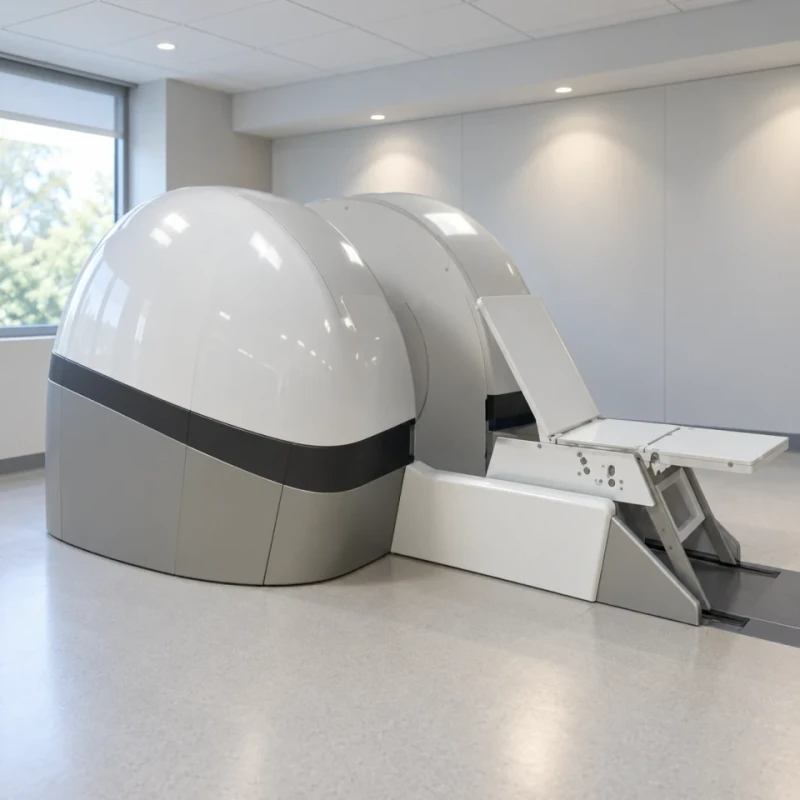
Equipment assembly reference illustrating rounded main covers and lower shell joints. Your chassis model determines the cover shape and splits; the patient table and internal device systems are separate.
Image credit: ·
Housing parts for your equipment
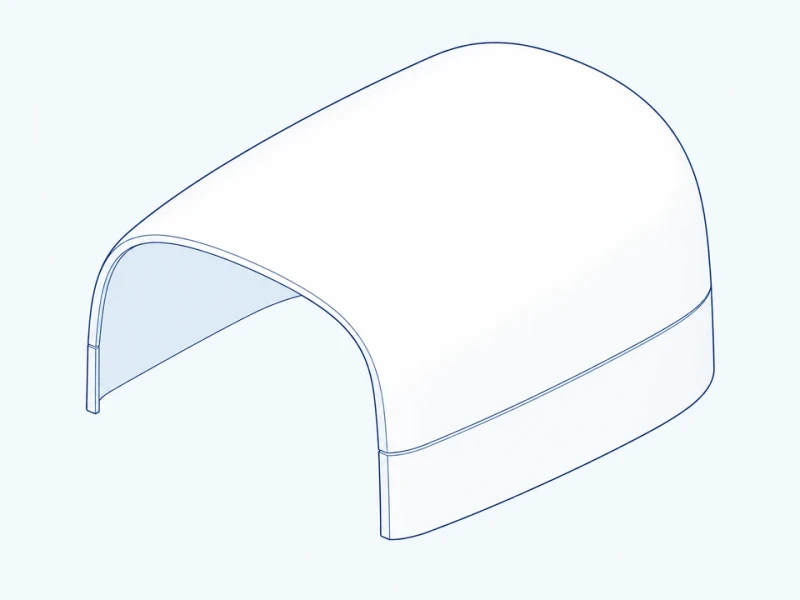
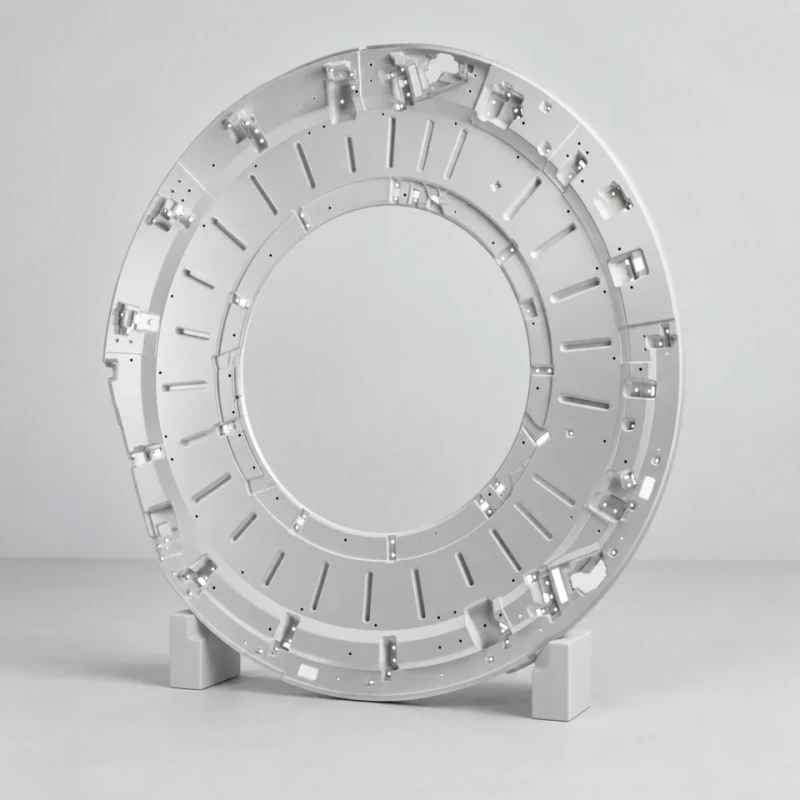
Rounded primary shell
This rounded main cover has its lower edge shaped to join your equipment base.
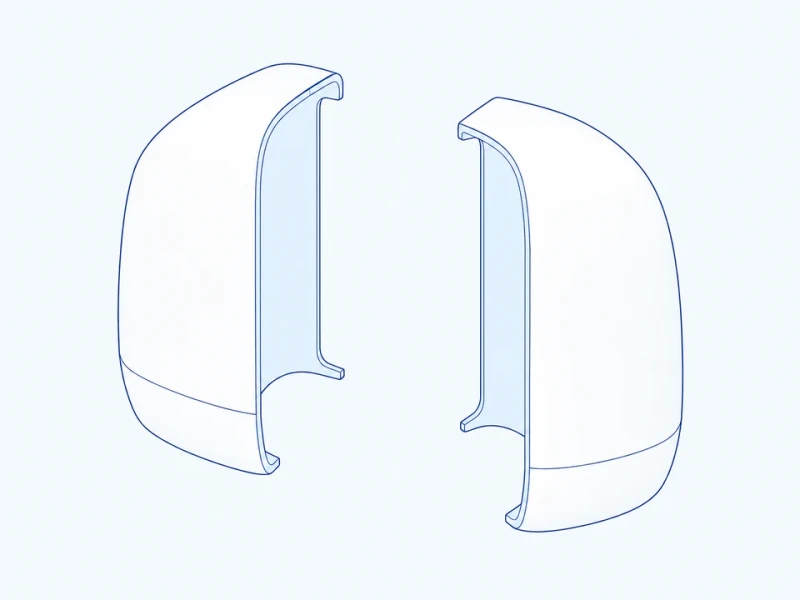
Paired side covers
The matching left and right covers enclose the sides and leave the center open for assembly.
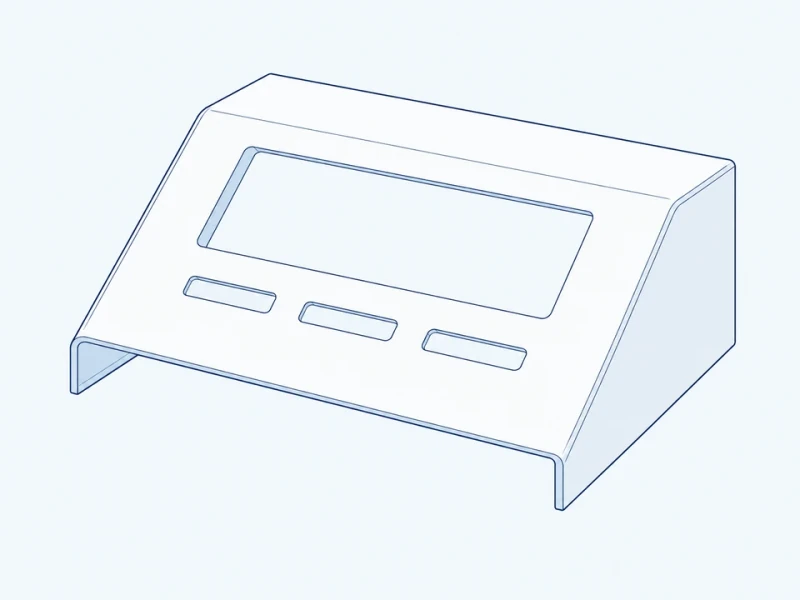
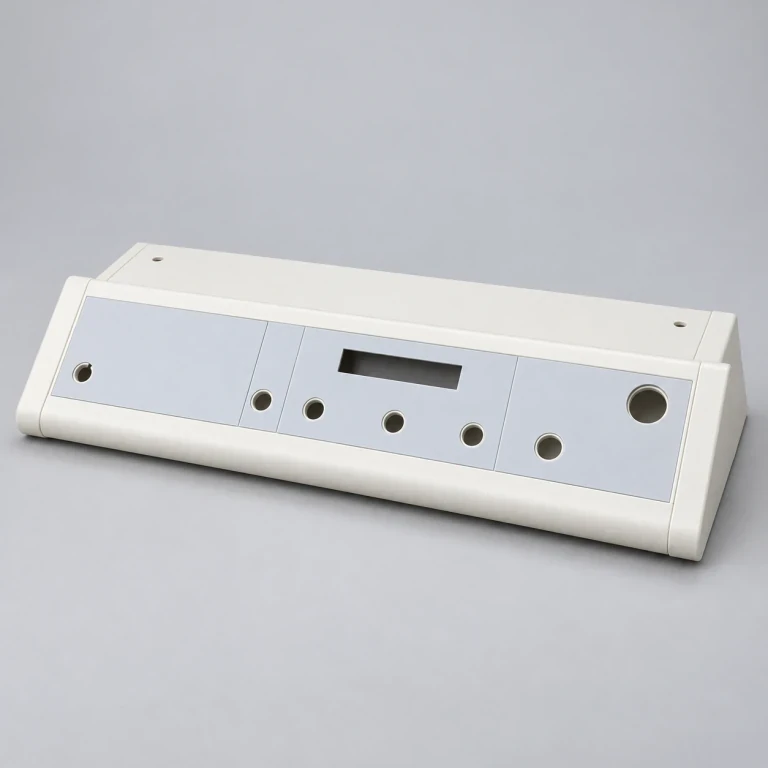
Shaped operator fascia
This angled operator panel has openings for your display and controls.
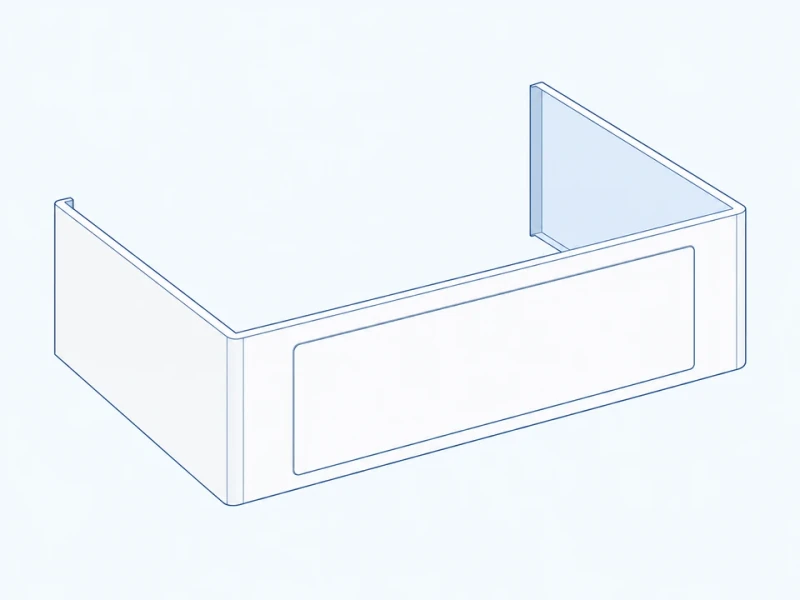
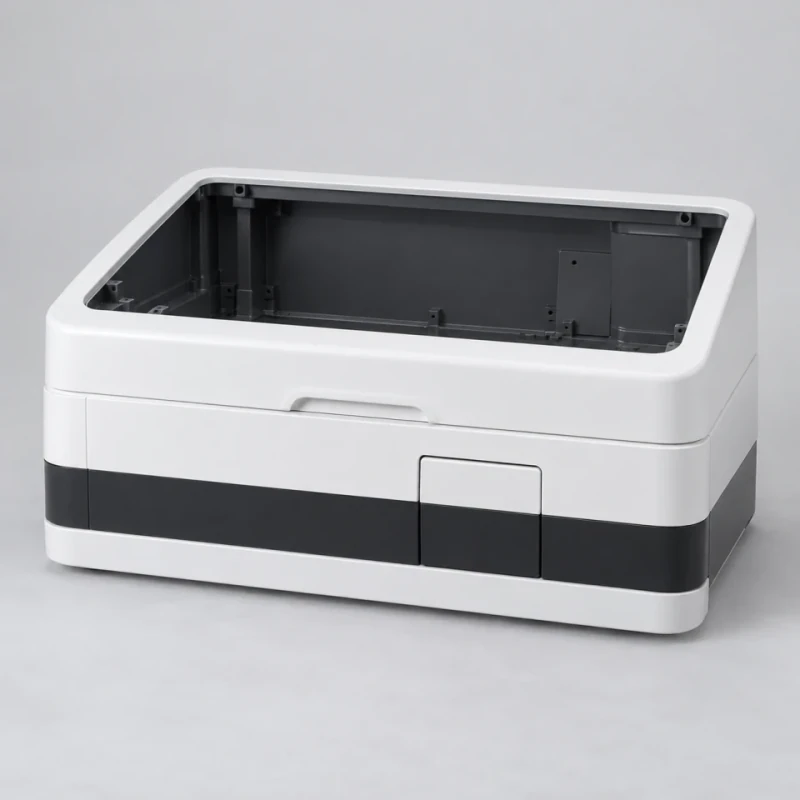
Lower service skirt
The lower skirt covers the base and has an access panel for service.
Customize the equipment housing
Your equipment's exterior design
We mold broad curves, recessed faces and returned edges from your styling model, keeping the cover set consistent with the device's intended appearance.
Panels arranged for assembly and service
A main shell, separate fascias and removable side panels can be combined around your equipment package so assembly and routine access suit the device layout.
A shared surface appearance across the cover set
Color boundaries, surface sheen and visible joining edges follow an agreed appearance reference, with mounting preparation and material requirements defined for the supplied components.
Medical housing references
Housing size and cover depth
The front view marks the housing's overall width and height. A separate open-back section shows outside cover depth from the front face to the rear rim; this is not the space available for internal equipment.
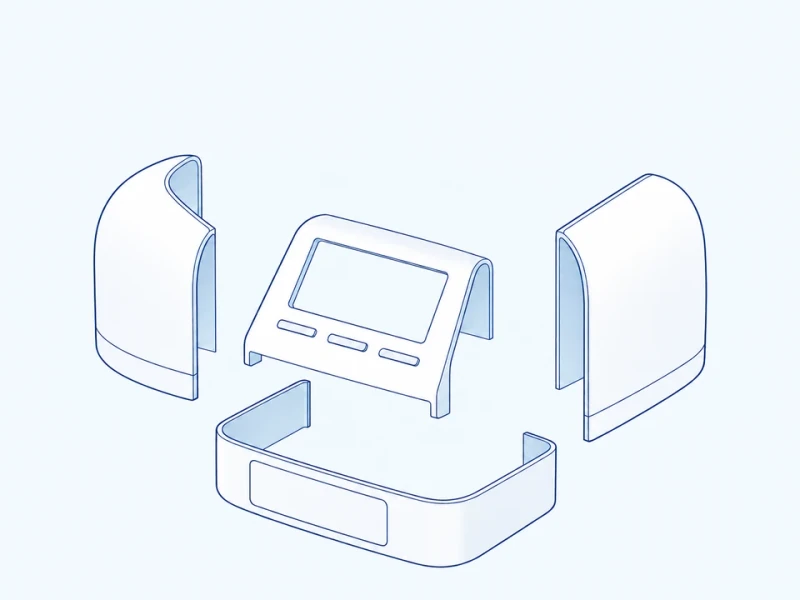
Paired sides, operator face and skirt
Left and right side covers, an angled operator fascia and a lower service skirt are molded as separate pieces with matching edges. One panel can come off for service without removing the whole shell.