Expert FRP Manufacturer

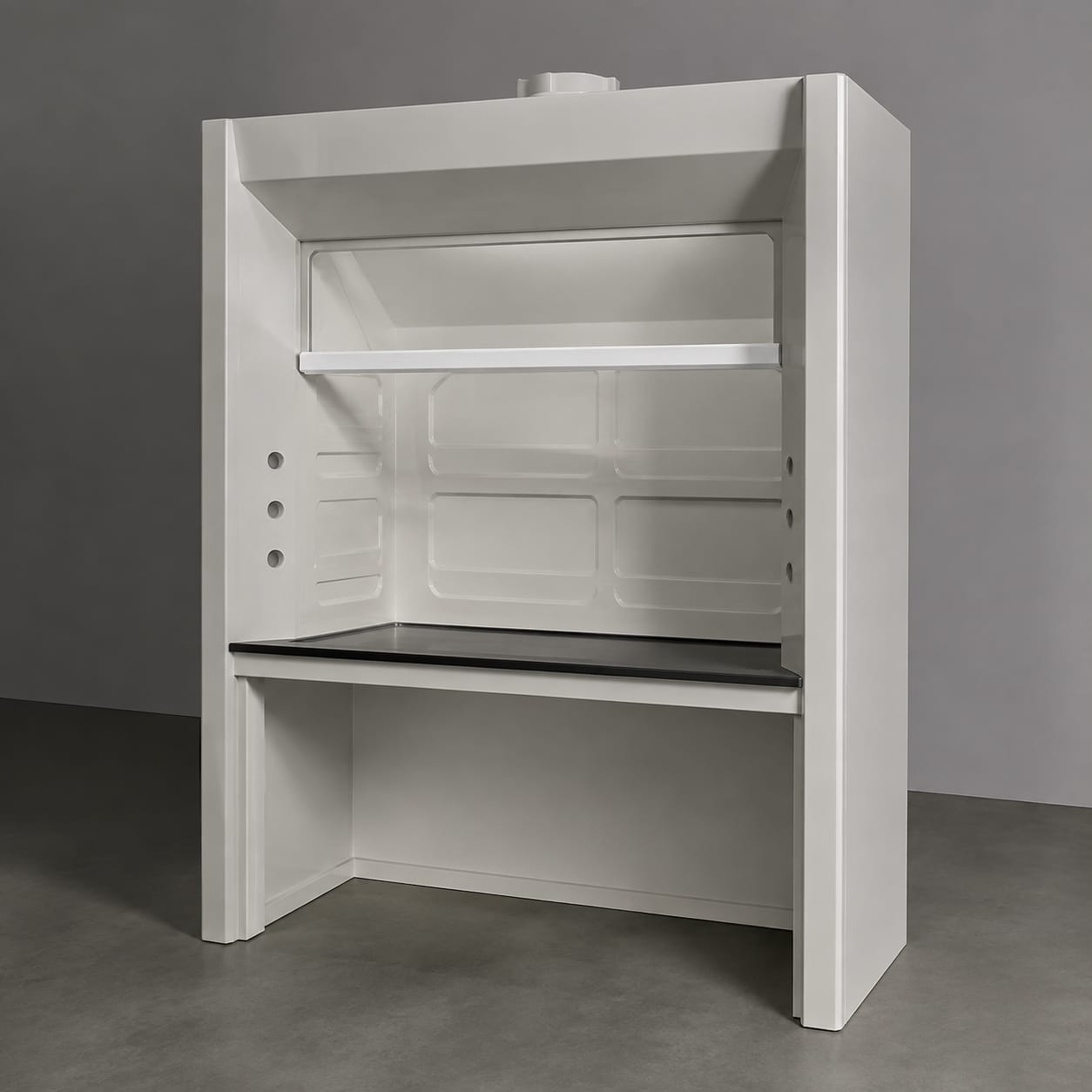
FRP Laboratory Fume Hood Shell

This custom fume hood shell serves research, education, and industrial laboratory installations. We shape it around hood envelope, sash opening, worktop relationship, service voids, and outer profile, then develop the composite build for the specified mating parts and operating conditions.

FRP Laboratory Fume Hood Shell

Production Scope

Custom Manufacturing

Material

FRP Composite

Finish

Project-Specific Coating

Order Type

Prototype or Batch

How we make it

Chemical List, Sash, and Exhaust Review to Duct, Liner, and Casework Fit Check

We first establish the working envelope and service conditions, then apply molded FRP sections with reinforced sash, duct, service, and casework connection zones. Final checks cover sash opening, duct location, liner and worktop fit, service entries, casework interface, and finish.

01

Chemical List, Sash, and Exhaust Review

We review hood envelope, sash opening, worktop relationship, service voids, and outer profile in the context of research, education, and industrial laboratory installations. The same review records the declared chemical list, concentration, temperature, cleaning regime, exhaust concept, and laboratory use and any customer-controlled acceptance criteria.

  • Define hood envelope, sash opening, worktop relationship, service voids, and outer profile
  • Record the declared chemical list, concentration, temperature, cleaning regime, exhaust concept, and laboratory use
02

Hood-Shell Molding and Service-Zone Build

The part is produced using molded FRP sections with reinforced sash, duct, service, and casework connection zones. Particular care is given to duct collar, baffle or liner connection, utility penetrations, base casework, lighting, and maintenance access so later drilling, assembly, and service remain practical.

  • Apply molded FRP sections with reinforced sash, duct, service, and casework connection zones
  • Build for duct collar, baffle or liner connection, utility penetrations, base casework, lighting, and maintenance access
03

Duct, Liner, and Casework Fit Check

Before packing, the agreed inspection covers sash opening, duct location, liner and worktop fit, service entries, casework interface, and finish. Results are recorded to the level specified in the purchase package, without implying system certification.

  • Check sash opening, duct location, liner and worktop fit, service entries, casework interface, and finish
  • Protect the finished fume hood shell for shipment

Scope at a glance

Applications + Custom Options

Applications

Where this fume hood shell adds value

This fume hood shell is intended for a corrosion-conscious outer shell for a buyer-designed extraction assembly. It is most relevant when hood envelope, sash opening, worktop relationship, service voids, and outer profile must work with duct collar, baffle or liner connection, utility penetrations, base casework, lighting, and maintenance access under the declared chemical list, concentration, temperature, cleaning regime, exhaust concept, and laboratory use.

  • Built for research, education, and industrial laboratory installations
  • Suited to a corrosion-conscious outer shell for a buyer-designed extraction assembly
  • Defined by hood envelope, sash opening, worktop relationship, service voids, and outer profile
  • Evaluated against the declared chemical list, concentration, temperature, cleaning regime, exhaust concept, and laboratory use

Custom options

Options for the fume hood shell

Buyers can define hood envelope, sash opening, worktop relationship, service voids, and outer profile. The quotation can also include duct collar, baffle or liner connection, utility penetrations, base casework, lighting, and maintenance access, plus surface, inspection, quantity, and packing requirements appropriate to the program.

  • Shape and envelope: hood envelope, sash opening, worktop relationship, service voids, and outer profile
  • Assembly details: duct collar, baffle or liner connection, utility penetrations, base casework, lighting, and maintenance access
  • Service conditions: the declared chemical list, concentration, temperature, cleaning regime, exhaust concept, and laboratory use
  • Visible finish, color or weave intent, inspection records, packing, and order quantity

Browse nearby applications using the same category and manufacturing approach.

Need to know

Common buyer questions

Which chemical and exhaust data should be supplied?

Provide the chemical list and concentrations, temperatures, cleaning regime, exhaust flow and pressure, duct and baffle layout, sash operating range, containment criteria, utility penetrations, and current hood and worktop drawings. The buyer's laboratory-safety authority should define the complete performance requirements.

Can the shell fit our sash, liner, and worktop system?

Yes, where the supplied assembly data supports it. We review duct collar, baffle or liner connection, utility penetrations, base casework, lighting, and maintenance access and return any unresolved fit or access question before the build is released.

Does the shell determine the complete hood's containment performance?

No. Containment depends on the complete hood, including sash, liner, baffles, exhaust system, controls, room airflow, and installation. We manufacture the shell to buyer-controlled drawings; final containment testing, certification, and laboratory suitability remain the buyer's responsibility.