Border Control Booths
This checkpoint cabin brings lane observation and document handover into the officer's workspace. The fiberglass body can have service windows on one or two sides, with sill heights matched to the vehicle-window range and staff access arranged on a separate face.
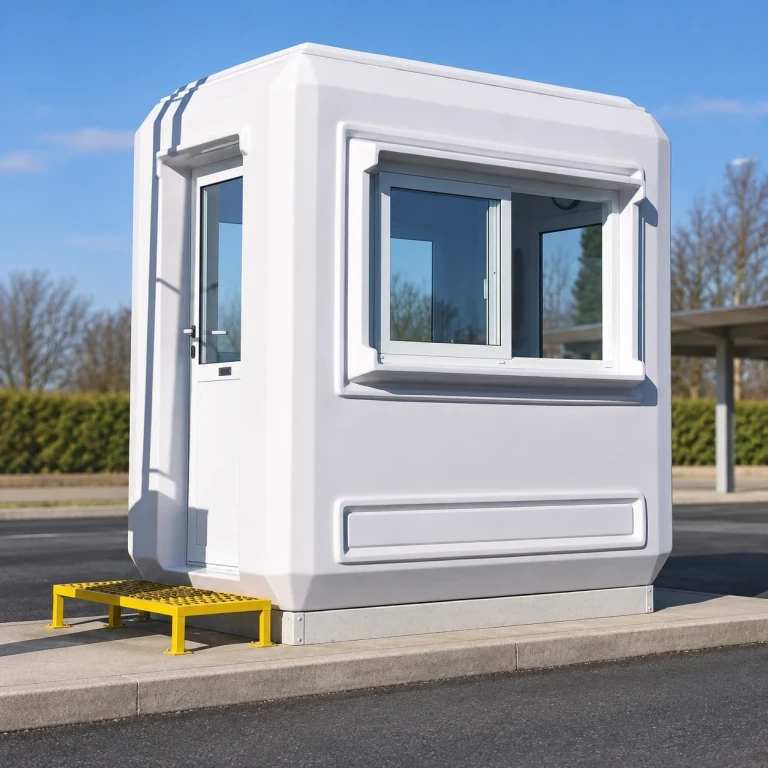
White fiberglass observation cabin with narrow window, glazed staff door and separate entry step.
Image credit: ·
Checkpoint-booth layouts
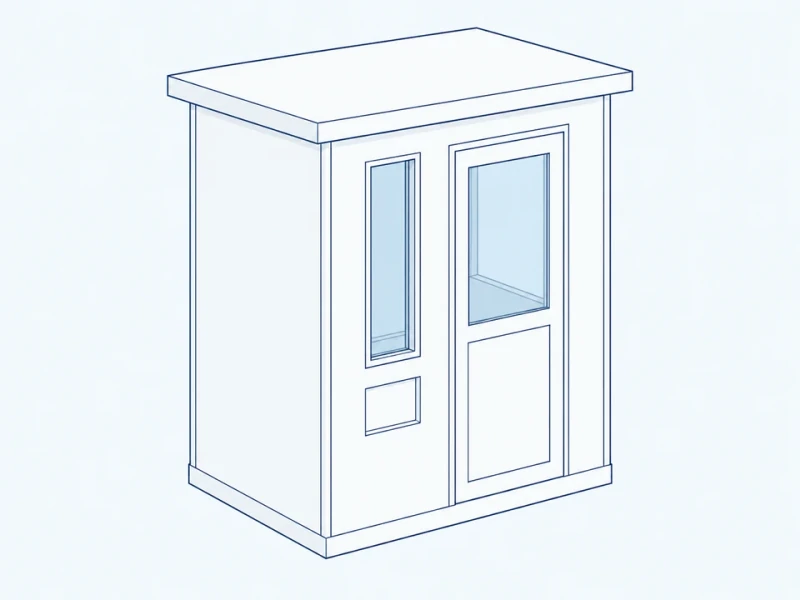
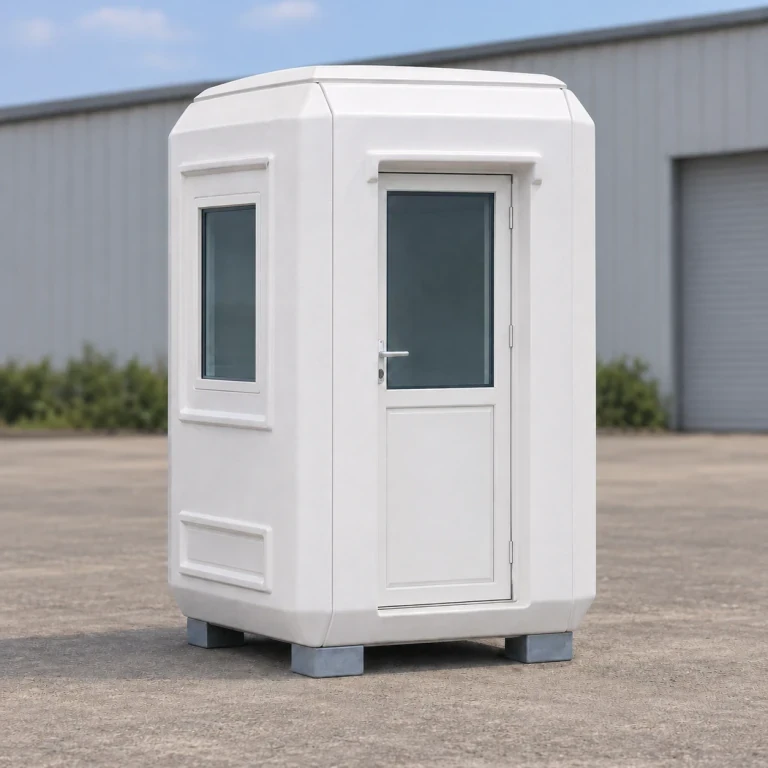
Compact observation cabin
A compact cabin has a narrow observation window beside its glazed staff door.
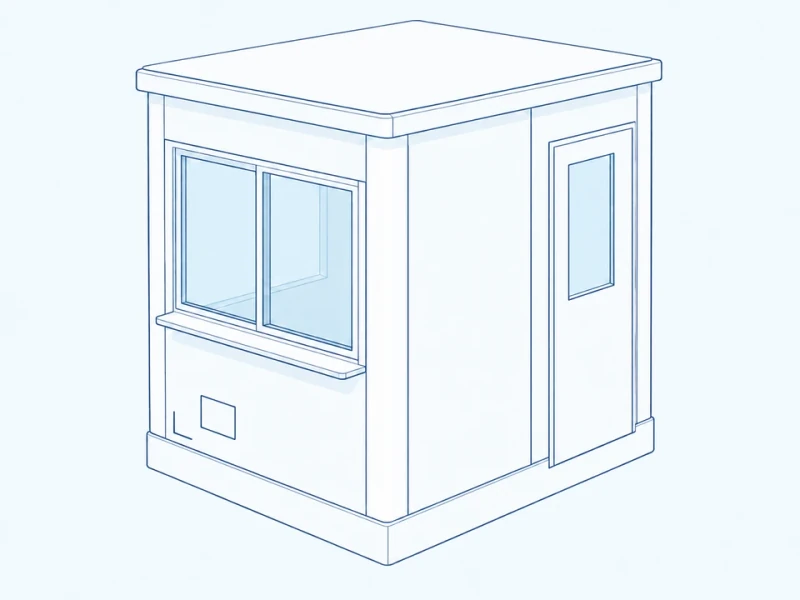
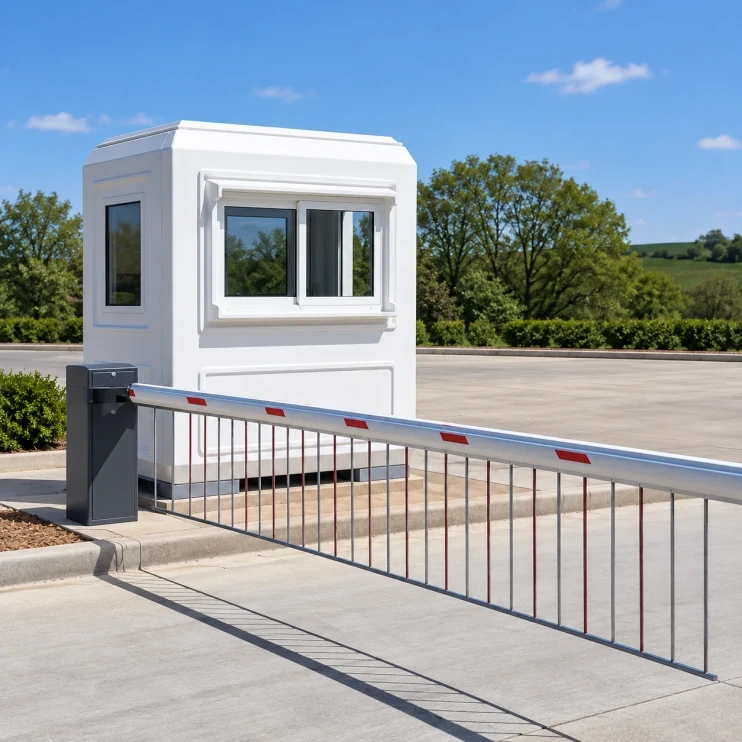
Lane-side document hatch
The lane-side window has a document shelf at the officer's working height; the staff doorway is on a separate face.
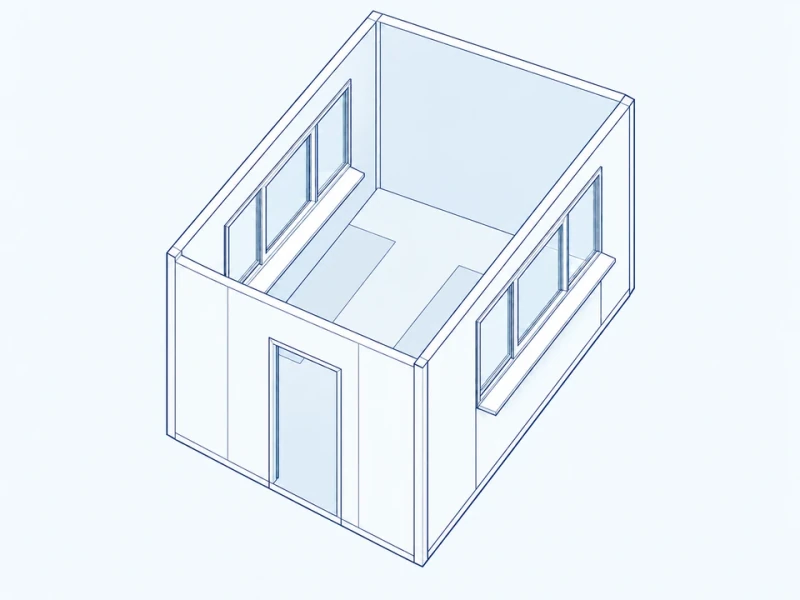
Two-lane observation
Windows on opposite faces allow one central workstation to observe and serve two lanes.
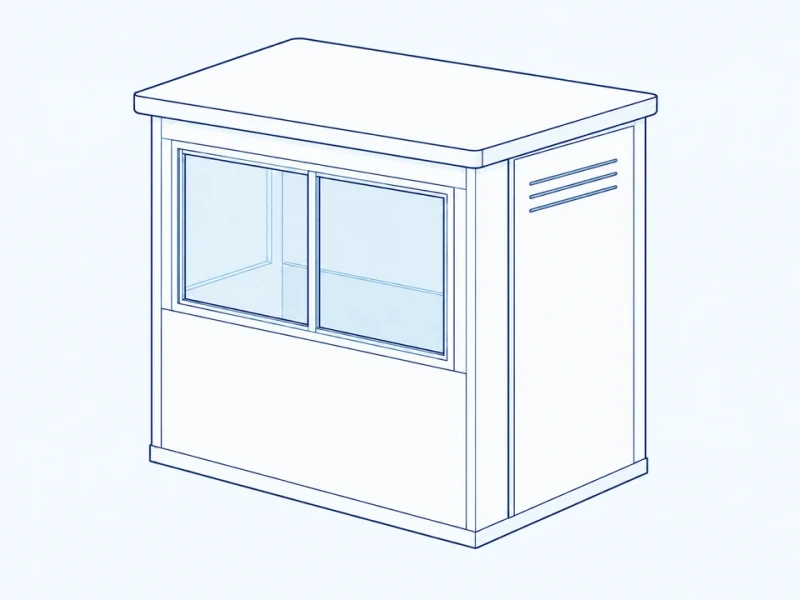
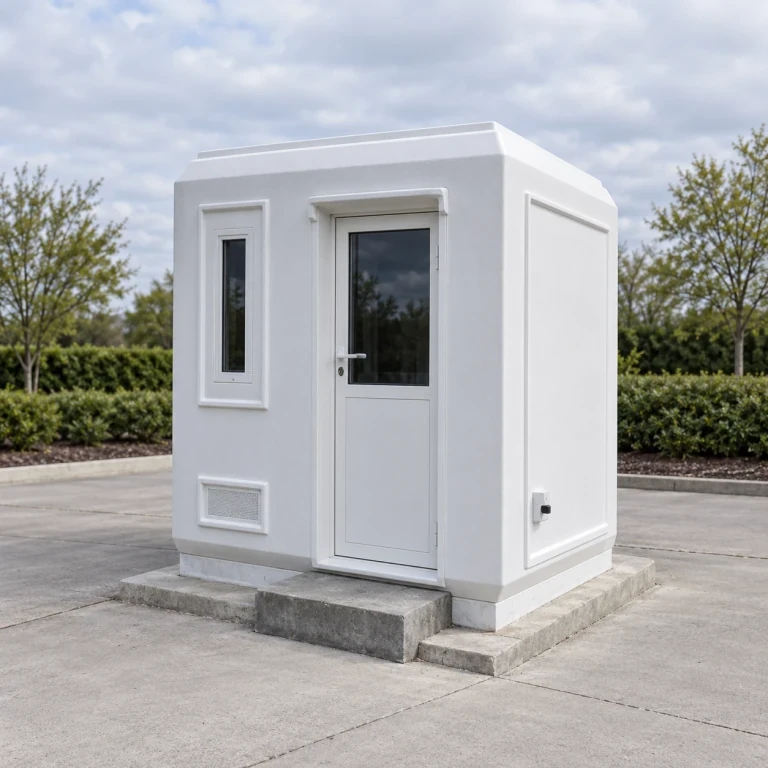
Separated equipment bay
A screened equipment compartment beside the officer station has its own exterior service door.
Checkpoint cabins fitted to the lanes
Document-transfer height
Lane-side hatches and sills are positioned for the vehicle-window range and seated officer's work area.
Observation and staff entry
We arrange staff doors and a separate equipment bay around a single-face or opposite-face observation layout.
Officer fittings and shell surface appearance
The shell provides mounting areas for desks and monitors and openings for communication cables. Interior lining and exterior color follow the selected finish.
Lane-side viewing and document handover
Cabin width and transfer height
The elevation measures the cabin body width, observation-window band and the transfer sill’s top surface above the cabin base. Its installed handover height also includes any plinth or raised island above the lane surface.
Inspection window and separate door
The sliding document-window opening, sill and staff door can follow the officer’s desk and lane-side layout.