FRP Gearbox Protective Covers
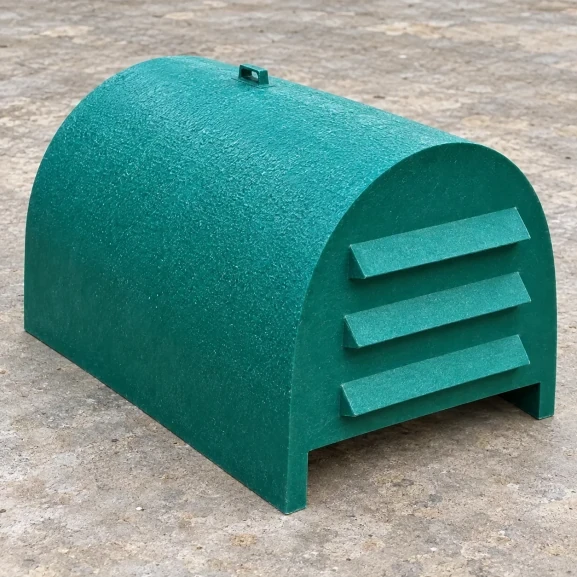
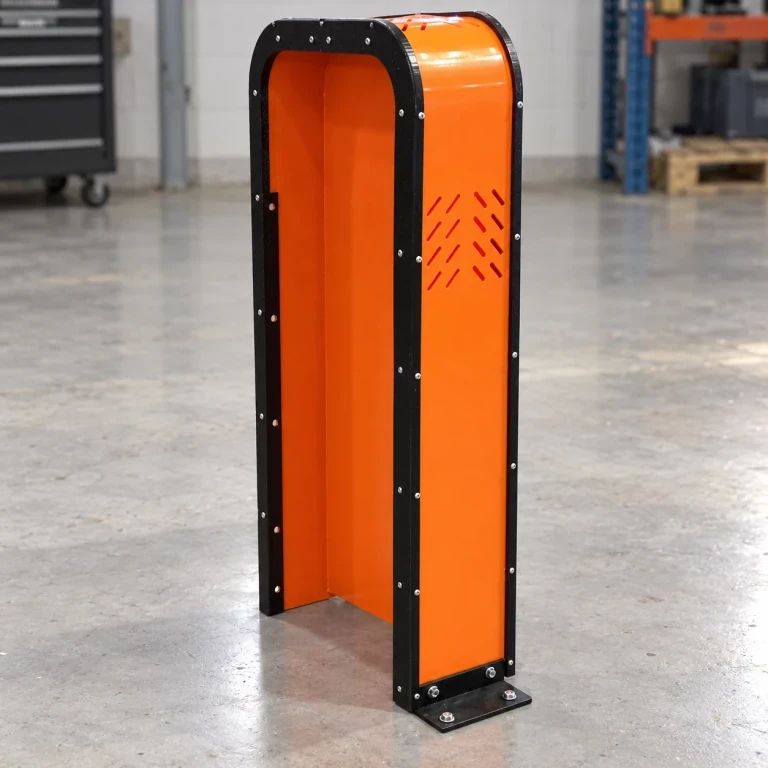
A fiberglass gearbox hood covers an outdoor drive while leaving access to its shafts and oil-service points. The hood can use a rounded or pitched profile, with split ends, local hatches and vents arranged around the installation.
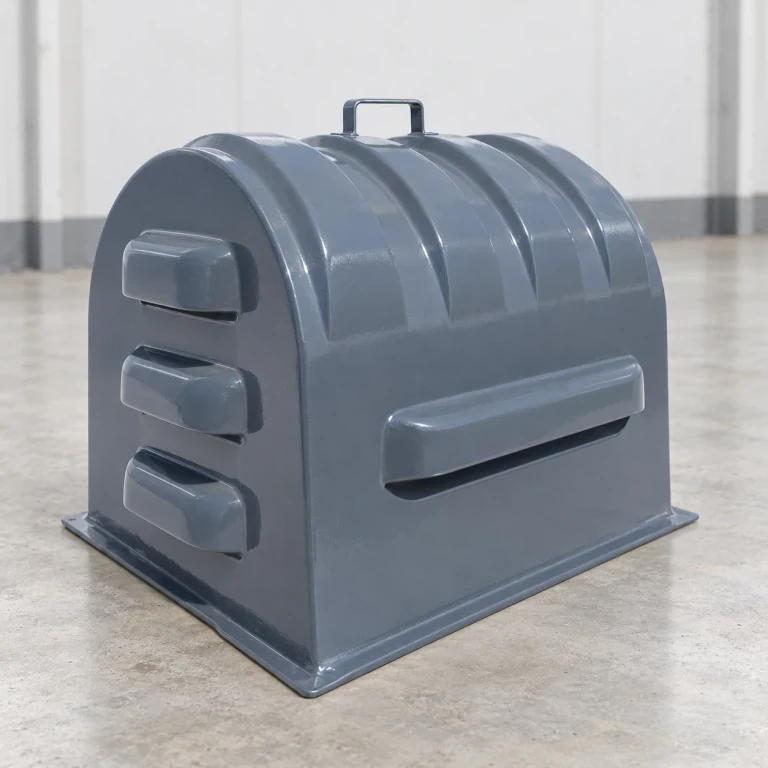
Vented tunnel hood with molded end and side rain hoods and outward fixing flanges.
Image credit: ·
Gearbox cover options
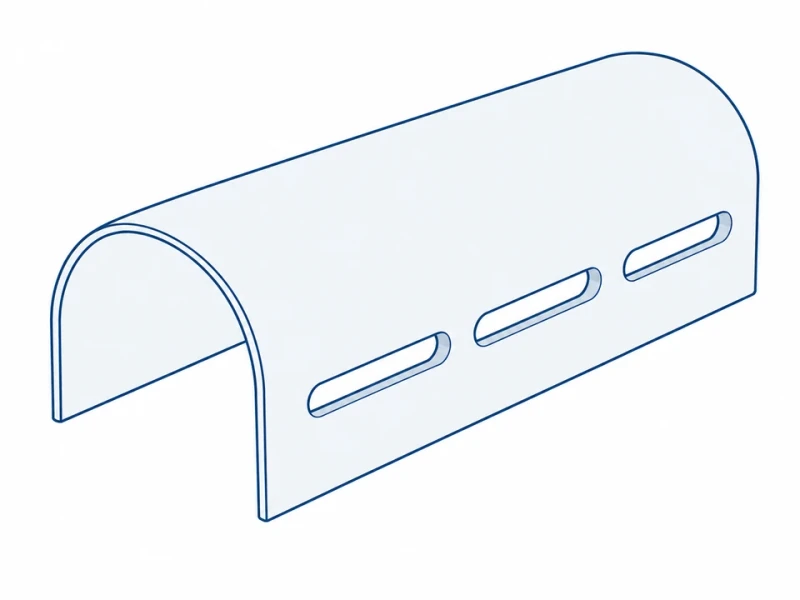
Vented tunnel hood
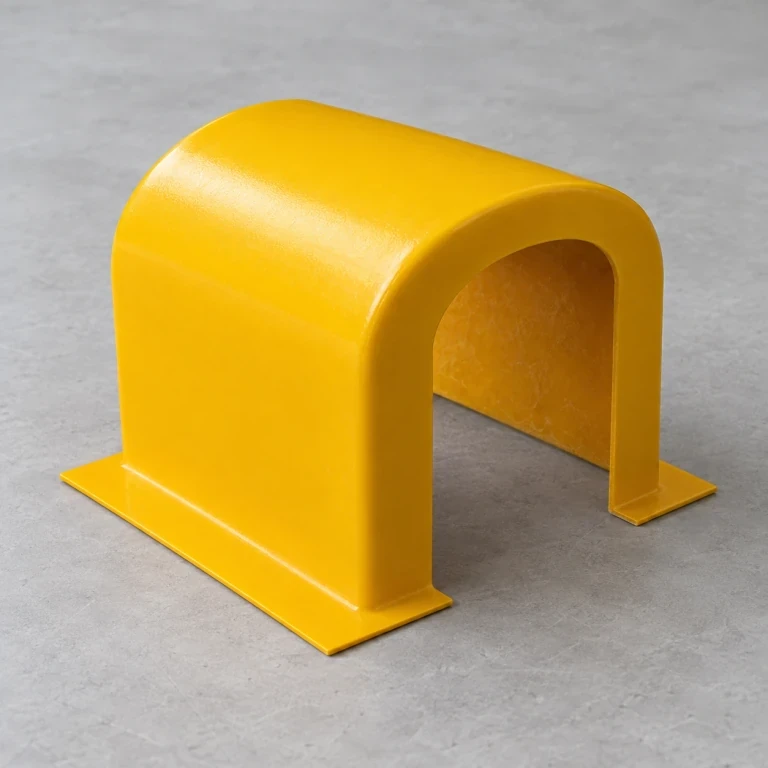
A rounded hood with vent slots covers the gearbox from above and is open underneath.
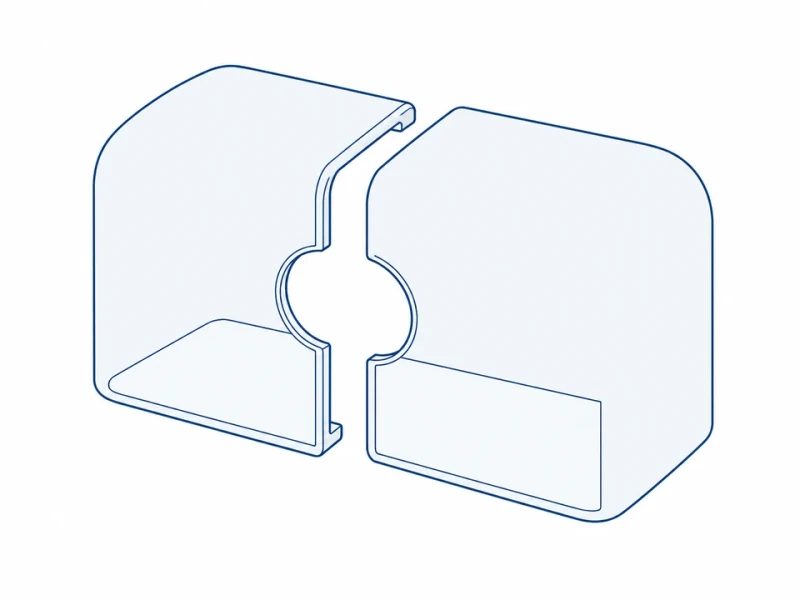
Split shaft-end cover
Separate end pieces close around a fixed shaft and can be removed to reach the coupling.
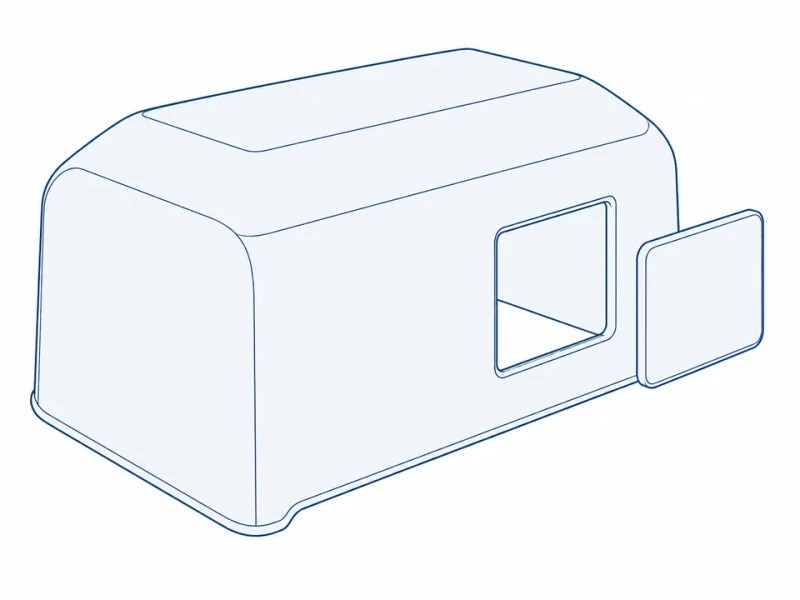
Oil-service access hatch
A local hatch opens onto oil-fill, level-check or inspection points without removing the cover.
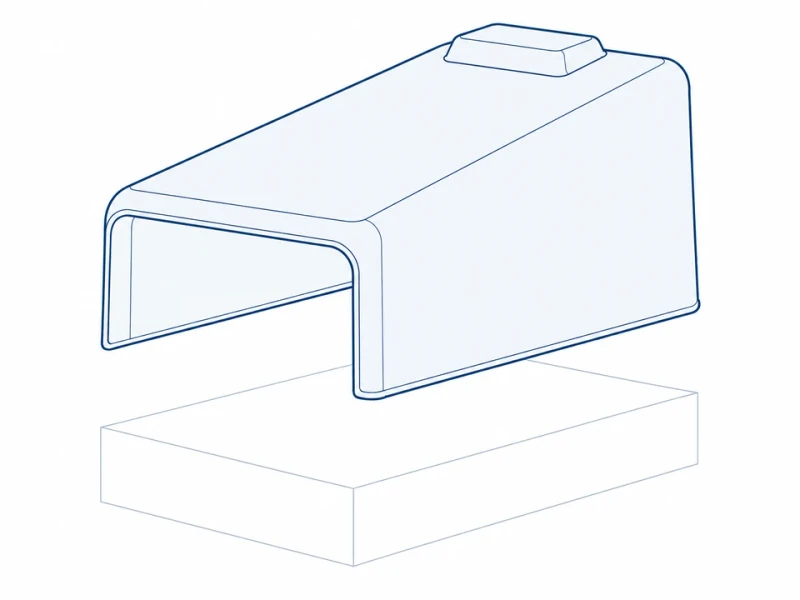
Sloped lift-off casing
A pitched hood lifts straight off the gearbox where there is room overhead.
Gearbox cover construction
Hood sections
Tunnel or pitched hoods are molded to the gearbox profile, with reinforcement around the service hatches.
Service openings
Shaft passages, oil-service openings, vents and drainage reliefs follow the installation drawing. Vent placement and the space around the drive depend on the gearbox supplier’s cooling requirements.
Fixings and gelcoat
The base and split edges receive the specified reinforcement and edge finish. Gelcoat color and gloss can match the nearby equipment.
Gearbox clearance and access
Shaft, oil access and fixings
The elevation shows the shaft-passage diameter and service-opening center height above the base-flange underside. Fixing pitch runs between the two base-hole centers. These locations follow the gearbox installation; the access height does not indicate the gearbox’s internal oil level.
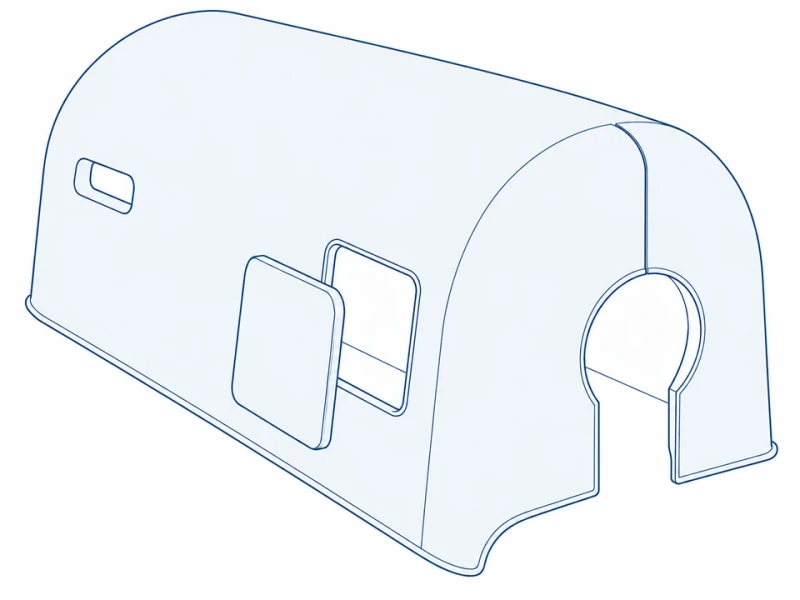
Split end and side hatch
A split shaft surround, side inspection hatch and upper openings let the cover fit around an installed gearbox and be serviced in place.