One housing for the display and its support.
Molded fiberglass display bodies with panel openings, a support collar and service access developed around your information system.
Panel openings, the mounting collar and replacement access follow the same housing design.
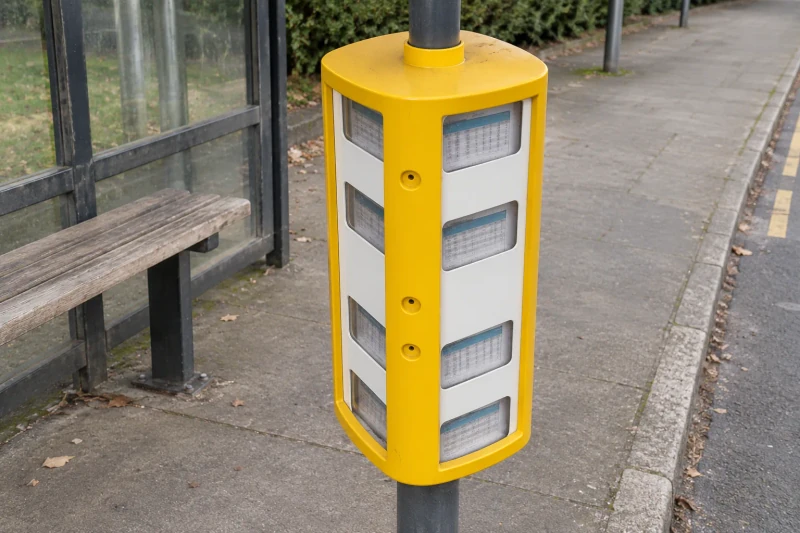
- Display
- Custom display openings
- Mounting
- Pole or support interfaces
- Surface appearance
- Agreed color and surface appearance
Fit the information without losing access.
A bus-stop information unit needs to hold its display panels while fitting the pole or support behind them. Panel proportions, the mounting collar and access for changing information all affect the body shape.
Different information faces
Display dimensions and retention edges have to fit within one compact body.
A fixed pole or shelter support
The mounting collar must meet the existing support while leaving its fasteners reachable.
Access after installation
A fitted housing still needs a practical route for replacing the information panels.
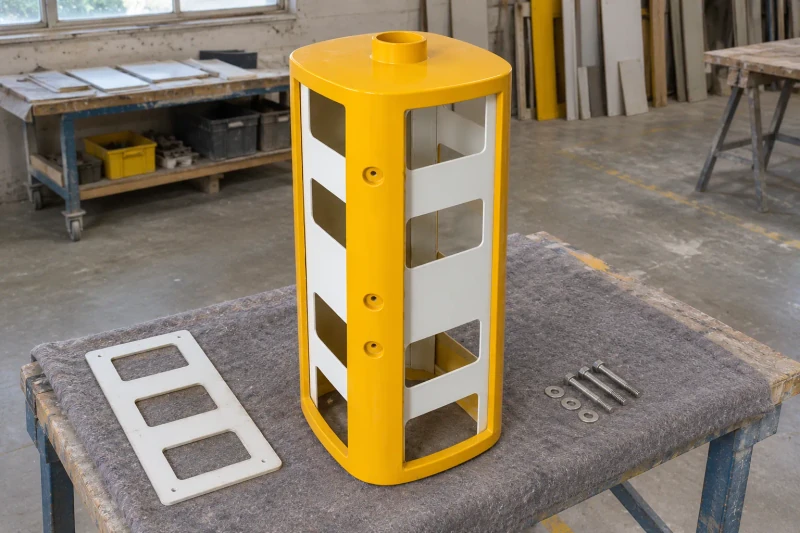
How we customize the parts.
Openings for each display face
Opening sizes follow your panel dimensions, with the surrounding edges shaped for the selected retention method. Different information formats can share the same housing.
A collar that follows the support
The top collar and side fixing holes match the specified post or shelter support. Space around the fasteners keeps the attachment points accessible during fitting.
Access for changing information
The housing is arranged around how panels will be removed and replaced. Cable openings, drainage and seals are added where your system specifies them.
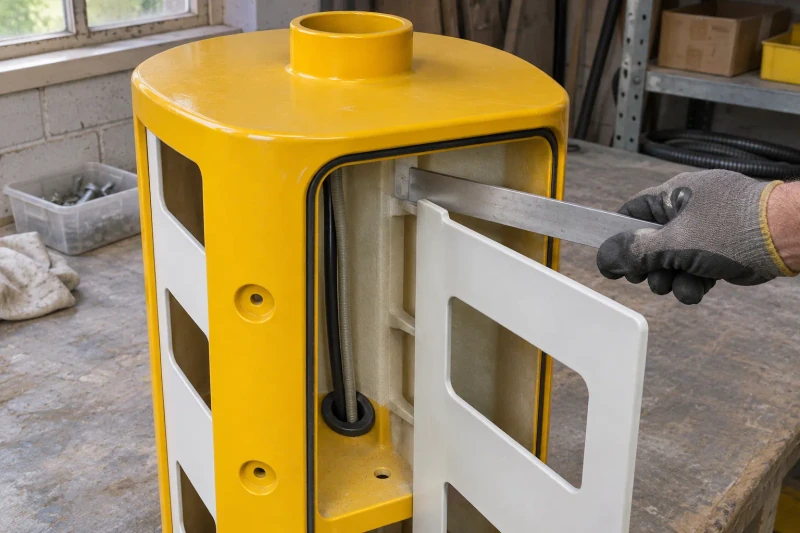
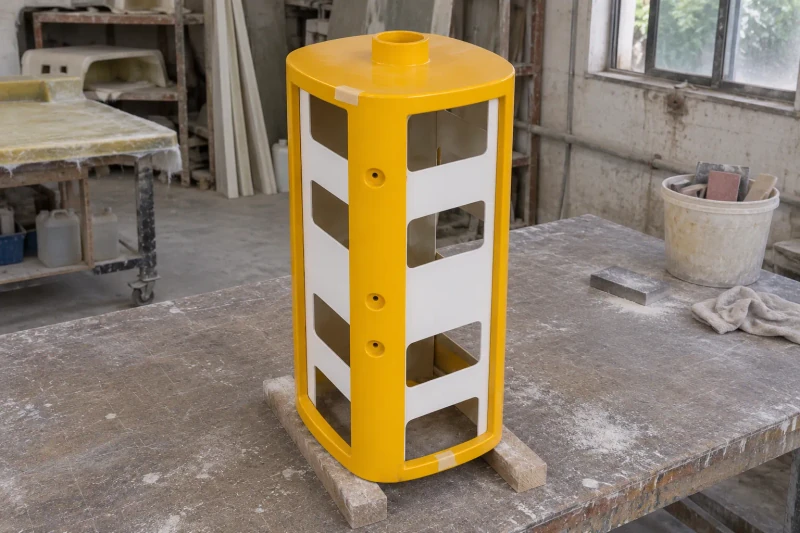
Mold the body and prepare the edges
We form the rounded shell and collar, then trim the display openings and mounting areas to the agreed drawings. Visible edges are finished for fitting. Opening dimensions, fixing positions and the selected color are checked against the order. The body is packed with protection around the display edges.
Prepared for fitting. Accessible for updates.
The housing arrives with its display openings and support interface considered together. Information panels can follow the planned replacement route instead of requiring a new body arrangement.
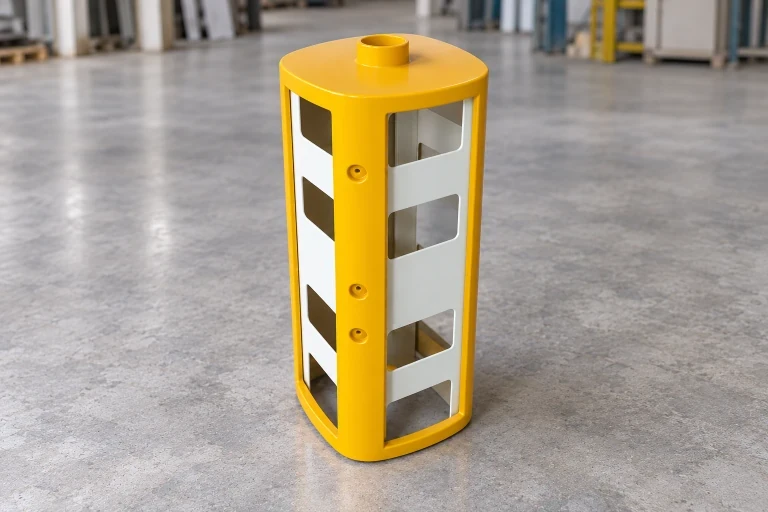
Mounting considered early
The support collar and accessible fixings are developed with the housing.
A route for panel changes
Replacement access remains part of the fitted display arrangement.
Repeatable opening layout
Display faces follow one agreed set of panel dimensions.
Dimensions and design options
Bus-stop sign formats
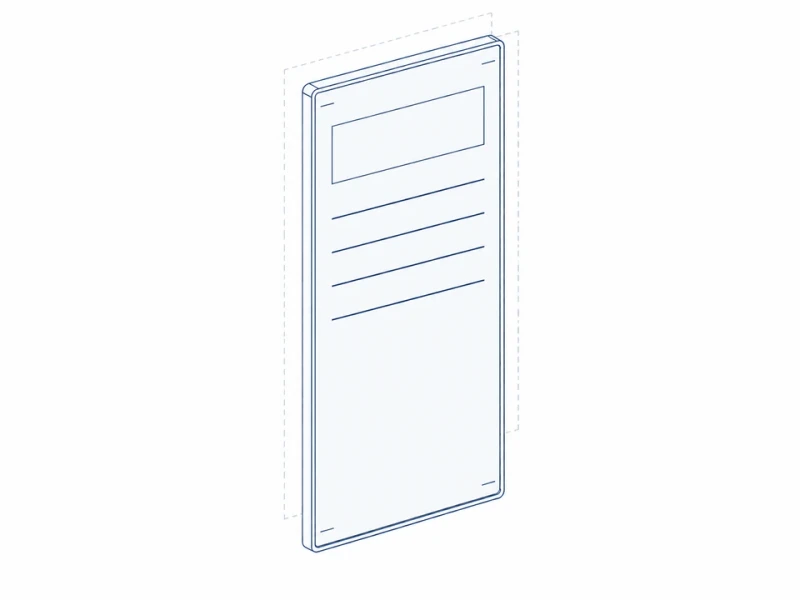
Shelter-mounted portrait panel
A tall information face attaches to a separately specified shelter frame through prepared mounting areas.
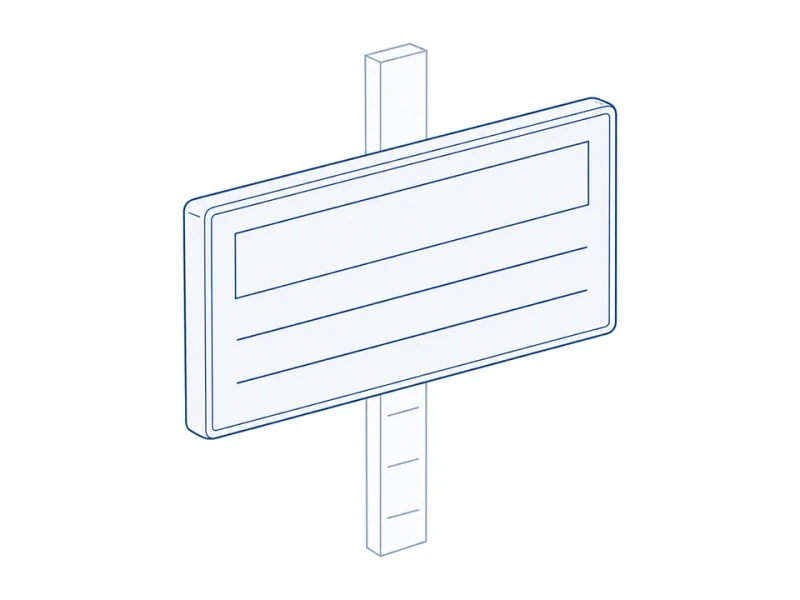
Pole-mounted route sign
A route-sign face fits the specified pole and clamp arrangement.
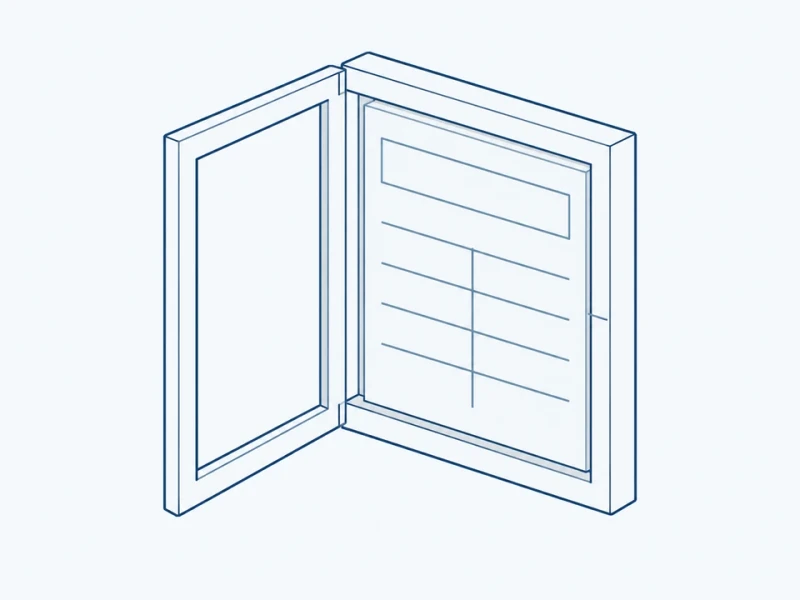
Replaceable timetable case
A protective frame holds a removable timetable insert and opens when the information changes.

Double-sided stop marker
Two sign faces fit around a post core so the information can be read from either direction.
Bus information face and mounting
Visible panel and fixing spacing
Visible face width, height and fixing centers are made to suit your timetable layout and the separate pole or shelter.
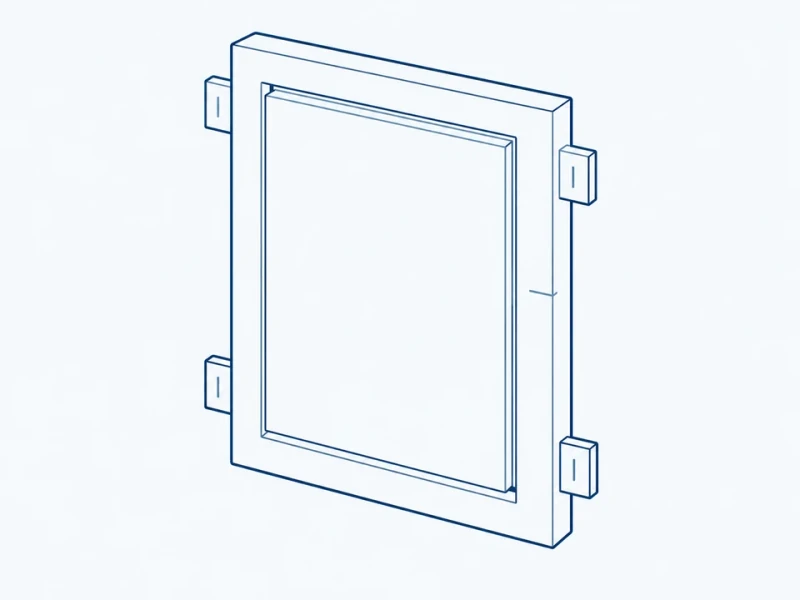
Replaceable face with side fixing tabs
The information-panel surround, insert edges and side mounting tabs can suit your stop-sign and shelter layout.