FRP Dust Collector Casings
Fiberglass dust-collector casings surround the filter assembly and connect it to the air ducts and lower dust discharge. Cylindrical or rectangular bodies can include service doors or removable faces for filter replacement. Resin and inner-surface construction depend on the dust, temperature, pressure and cleaning conditions.
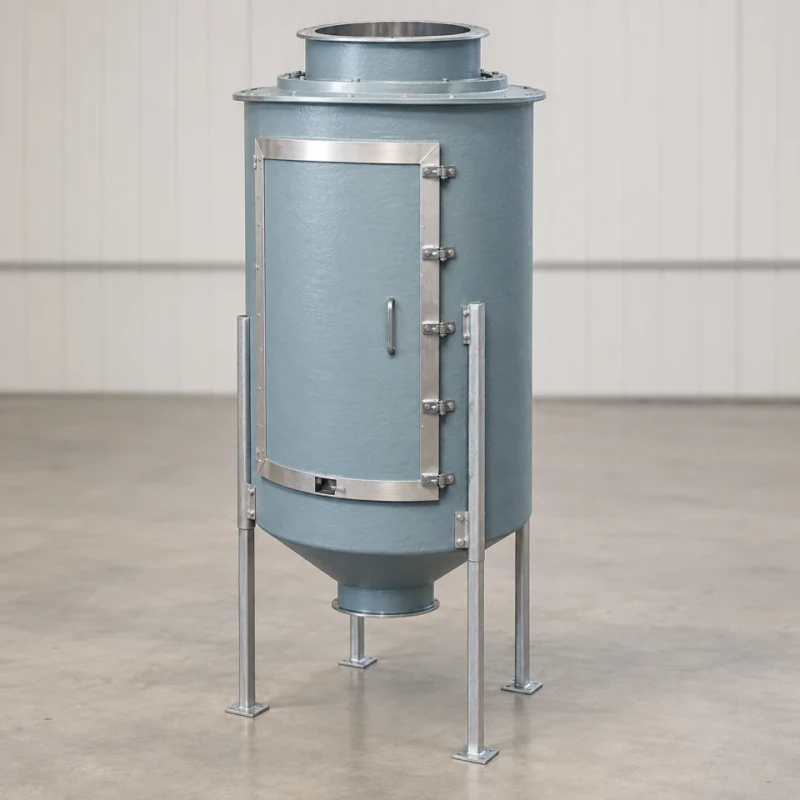
Empty collector casing with top duct collar, access door, tapered discharge and supports.
Image credit: ·
Dust-collector casing options
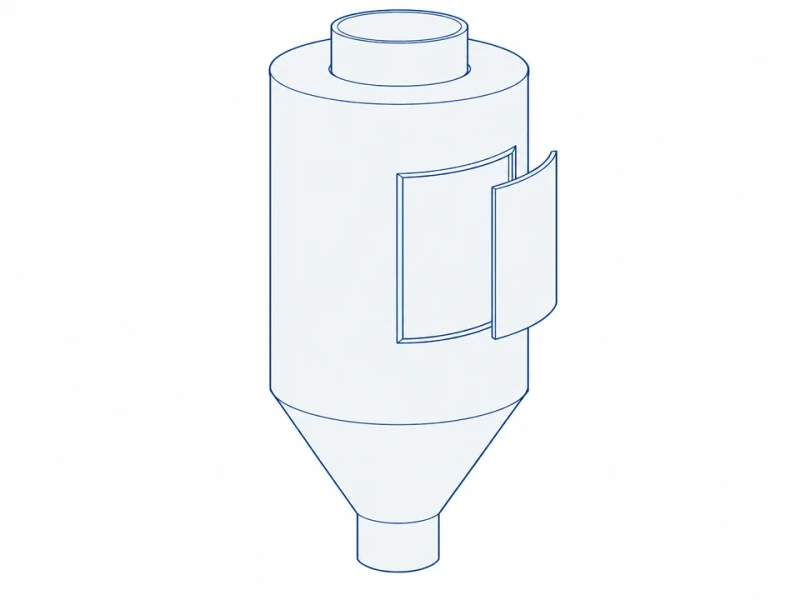
Cylindrical casing
A cylindrical shell has a side access door, upper outlet and lower discharge connection.
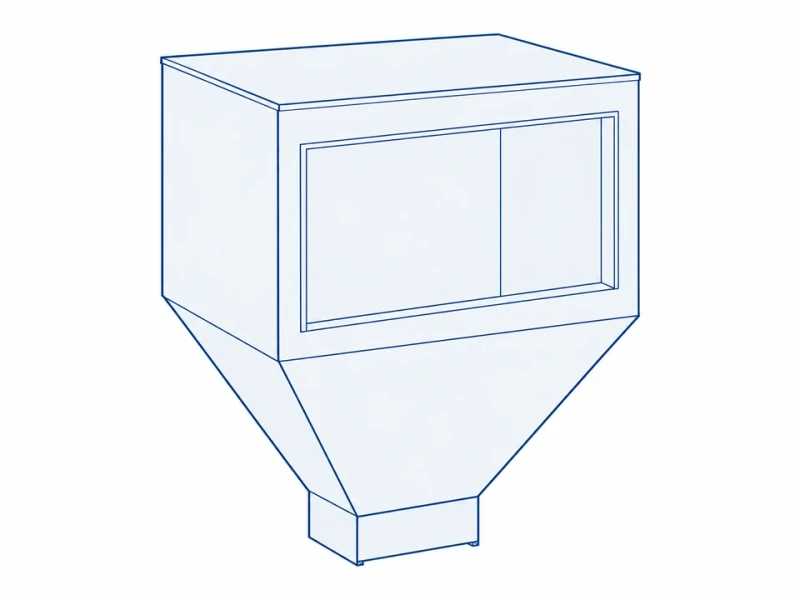
Rectangular section
A rectangular section is built around the filter supports and hopper joint.
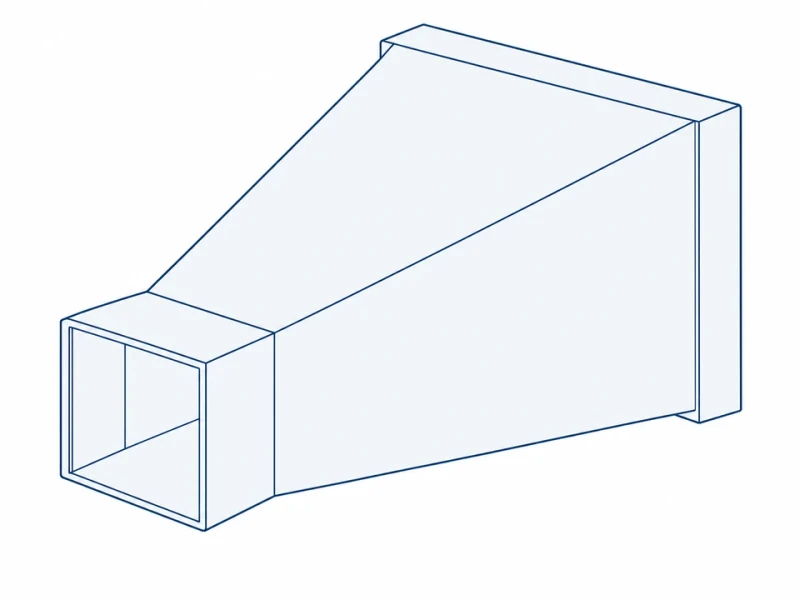
Duct transition
A transition piece connects the casing to an inlet or outlet duct.
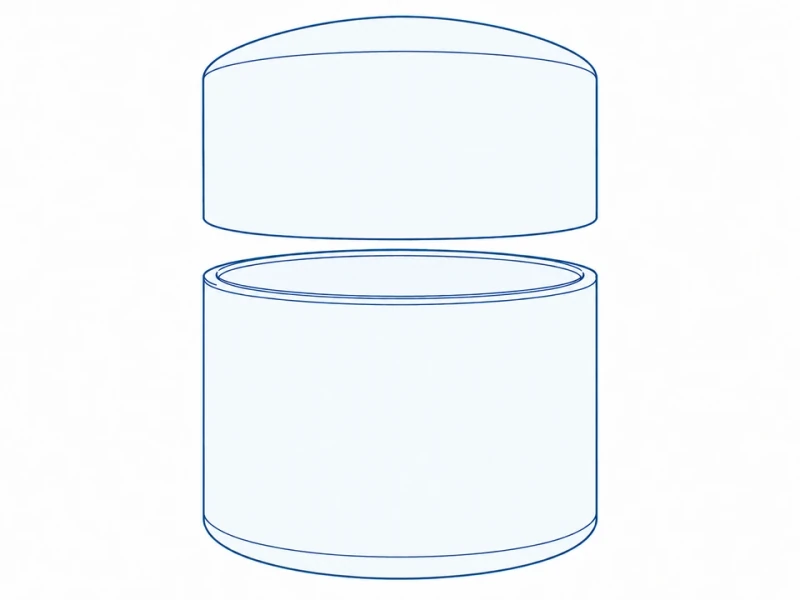
Removable access face
A bolted face can be removed to expose the filter’s mounting and withdrawal path.
Collector casing manufacture
Shell and hopper molding
Casing bodies and hoppers are molded with reinforcement at the specified filter, flange and support areas.
Connection preparation
Duct flanges, filter mounting areas and removable access edges are finished to your assembly drawing.
Inner surface and resin
Resin and inner-surface construction are specified for the dust, temperature and cleaning method. Material selection for combustible or static-sensitive dust also follows the system hazard assessment.
Collector openings and hopper
Air and hopper connections
The outlet and discharge dimensions measure the outside diameters of their round connection collars. The service dimension measures the clear access opening’s height.
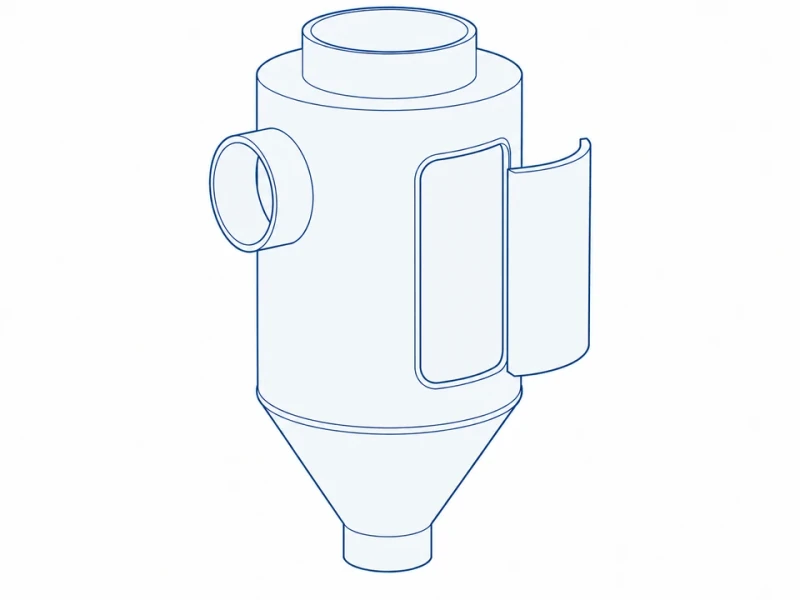
Cylindrical body and tapered hopper
Top and side duct connections, a curved service door and the tapered hopper outlet are molded into the casing at the positions on your drawing.