A bin shell designed around usable space.
Custom fiberglass enclosures with a recessed upper dish, deposit opening and service access developed around your inner container and emptying method.
The inner container, deposit opening and emptying access determine the molded body layout together.
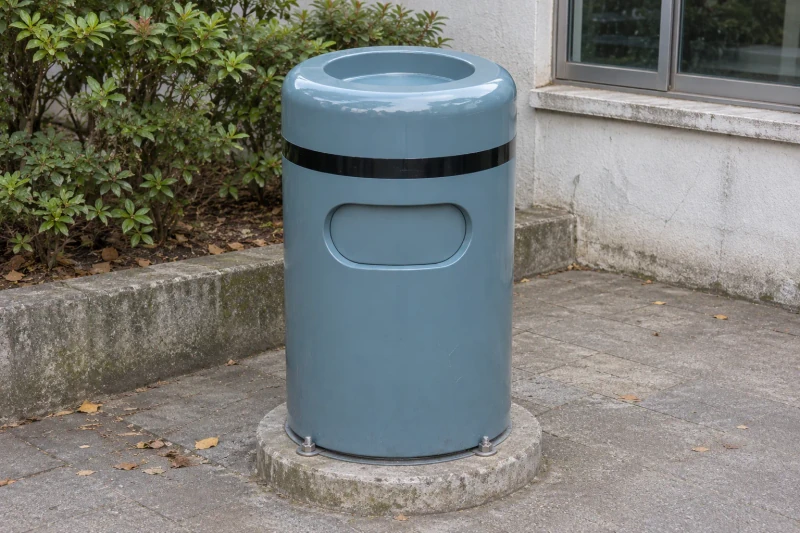
- Body
- Cylindrical fiberglass shell
- Deposit
- Custom deposit opening
- Hardware
- Fittings by agreement
Make the capacity useful to the collection team.
The useful capacity of a public bin depends on more than the size of its outer shell. The inner container, deposit flap and collection access all take space, and staff need a practical way to remove the collected waste.
Capacity inside the external shell
The liner, fittings and handling space reduce the volume available for collected waste.
Separate deposit and emptying access
The public flap needs one clearance; removing a loaded inner container needs another.
A shaped top on a fixed base
The molded rim, drainage provisions and anchoring details need to suit the installation location.
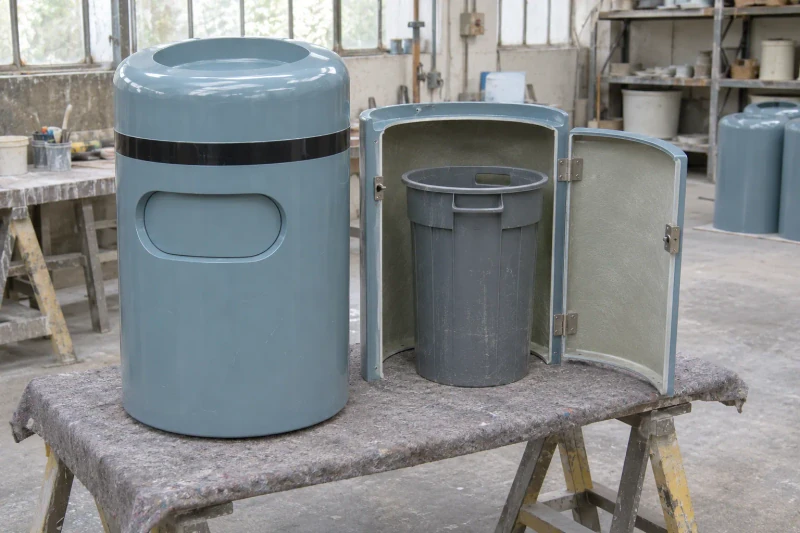
How we customize the parts.
Space for the inner container
Usable capacity depends on the selected liner or bag, rather than the outer shell dimensions alone. The shell leaves room for the container, its fittings and removal for emptying.
Separate deposit and emptying access
The deposit opening is sized for the flap and its swing. A separate service opening matches how collection staff lift out the container, with room to handle it.
Top dish, drainage and base fixing
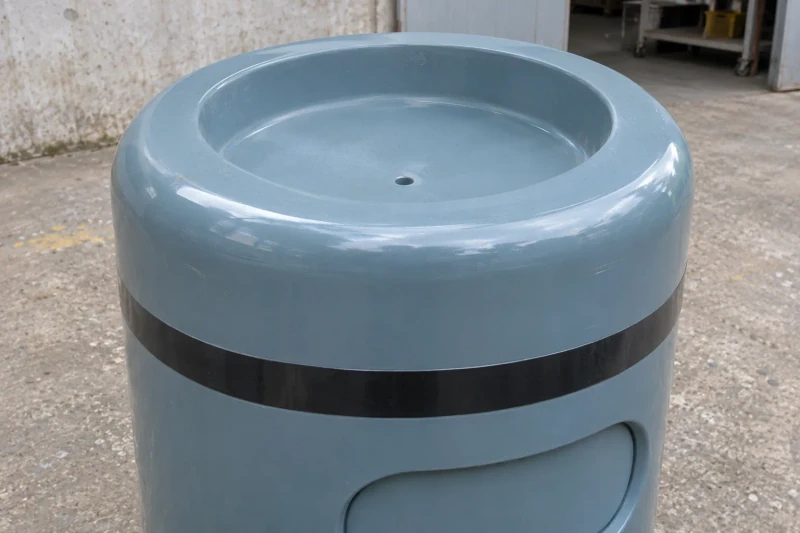
A recessed top dish and rounded rim are molded into the cylindrical body. Drainage and base fixings can be prepared for the installation location.
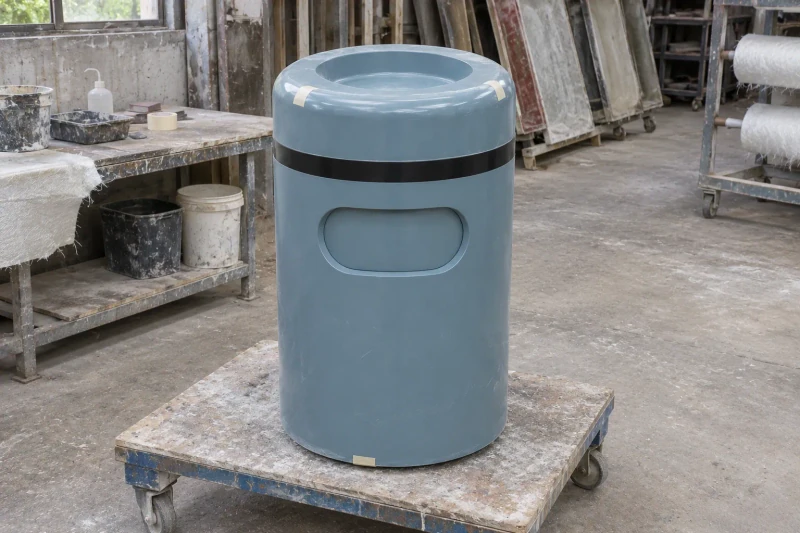
Mold and prepare the shell
We mold the cylindrical body, top dish and rounded rim, then cut the openings and prepare fixing areas for the selected fittings. We check the container and flap fit, complete the body color and contrasting band, and protect the shell for delivery.
Storage and emptying planned together.
The outer shell and internal collection arrangement are developed together. The emptying route is included in the body design, giving the collection team a defined way to remove the selected container.
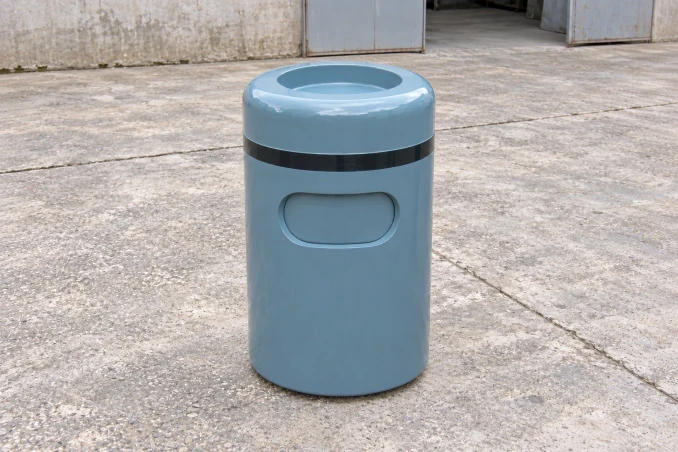
Capacity based on the inner container
The shell allows for the liner and the space needed to handle it.
Emptying access included
The collection opening follows the selected removal method.
Coordinated street furniture
Body color and band finish can follow the surrounding furniture scheme.
Dimensions and design options
Waste-bin enclosure layouts
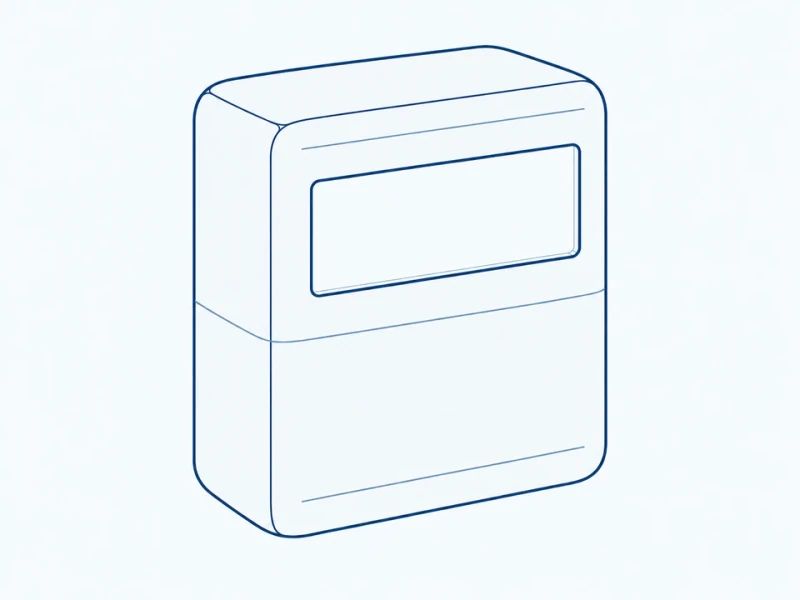
Front deposit enclosure
A broad front deposit opening sits above a removable liner.
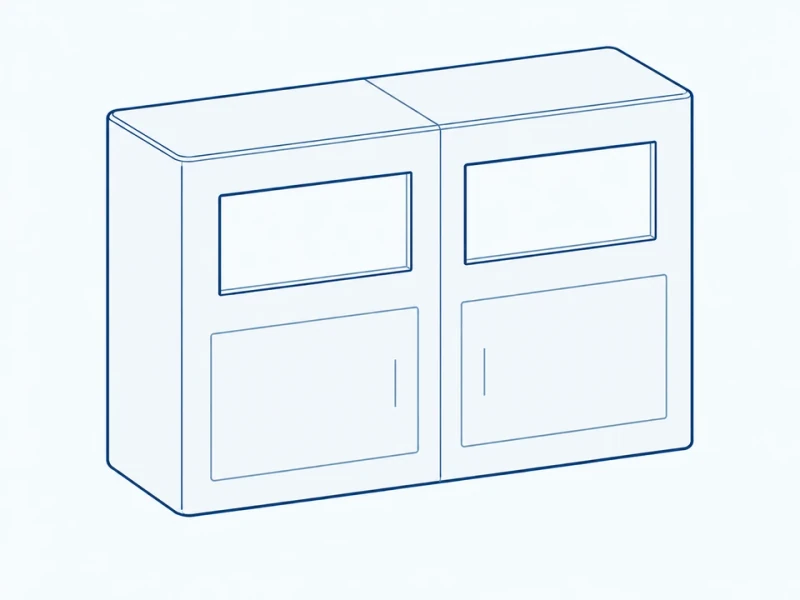
Two-stream station
Two deposit openings lead into separate liners in one station to keep the waste streams apart.
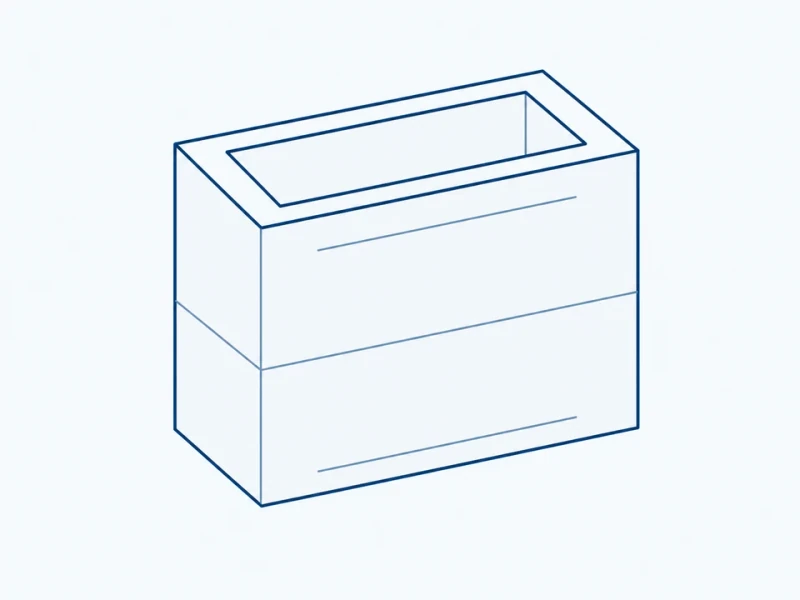
Top deposit shell
A top deposit opening sits in a removable lid that gives access to the liner.
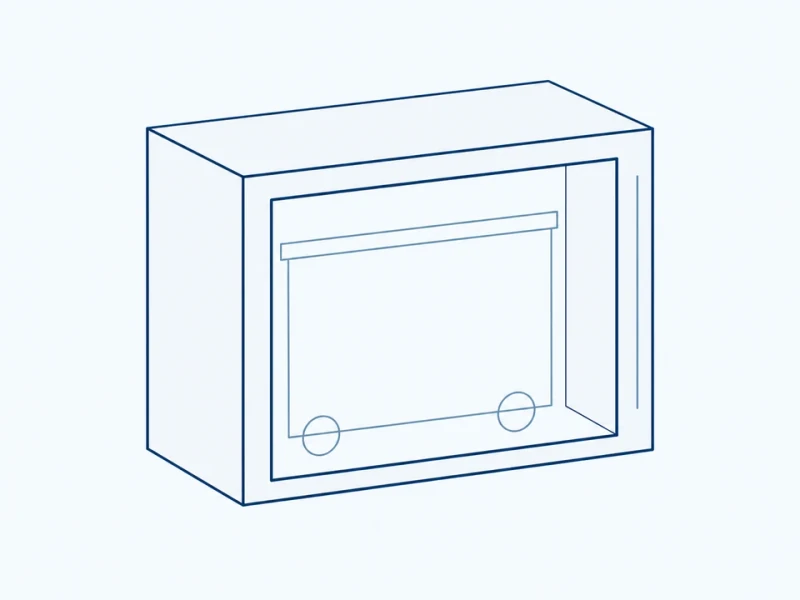
Wheeled-bin screen
An outer shell encloses a wheeled bin, and a front service opening allows the bin to be removed.
Deposit opening and liner access
Shell width and deposit sill height
In this front-opening view, deposit sill height runs from the shell base to the lower edge of the opening. Shell and opening widths are sized around the selected liner or bin.
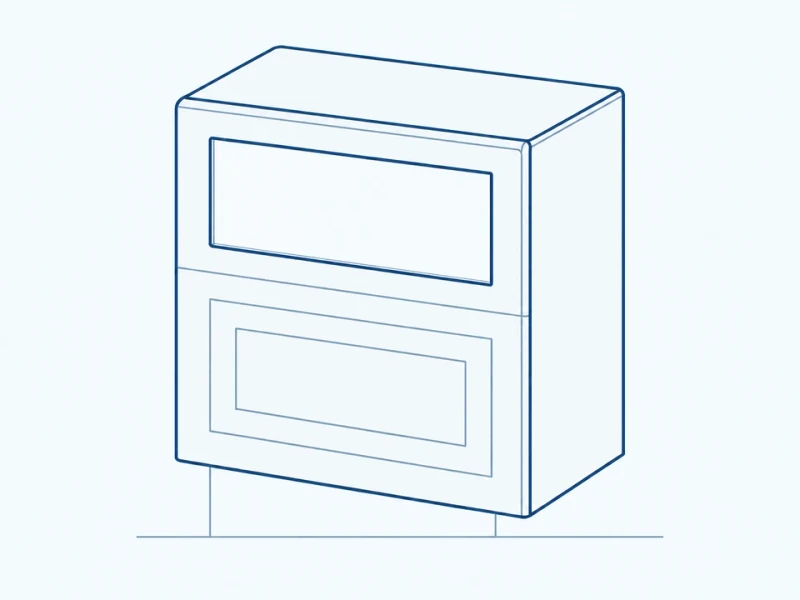
Upper deposit and lower service panel
The deposit opening, divided front and emptying-panel edges are sized around your removable container.