Recycling & Waste Collection
Give residents a clear deposit point and collection crews a practical way to empty it. Custom FRP clothing banks and bin housings combine program colors and instructions with hatches, container space and service doors made for the collection routine.
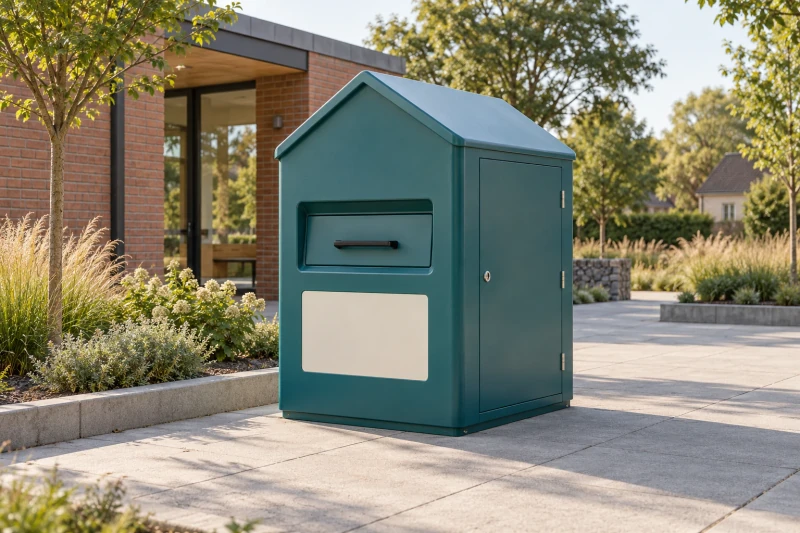
Where it is used
A clothing collection point for residents and collection crews
A clothing bank has to work for both residents making donations and crews emptying it. Bags pass through the front hatch into a separate container, which is removed through the service door. The body size and site position need to allow both movements.
- The deposit opening and hatch movement must suit the expected range of clothing bags.
- The service door must clear the inner container and the crew's removal path.
- Instructions and hardware must stay accessible once the bank is placed and fixed.
Our approach
Design for depositing and emptying
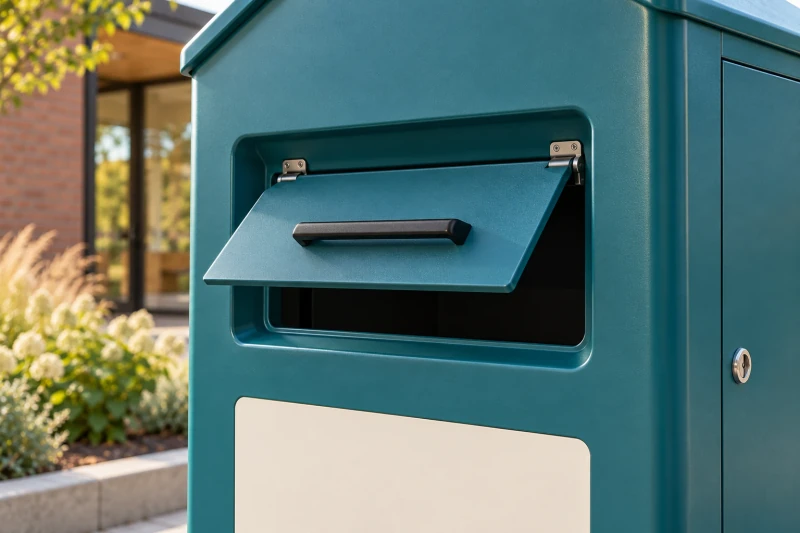
Size the deposit opening for the intended bags
We match the deposit opening to the intended bag sizes and the selected hatch. The hatch movement is checked against the inner container so bags can pass through without the mechanism taking up the space they need.
The opening, hatch and inner container are sized as one collection arrangement.
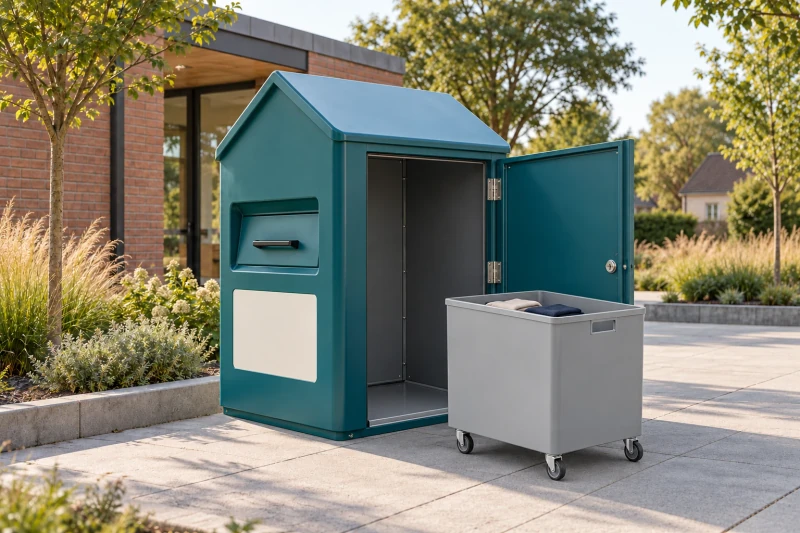
Separate access for emptying the bank
We set the side service opening around the chosen collection bin and the direction it comes out. Door swing, threshold, fastener access and standing space beside the unit are reviewed against your crew's emptying routine.
The service layout shows the container clearance and the space the crew needs to work.
Check fittings, instructions and surface appearance on the first unit
The first body is fitted with the chosen hatch, service door and container. We check hinge and lock contacts, cleaning access, program colors and instruction areas, then record the details and maintenance fittings for repeat units.
The approved first unit sets the openings, fittings and appearance for repeat units.
What we can supply
Bodies, fittings and site work
Collection bodies with prepared openings
The roof and shell are built to the placement plan, with the specified deposit and service openings, reinforced hardware mounting areas and base-fixing points.
Fittings and program appearance
The shell color, instruction areas and graphics are agreed on the first unit. The order identifies the hatches, hinges, locks and inner containers included in the supply.
Delivery and site work
Packing protects the finished faces and opening edges. Base fixing, placement and collection handling are planned with the site team; any installation work supplied with the unit is identified in the order.
Collection points and wet-waste storage
Donation banks, bin shells and slurry storage
- A collection bank built around the emptying routine.
Donation access, internal storage and the collection door are developed together in one molded body.
- A bin shell designed around usable space.
The inner container, deposit opening and emptying access determine the molded body layout together.
- A slurry tank that fits the process room.
The vessel envelope, process connections and cleaning access are coordinated before fabrication.