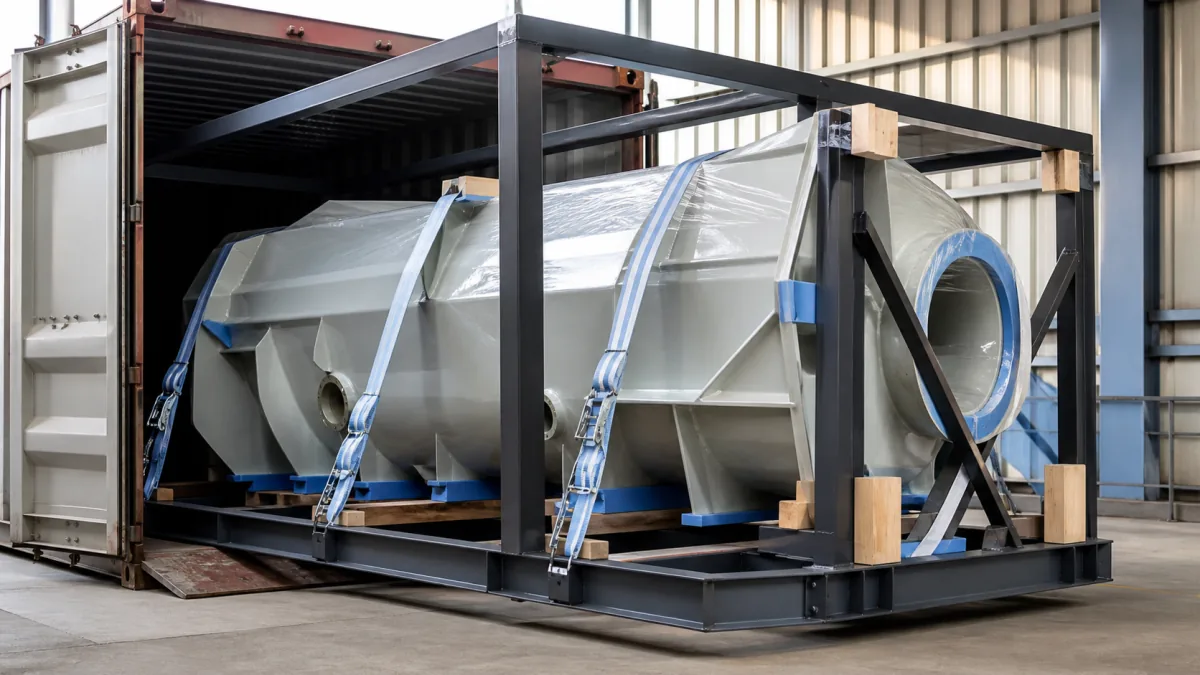
Custom Fiberglass Part Cost Factors: A Buyer’s Guide
Learn what affects custom fiberglass part cost, from tooling and laminate design to finish, quantity, inspection, packing, and clearer RFQ inputs.
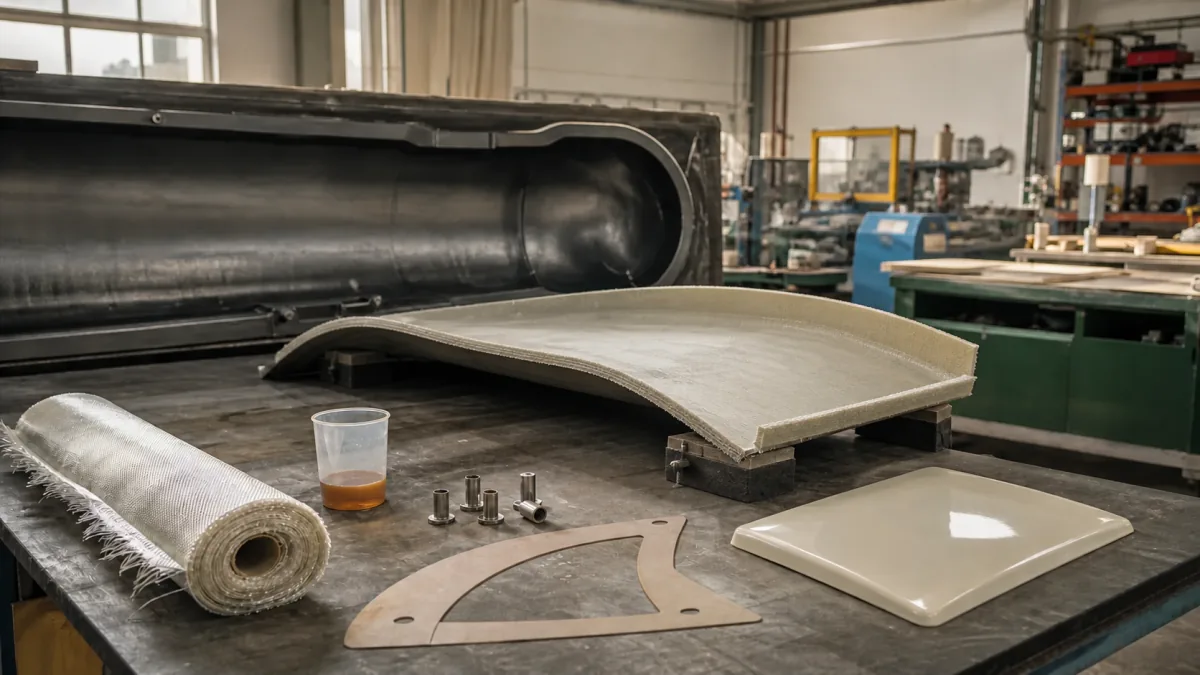
Custom fiberglass part cost is driven less by the material name alone than by the complete manufacturing requirement. A simple FRP cover made in a low quantity may need relatively little development work, while a large, cosmetic, structural enclosure with tight fit-up requirements can require significant tooling, labor, inspection, and packaging preparation.
The most reliable way to control cost is to define the part’s function, geometry, laminate, finish, expected quantity, and acceptance criteria before requesting quotes. A lower unit price is not necessarily the lower project cost if the quote excludes tooling, secondary work, inspection, or freight preparation.
Separate One-Time and Recurring Costs
Start by dividing a quotation into costs that happen once and costs that repeat with every part or production run. This makes supplier comparisons much clearer and helps determine whether a more capable mold or process is justified.
One-time costs
One-time or non-recurring engineering (NRE) costs can include:
- Drawing and manufacturability review
- CAD cleanup or mold-ready surface development
- Prototype development
- Master patterns, plugs, and molds
- Fixtures for trimming, drilling, bonding, or assembly
- First-article setup and agreed inspection documentation
- Color, finish, or laminate development when requirements are unusual
Tooling is often the largest one-time item. Its cost depends on the mold material, dimensional stability needed, number of cavities, surface quality, expected use, and whether the part needs matched tooling on both sides.
A buyer should ask whether tooling is included, separately listed, amortized into unit pricing, or treated as supplier-owned equipment. Also confirm who maintains it, what changes trigger a tooling revision, and whether replacement or refurbishment is outside the quoted scope.
Recurring costs
Recurring costs usually include:
- Fiberglass reinforcement and resin system
- Gel coat, paint, or surface materials
- Direct molding labor
- Trim, drill, and cutout work
- Hardware, inserts, adhesives, and assembly labor
- Routine inspection
- Packaging materials
- Scrap allowance and handling
A useful quote separates these categories where practical. That visibility helps a sourcing team identify whether cost is mainly tied to material consumption, labor-intensive finishing, or an expensive production method.
Review Size, Shape, and Mold Complexity
Part size and geometry have a direct effect on custom fiberglass part cost factors because they influence material usage, mold size, handling, cure control, trimming, and shipping.
Large FRP panels, housings, and enclosures may require oversized molds, more layup time, additional support during handling, and specialized packaging. Deep sections, narrow channels, sharp returns, and enclosed shapes can make molding and demolding more difficult.
Features that commonly increase complexity include:
- Deep draws or tall side walls
- Reverse draft and undercuts
- Tight inside radii
- Thin flanges that can distort during trimming
- Large unsupported flat surfaces
- Complex compound curves
- Numerous small details molded into one surface
- Two-sided cosmetic surfaces
- Closely controlled mating interfaces
A shape does not need to be complicated to be costly. A broad, flat panel can require attention to stiffness and surface stability if it must remain flat after cure, trimming, shipping, and installation. Likewise, a simple enclosure may require a more elaborate mold if it has smooth exterior cosmetic surfaces and tight alignment requirements.
Design choices that may reduce cost
Before locking a design, review whether you can:
- Replace sharp corners with practical radii.
- Eliminate undercuts or redesign them as separate components.
- Combine multiple cutouts into a simpler trim operation.
- Move noncritical details from the molded surface to a secondary component.
- Specify tolerances only where function requires them.
- Identify hidden surfaces that do not need cosmetic finishing.
These changes can reduce tooling difficulty and recurring labor without compromising function. A manufacturability review is especially useful before releasing production tooling.
Understand Laminate and Reinforcement Inputs
Fiberglass parts are not all built to the same laminate schedule. Resin type, reinforcement form, fiber orientation, thickness, core material, fire behavior, electrical performance, and environmental exposure can all affect cost.
The laminate should be designed around the actual application rather than a generic thickness callout. A part may need stiffness, impact resistance, corrosion resistance, dielectric performance, temperature resistance, or a specific weight target. Each requirement changes the material and process choices.
Important inputs to define include:
| Requirement | What to clarify | Potential cost effect |
|---|---|---|
| Resin system | General-purpose, corrosion-resistant, fire-retardant, or other required chemistry | Specialized resins can increase material cost and processing requirements |
| Reinforcement | Chopped strand, woven fabric, stitched fabric, continuous reinforcement, or hybrid construction | Fabric selection and fiber orientation affect labor, strength, and repeatability |
| Thickness | Nominal thickness, minimum thickness, or structural performance target | More material is not always the best solution; local reinforcement may be more efficient |
| Core material | Whether a sandwich construction is needed for stiffness or weight reduction | Adds materials and bonding steps but may reduce overall weight |
| Environmental exposure | UV, moisture, chemicals, salt, heat, or abrasion | May require different resin, gel coat, barrier layers, or protective finish |
| Fire or smoke requirements | Applicable standard, test method, and acceptance criteria | Testing, formulation, and documentation needs can materially change cost |
Avoid specifying a laminate only as “fiberglass, 1/4 inch thick” when the part has a structural or environmental role. That description leaves major questions unanswered: Where is the load applied? Is thickness measured before or after finish? Are there reinforced mounting zones? Does the part need to resist impact, vibration, or chemical exposure?
Conversely, do not over-specify material types without a functional reason. A resin or reinforcement selected for an extreme environment can add cost without improving performance in a mild service condition.
Account for Inserts, Openings, and Assembly Work
Secondary operations are frequent sources of quotation differences. A molded shell can appear inexpensive until drilling, trimming, bonding, fastening, sealing, and assembly requirements are included.
Tell suppliers whether the part needs:
- Trimmed edges or a raw molded edge
- Holes, slots, vents, or large cutouts
- Threaded inserts, studs, bushings, or captive hardware
- Bonded brackets, ribs, hinges, latches, seals, or gaskets
- Mating components supplied by the buyer
- Labels, protective films, or identification marks
- Partial or complete assembly
Each opening needs a defined location reference, size, tolerance, and edge-quality expectation. For example, a clearance hole hidden beneath a bracket has different requirements than a hole that locates a visible exterior panel.
Inserts need an installation plan
Specify the insert type, material, thread, pullout or torque requirements if applicable, and whether it is molded in or installed afterward. Molded-in inserts may reduce a later operation in some designs, but they also require accurate positioning and may complicate the molding process. Post-installed inserts can offer flexibility for engineering changes but add labor and fixture needs.
If the buyer supplies mating hardware or components, provide physical samples or controlled drawings when possible. A nominal drawing dimension alone may not reveal clearance issues, fastener interference, or real-world variation in the mating assembly.
Define Surface Finish and Cosmetic Zones
Surface requirements can change both tooling cost and unit cost. A part intended for an internal industrial compartment may need only a functional molded surface. A visible vehicle, equipment, retail, or architectural component may require a consistent color, gloss level, texture, and appearance across defined viewing areas.
Clearly identify:
- Class A, cosmetic, visible, and non-visible zones
- Molded gel coat, paint-ready, painted, textured, or unfinished surfaces
- Color reference or approved color standard
- Gloss range, texture, and grain requirements
- Permitted cosmetic variation
- Whether print-through, minor pits, or fiber pattern visibility are acceptable
- Which side or sides require the specified finish
“Smooth white finish” is not a complete cosmetic specification. A supplier needs to know whether white is a general color family or a controlled match, whether the surface will be viewed at close range, and whether it will be painted after delivery.
Two-sided cosmetic requirements typically require more complex tooling and careful handling. So do large, glossy surfaces where small imperfections become more visible under directional lighting.
For practical cost control, designate cosmetic zones instead of applying the highest appearance requirement to every surface. This allows effort to be focused where users or customers will actually see the part.
Connect Quantity to the Production Method
Quantity affects the appropriate manufacturing method, tooling investment, labor allocation, and unit cost. There is no universal break point where one FRP process always becomes cheaper than another; the right choice depends on geometry, laminate, finish, tolerance, and production schedule.
At lower quantities, a process with lower upfront tooling expense may be appropriate even if the part requires more labor per unit. At higher quantities, more durable or automated tooling may have a higher initial cost but lower recurring labor and more consistent cycle control.
When requesting a quote, provide more than one number:
- Prototype quantity
- Initial production quantity
- Expected annual volume, if known
- Potential total program volume
- Desired order cadence
- Whether demand is firm, estimated, or dependent on project approval
This information lets suppliers price the project realistically rather than assuming a single batch is the entire opportunity.
Compare total cost, not just piece price
For a low-volume program, the lowest tooling cost may be the best overall choice. For repeat production, evaluate the total cost across a meaningful number of parts:
Total project cost = one-time costs + (unit price × planned quantity) + shipping and other stated charges
Also consider the cost of engineering changes. A design that is likely to evolve may benefit from a lower-commitment prototype tool before final production tooling is released.
Include Inspection, Packing, and Freight Scope
Inspection, packaging, and freight are sometimes left vague in an RFQ, which can lead to unexpected charges or parts arriving with insufficient protection.
Define inspection based on the part’s actual function. Possible requirements include:
- Visual inspection to agreed cosmetic criteria
- Dimensional inspection at named critical features
- First-article inspection
- Inspection reports or measurement records
- Fit checks using buyer-provided mating parts or fixtures
- Laminate thickness checks
- Hardware presence and assembly verification
Avoid asking for “100% inspection” without defining what will be inspected and how acceptance is determined. Inspecting every dimension on every part can be expensive and may not improve functional quality. Instead, identify critical-to-function dimensions, cosmetic zones, and features that need routine verification.
Packaging should address the part’s size, finish, fragility, stacking limits, and shipment mode. Confirm whether the quote includes:
- Individual protective wrapping
- Foam, dividers, edge protection, or protective film
- Pallets, crates, or custom racks
- Maximum stack height
- Labels and part identification
- Domestic freight preparation
- Freight charges, freight class, and delivery terms
For large or cosmetic components, packaging is not an afterthought. A lower-cost package that permits rubbing, flexing, or impact during transit can create more cost through damage, rework, or replacement.
Compare Quotes on the Same Requirements
The best way to evaluate custom fiberglass part cost factors is to make sure every supplier is pricing the same package of requirements. A quote that appears lower may exclude items another supplier included.
Use a quote-comparison checklist:
- Is tooling included, separate, or amortized?
- What process and mold approach are assumed?
- What resin, reinforcement, thickness, and finish are included?
- Are inserts, cutouts, trim, drilling, and assembly included?
- Are material substitutions allowed without approval?
- What tolerances and cosmetic criteria are assumed?
- Does the price cover prototypes, first articles, or production only?
- What inspection records are included?
- What packaging is included?
- Are freight, taxes, duties, or other logistics charges included or excluded?
- What quantities and release schedule support the quoted unit price?
- What is excluded or identified as an allowance?
A comparison spreadsheet can be more useful than ranking suppliers by unit price alone. Place every included and excluded item in adjacent columns. If one quote has a higher piece price but includes finished trim, hardware installation, inspection reports, and protective crating, it may offer a lower delivered cost and less project risk.
Common RFQ mistakes that inflate cost later
Incomplete information often creates conservative assumptions, quote revisions, or change-order discussions. Common issues include:
- Sending a 3D model without a controlled drawing or revision level
- Omitting critical dimensions and datum references
- Failing to identify cosmetic surfaces
- Calling out inserts without installation details
- Providing one quantity with no indication of future demand
- Specifying a material without defining the service environment
- Leaving shipping and packaging expectations unstated
- Requesting tight tolerances across nonfunctional surfaces
If information is preliminary, say so. Ask suppliers to identify their assumptions in writing. This is better than allowing each supplier to make different assumptions that cannot be seen during bid comparison.
A Practical RFQ Package for Custom FRP Parts
A complete RFQ does not need to be lengthy, but it should answer the questions that drive cost and manufacturability. Include:
- A revision-controlled drawing and, when available, a 3D CAD file.
- Part function, use environment, and key performance requirements.
- Material, laminate, thickness, and reinforcement requirements—or a request for recommendations based on loads and conditions.
- Cosmetic zones, finish expectations, color reference, and approved appearance samples if available.
- Required trim, holes, inserts, hardware, and assembly steps.
- Critical dimensions, datums, fit-up needs, and inspection expectations.
- Prototype, production, and estimated annual quantities.
- Packaging, labeling, and delivery scope.
- A request for stated assumptions, exclusions, tooling details, and quote validity conditions.
GFIND can review buyer drawings and application requirements for manufacturability, tooling, prototypes, molded production, finishing, inspection references, and shipment preparation. Explore its custom composite solutions when defining a project scope.
The clearest RFQ is not necessarily the most detailed one; it is the one that distinguishes what is essential from what is optional. Once the key performance, appearance, and volume requirements are established, request comparable quotations and resolve differences before selecting a production approach. For project-specific discussion, use the GFIND contact page.