Custom FRP RFQ Guide: Inputs for Accurate Quotes
Prepare a custom FRP RFQ with the drawings, service conditions, materials, inspection criteria, quantities, and delivery details suppliers need to quote.

A clear custom FRP RFQ gives a supplier enough information to determine whether the part can be made as intended, what tooling and processes may be required, and what assumptions affect the quotation. The goal is not to finalize every engineering detail before requesting pricing. It is to identify the features, performance demands, quality references, and commercial conditions that meaningfully change cost, feasibility, or lead time.
For custom fiberglass parts, vague descriptions such as “weather-resistant enclosure” or “strong composite panel” often lead to non-comparable quotes. Define the part’s function, submit the best available geometry, state what is known and unknown, and ask suppliers to identify open technical assumptions. This approach helps prevent costly revisions after tooling or production begins.
Define the Part and Its Function
Start an RFQ with a plain-language summary of what the FRP part does in the finished product or installation. A drawing describes geometry, but it may not explain which dimensions are critical, how the component is handled, or why a particular surface must remain visible.
Include:
- Part name, part number, and revision level
- Product or equipment where the part will be used
- Primary function, such as a cover, housing, structural member, guard, panel, duct, or enclosure
- Whether the part is cosmetic, structural, electrical insulating, corrosion-resistant, or a combination
- Assembly orientation and the part’s position in the final product
- Whether the part is user-facing, exposed to the public, or hidden inside an assembly
- Known failure concerns, such as cracking near fasteners, warping, water intrusion, or surface damage
A functional description helps a supplier distinguish between a general-purpose molded panel and a component that needs controlled stiffness, accurate mating features, reinforced attachment locations, or a durable exterior finish.
For example, “FRP cover, 36 inches long” is incomplete. A more actionable description would be: “Exterior equipment cover that protects electronic controls from rain and incidental impact; the outer surface is visible; it mounts to a steel frame through six bolted locations; the cover must be removable for maintenance.”
Identify critical-to-function requirements
Not every feature needs the same degree of control. Mark the requirements that cannot vary without affecting assembly, performance, or appearance. These may include:
- Mating flange flatness
- Hole location relative to a mounting pattern
- Clearance around moving parts
- Panel stiffness under a stated load
- Exterior color and texture consistency
- Weight limits for manual handling
- Electrical isolation requirements
- Water-shedding or drainage features
This information allows suppliers to focus manufacturing controls and inspection effort where it matters. It also prevents a quote from assuming unnecessarily tight tolerances across an entire large composite molding.
Share Drawings, Models, or Reference Parts
A 3D CAD model and dimensioned 2D drawing are generally the strongest starting point for a custom FRP RFQ. The model communicates shape, while the drawing establishes revision control, dimensions, tolerances, notes, and inspection references.
When available, provide:
| Item | What it helps clarify |
|---|---|
| Native CAD or neutral 3D file | Overall geometry, draft, radii, wall transitions, and complex surfaces |
| PDF drawing | Dimensions, tolerances, hole callouts, revision level, and notes |
| Assembly drawing | Mating parts, clearances, attachment method, and installation orientation |
| Photos of an existing part | Surface appearance, use context, and areas that may be difficult to describe |
| Physical reference part | Shape, texture, color expectation, and fit comparison where agreed |
| Marked-up sketch | Early concept requirements when production drawings are not yet complete |
Common neutral 3D formats include STEP, IGES, Parasolid, and SAT, but a supplier should confirm its preferred file format. If the design is preliminary, label it accordingly. Do not present a concept model as a release-ready production drawing if key dimensions are still changing.
Make tolerances realistic for the process
Composite parts do not behave exactly like machined metal components. Molding method, part size, geometry, reinforcement layout, cure behavior, trimming method, and post-processing can all influence dimensional variation.
Instead of applying one tight general tolerance to every dimension, classify features by function:
- Critical fit features: Mounting patterns, mating flanges, locating points, sealed interfaces, and cutouts that receive purchased components.
- Controlled appearance features: Visible edges, exterior contours, seams, and cosmetic surfaces.
- General profile features: Non-mating exterior areas where normal molding variation is acceptable.
- Trim features: Edges or openings that may be CNC-trimmed, drilled, or machined after molding.
If a tolerance is driven by another component, submit information about that mating component. For instance, a bolt-hole pattern may be easy to inspect on the FRP part but still fail in assembly if the steel frame’s tolerance has not been considered.
Reference parts are useful but not self-explanatory
A physical sample can help communicate shape or finish, but it should not be the only definition of the requirement. Clearly state whether the sample represents:
- The desired geometry
- A cosmetic benchmark only
- A legacy part that needs improvement
- A fit-check item with known defects
- An approximate concept not intended for direct duplication
If a supplier receives only a sample, agree on how dimensions, materials, finish, and acceptance will be documented before production tooling is released.
Describe Service Environment and Loads
The intended service environment determines whether a basic fiberglass construction is appropriate or whether the part needs a specific resin system, reinforcement approach, protective coating, or design adjustment. Include the actual conditions the part will encounter rather than relying only on broad labels such as “industrial use” or “outdoor.”
Describe the following where relevant:
- Indoor, outdoor, marine, underground, or sheltered installation
- Temperature range, including cycling, cold starts, or nearby heat sources
- Direct sunlight and UV exposure
- Rain, humidity, standing water, splash, washdown, or immersion
- Contact with chemicals, fuels, oils, cleaners, salt, acids, alkalis, or process fluids
- Abrasion, impact, vibration, wind, or repeated opening and closing
- Electrical exposure, insulation needs, grounding approach, or electromagnetic considerations
- Fire, smoke, or flame-performance requirements tied to a specific project standard
- Expected product life and maintenance approach
Be specific about chemical exposure. “Chemical resistant” is not enough because compatibility depends on the chemical, concentration, temperature, duration of contact, and whether exposure is intermittent or continuous. Attach a chemical list or safety data information when possible.
State loads in usable terms
A supplier needs load direction, location, magnitude, frequency, and support condition to evaluate a structural FRP component. State whether loads are static, cyclic, impact-related, or occasional.
Useful load details include:
- Maximum distributed or point load
- Load location and contact area
- Span between supports
- Mounting and restraint conditions
- Deflection limit, if one applies
- Number of expected cycles for repeatedly loaded parts
- Impact scenario, such as tool drop, foot traffic, or transport handling
- Required factor of safety, when defined by the buyer’s engineering criteria
Avoid asking for “high strength” without a measurable requirement. A stiffness target may be more important than ultimate strength for a panel that must not deflect into nearby equipment. Conversely, a protective guard may need impact resistance and secure attachment more than a highly polished appearance.
State Material and Finish Requirements
If your design requires a particular resin, fiber type, core material, color, or surface system, state it in the RFQ. If the material selection is still open, describe the performance need and ask the supplier to identify a proposed construction and its assumptions.
Typical material-related inputs include:
- Fiberglass, carbon fiber, or hybrid reinforcement preference
- Resin family or required performance characteristics
- Solid laminate, sandwich panel, ribbed structure, or other construction concept
- Nominal thickness or target weight, if applicable
- Electrical, corrosion, flame, or environmental requirements
- Need for a gel coat, paint-ready surface, molded-in color, coating, or protective layer
- Cosmetic class and visible-side designation
- Surface texture, gloss range, and color reference
- Whether color consistency must match another assembly component
A requested material should be tied to a reason. For example, specify that carbon fiber is needed for a stiffness-to-weight objective or visible weave appearance, not simply because it is a premium material. Likewise, a resin name alone may not communicate the actual chemical or temperature exposure the part must withstand.
Clarify cosmetic expectations early
Cosmetic requirements can substantially affect tooling, mold finish, process selection, part handling, and inspection. Identify:
- Which side or sides are visible in final use
- Whether both sides need a finished appearance
- Allowable surface variations, such as print-through, minor texture variation, or parting lines
- Color reference, including an approved sample or recognized color system when available
- Whether the part will be painted after delivery
- Acceptable repair criteria for non-structural surface defects
Do not assume a structural composite part will have the same surface appearance as an injection-molded plastic or painted sheet-metal panel. If a visual target is important, submit representative samples and define an approval process for the first article or finish standard.
Identify Interfaces, Inserts, and Openings
Interfaces are among the most common sources of RFQ omissions. Every attachment point, penetration, and mating surface should be identified because these features may require local reinforcement, molded-in hardware, secondary machining, sealing provisions, or special inspection.
Provide details for:
- Threaded inserts, studs, nuts, bushings, hinges, latches, and brackets
- Fastener type, size, torque expectation, and installation direction
- Holes, slots, windows, cable pass-throughs, vents, and access openings
- Edge trim, gaskets, seals, adhesive bond areas, and overlap joints
- Metal-to-composite contact points and corrosion-isolation needs
- Purchased components that must fit the FRP part
- Assembly sequence and access limitations for tools or fasteners
For each insert or opening, identify its position from clear datums. A hole location measured from a free-form exterior edge can be difficult to control consistently. Where possible, define functional datums based on mating surfaces or locating features.
Decide what is molded versus machined
Some holes, cutouts, and pockets may be formed in the mold; others may be trimmed or machined afterward. There is no universal best answer. Molded features can reduce secondary work in some cases, while post-machining can offer flexibility for low-volume changes or tighter feature control.
Ask the supplier to explain the proposed approach when the choice affects cost, tolerance, tooling complexity, or future revisions. This is particularly important for designs that may change after prototypes are evaluated.
Set Quantity, Tooling, and Schedule Expectations
State the expected quantity for the immediate purchase and the anticipated demand pattern if known. A supplier may recommend a different process or tooling strategy for a one-time prototype run than for recurring production.
Your RFQ should distinguish among:
- Prototype quantity
- Initial production order quantity
- Annual or forecast volume, if available
- Expected order releases or lot sizes
- One-time tooling versus recurring part pricing
- Whether tooling ownership, storage, maintenance, or transfer terms need discussion
- Likelihood of design revisions after prototype testing
Do not request “best price” without a quantity basis. Quote comparisons are meaningful only when suppliers are pricing the same quantities, scope, material assumptions, finish level, tooling approach, and inspection requirements.
Provide schedule milestones, not unsupported deadlines
List the dates that matter to your project, such as:
- RFQ response date
- Design-freeze target
- Prototype need date
- Tooling approval milestone
- First-article review date
- Required shipment window
- Installation or product-launch date
A requested date is not the same as a confirmed production commitment. Suppliers need to review geometry, tooling scope, material selection, finishing, inspection, and shipping requirements before confirming a workable schedule. Ask them to identify dependencies and assumptions that could affect the proposed timeline.
Agree Inspection, Packing, and Delivery Needs
Define how the part will be accepted. Without an agreed inspection basis, a supplier may inspect general dimensions while the buyer expects verification of specific interfaces, finish criteria, or assembly fit.
Specify the acceptance references and requested documentation, such as:
- Current drawing revision and approved CAD model
- Critical dimensions and tolerance requirements
- Inspection points, datum scheme, and measurement method where necessary
- Visual acceptance standard or approved cosmetic sample
- First-article, prototype, or production-part approval expectations
- Material or process records requested by the buyer
- Required labeling, part identification, and revision marking
Keep inspection requirements proportional to risk. Requiring exhaustive measurement of non-critical contours can add cost without improving functional quality. Concentrate on the dimensions, interfaces, and finish areas that affect assembly or end use.
Prevent freight damage with clear packing instructions
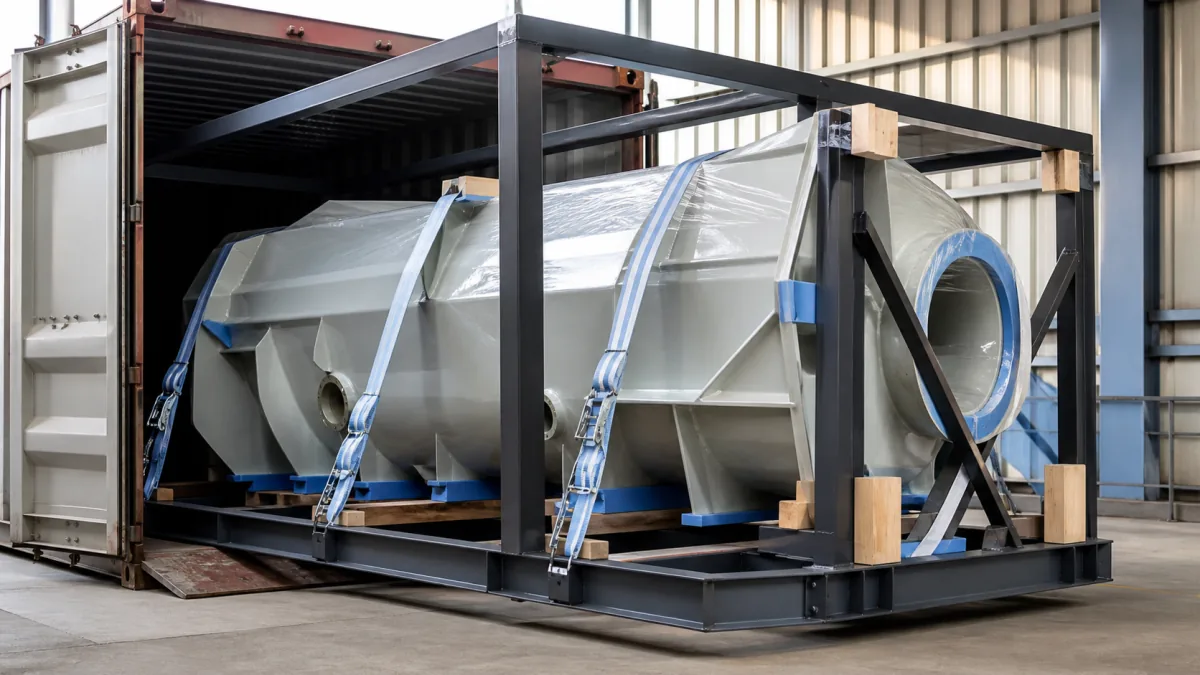
Composite parts can be vulnerable to edge damage, surface abrasion, distortion from poor support, and point loading during transport. State any packing needs that affect the quote:
- Individual wrapping or separators for cosmetic surfaces
- Protective film requirements
- Edge and corner protection
- Custom racks, trays, or returnable containers
- Stack height limitations
- Maximum package weight
- Pallet requirements
- Handling labels or orientation markings
- Destination, shipping method, and delivery appointment requirements
Also clarify the shipping term and point at which risk transfers if your purchasing process requires it. For large or unusually shaped parts, ask for packaging assumptions before comparing freight-inclusive quotes.
Use a Final FRP RFQ Checklist
Before issuing a custom FRP RFQ, review the package against this checklist.
Part definition
- Part name, number, revision, and required quantity are included.
- The part’s function and installation context are explained.
- Critical dimensions, fit features, and visible surfaces are identified.
- Known design risks or prior issues are disclosed.
Geometry and interfaces
- A 3D model, 2D drawing, or clearly marked concept package is attached.
- Tolerances are assigned according to feature function.
- Mating parts, assembly drawings, and clearance constraints are included where relevant.
- Inserts, holes, cutouts, seals, and secondary operations are fully called out.
- Reference samples are labeled to explain what they represent.
Performance and materials
- Service temperature, weather, moisture, chemicals, UV, vibration, and impact conditions are described.
- Loads, support conditions, and deflection limits are stated where applicable.
- Material, resin, reinforcement, thickness, and finish requirements are defined or identified as open for supplier recommendation.
- Applicable project standards or customer requirements are attached rather than referenced generally.
Commercial and quality requirements
- Prototype, initial production, and anticipated recurring quantities are separated.
- Tooling expectations and potential design-change timing are disclosed.
- Required schedule milestones are listed.
- Inspection, first-article, visual acceptance, and documentation requirements are clear.
- Packing, labeling, shipping destination, and delivery constraints are included.
A complete RFQ does not eliminate every technical question. It makes the remaining questions visible early, when they are easier to resolve. If you need manufacturing input before releasing the design, share the current package and ask for a manufacturability review rather than guessing at moldability, reinforcements, or secondary operations.
GFIND can review buyer drawings and application requirements for custom fiberglass and carbon-fiber components, including tooling, prototypes, molded production, finishing, inspection references, and shipment preparation. For a project-specific discussion, use the custom composite solutions page or contact GFIND.