A foam-core shell with the wall and joints developed together.
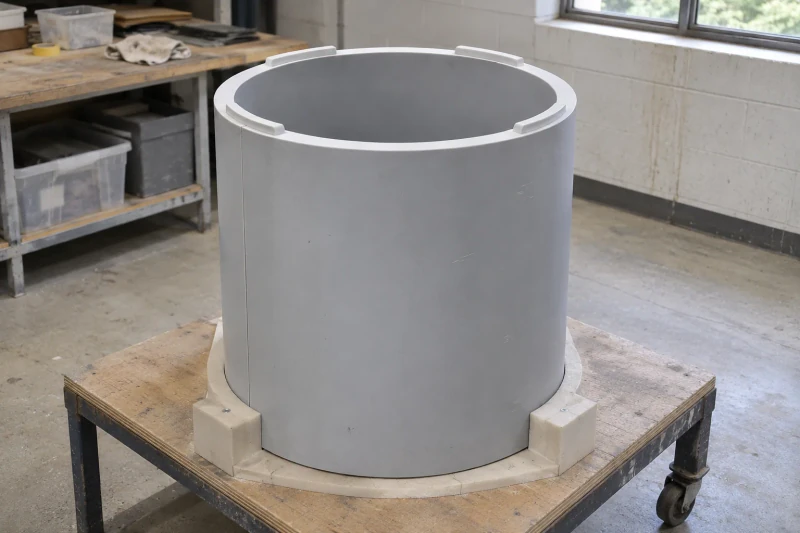
Develop a cylindrical shell with fiberglass skins and a polyurethane foam core. We make sample sections around your bore, wall construction and connection drawings before repeat supply is agreed.
Bore clearance, outer diameter and the core-and-skin construction follow the mating assembly.
- We make
- FRP skins and foam core
- We coordinate
- Custom bore and rim
- You receive
- Development samples
Fit the core and skins between two fixed diameters.
A foam-core cylindrical shell combines several dimensions in one part. The inside must leave the required clearance, the outside must fit the available space, and the core and fiberglass skins sit between them. Its end rim and side joint also need to meet the adjoining assembly.
Clearance inside and space outside
The required bore and available outer diameter leave a fixed envelope for the shell wall.
Core and skins sharing the wall
Core grade, thickness and fiberglass layers must work together for the stated use and exposure.
Rims and joints meeting the assembly
End tabs and the side joint need a defined attachment method and mating arrangement.
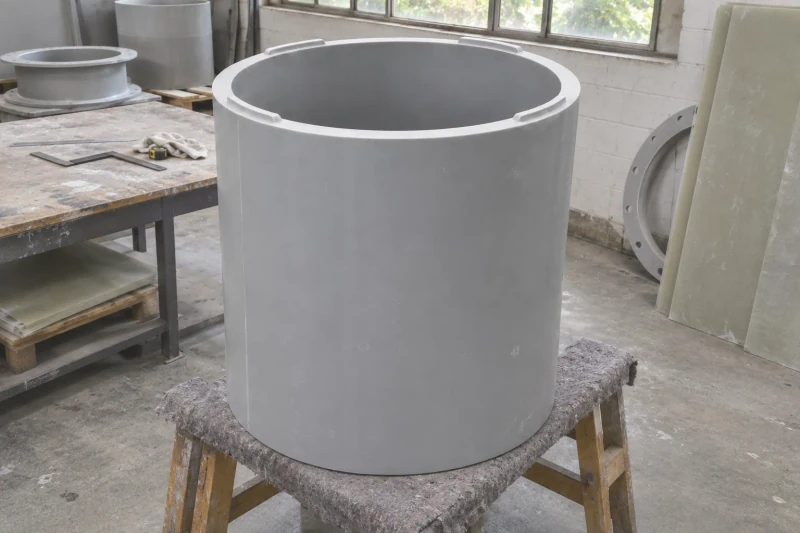
How we customize the parts.
Bore and wall size
Inside diameter, outside diameter and length are set together, with the clearances your mating parts need.
Core and fiberglass skins
Core grade, core thickness and fiberglass layers are chosen for the intended use, temperature and exposure instead of a standard build.
Rim, tabs and side joint
The end rim, tabs and side joint follow your drawing. How they attach and what loads they may carry are settled during development.
Make the sample section
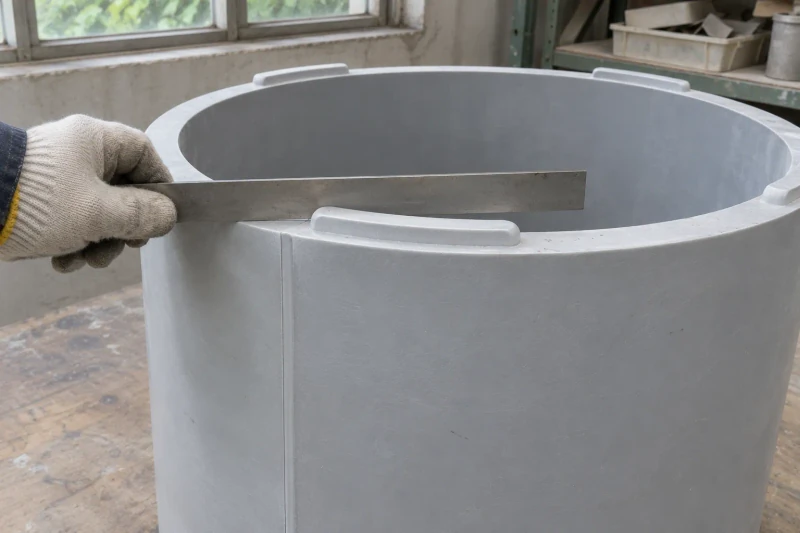
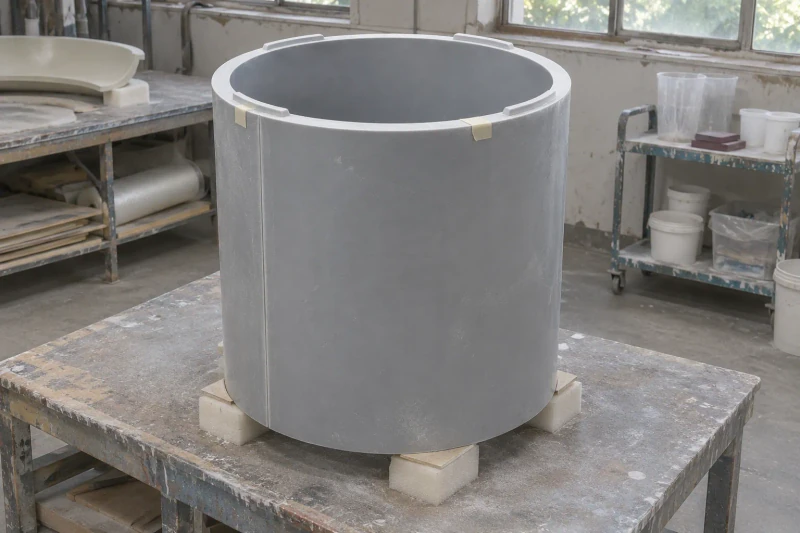
We form the foam core and fiberglass skins to the agreed geometry, with the specified rim, tabs and side-joint preparation. Your team checks bore clearance, roundness and fit with the mating parts. We record the accepted build, and repeat supply is discussed once the agreed checks are complete.
Check the physical section before repeat supply.
A physical shell section brings the bore, wall construction and end interfaces into one review. The equipment team can agree the mating fit and defined core-and-skin build before ordering repeat parts.
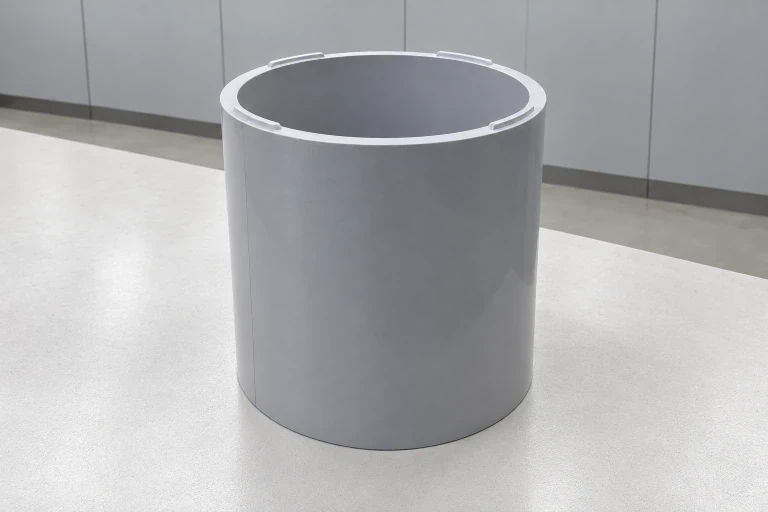
A section to check physically
The sample brings bore clearance and wall dimensions together.
Core and skins defined together
The construction follows one agreed material and thickness arrangement.
Mating ends considered early
Rims, tabs and the side joint follow the surrounding assembly.
Dimensions and design options
- Construction
- FRP skins and foam core
- Custom geometry
- Your bore, length and rim detail
- Supply stage
- Development samples
Sample shell configurations
Bore clearance, the polyurethane core and the fiberglass skins all come from one section drawing. Including the end rim and longitudinal joint in the sample lets you check wall build and mating fit on the same part.
Open cylindrical sample section
A full circular section shows the bore, roundness and layered wall together. The end face shows the hollow center, the foam-core band and the thin inner and outer skins.
End rim with local tabs
Short tabs on the end rim can be added to suit the adjoining assembly. Their position, height and purpose are agreed together with the rim and core-edge detail before the sample is made.
Longitudinal joint review sample
An open side joint exposes the wall build-up and mating edges during development. The split position, core edge and joining method come from your assembly brief and are checked on the sample.
Short sections for axial assembly
Shorter modules suit assemblies or handling routes that limit section length. End alignment, core-edge closure and the joint between modules are agreed before supply lengths are set.
Bore, outside diameter and wall build
One section drawing defines the space inside the shell and the layers around it. Shell length and mating parts use common end references, while the core and each fiberglass skin are specified separately.
- Di · usable bore
- The finished bore accounts for inside diameter, roundness tolerance and clearance to the adjoining part. Any lining or inner surface reduces the usable bore.
- Do · outside envelope
- Maximum outside diameter defines the space occupied by the shell. For a concentric section, the total wall thickness, both skins plus the core, equals (Do - Di)/2.
- L · axial length
- Both ends are located from the assembly datum, with the length, end squareness and adjoining-section positions defined together. Projecting tabs have separate dimensions.
- Core and skin thicknesses
- The section drawing defines the polyurethane core grade and thickness and the inner and outer fiberglass build. The core is one part of the total wall, with its bond and end closure shown separately.
End rim, tabs and side joint
The rim, tabs and side joint can be included in the sample so their fit and edge construction can be examined together.
- A · core closure and skin continuity
- The rim detail shows how the inner skin, core and outer skin end, including edge closure, bond preparation and end-face finish for the exposure and mating arrangement.
- B · rim tabs and end alignment
- Tab positions follow the assembly drawing. Contact areas, clearance, allowed load, height and thickness are coordinated with the attachment role and adjoining section.
- C · longitudinal joining area
- The side-joint detail defines its shape, joining method, access and inspection, including any bond, seal or fastener preparation. Adjoining parts and hardware are listed separately.
Development checks
- Function and exposure
- Insulation casings, structural parts and fluid-service parts have different construction and test needs. Temperature, media and loads determine which questions the sample must answer.
- Layer and joint review
- Core and skin records, bond checks and fit review follow the agreed inspection plan. Any thermal, pressure or load testing is specified per project for the agreed sample assembly.
- Sample acceptance and repeat supply
- The accepted bore, roundness, rim and joint details are recorded after review. The end ring and tabs are protected in transit, and repeat supply is agreed after the development stage.