Gelcoat vs. Paint for Outdoor FRP: How to Choose
Compare gelcoat and paint for outdoor FRP parts. Evaluate weathering, appearance, geometry, repairs, and specifications before you source a supplier.
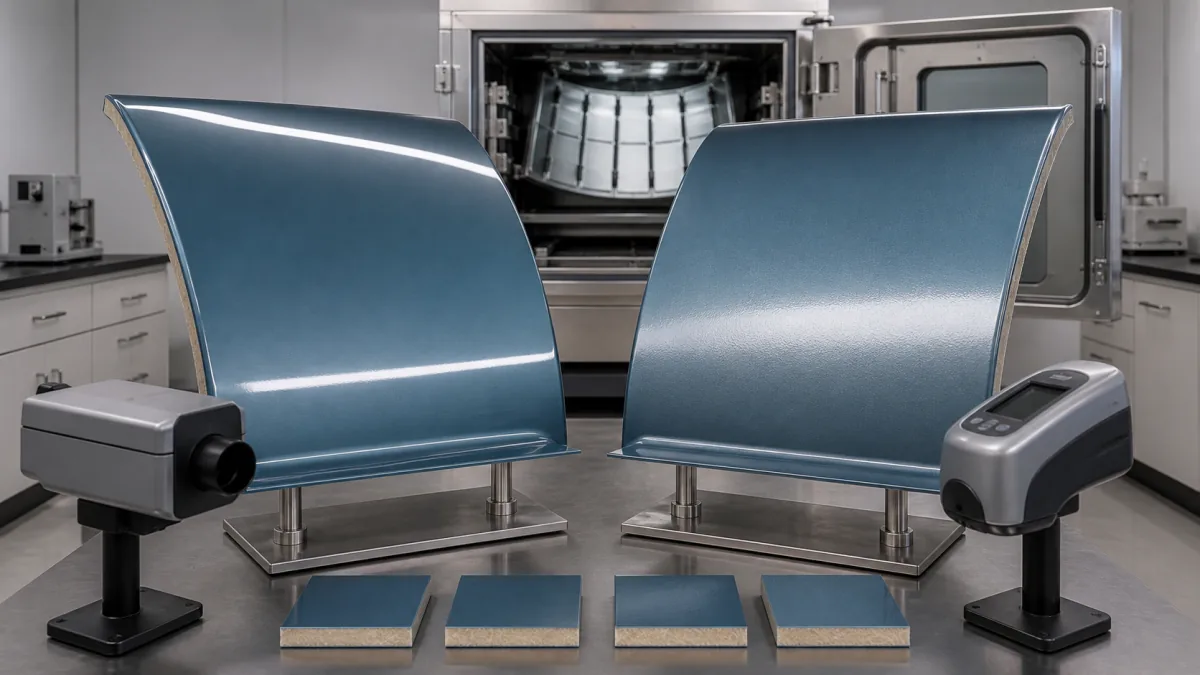
For outdoor fiberglass-reinforced plastic (FRP), neither gelcoat nor paint is always the better finish. Molded gelcoat is usually the practical choice when a part needs a durable, repeatable color and texture straight from the mold. Post-applied paint is often the better choice when color flexibility, late-stage cosmetic correction, complex masking, or refinished parts matter more.
The right choice depends on the part’s geometry, exposure conditions, cosmetic expectations, production volume, repair plan, and tooling strategy. Treat the finish as part of the part design—not as a final decoration—because it affects mold construction, process steps, inspection, and long-term maintenance.
Understand How Gelcoat and Paint Are Applied
Gelcoat is a pigmented resin-based surface layer applied inside a prepared mold before the FRP laminate is built. Once the part cures and is removed, the molded face carries the color, gloss, and surface texture transferred from the tool. The result is commonly called an “in-mold” finish.
Paint is applied after the FRP part has been molded, trimmed, and prepared. Depending on the coating system and requirements, the process may involve cleaning, sanding or abrasion, filling, primer, color coats, and a clear protective coat. Paint can be applied to selected areas or the full exterior surface.
| Consideration | Molded Gelcoat | Post-Applied Paint |
|---|---|---|
| When applied | Before laminate is placed in the mold | After molding and surface preparation |
| Color changes | May require different gelcoat material and production setup | Can be changed more readily between runs |
| Surface appearance | Strongly tied to mold surface quality | Can improve or standardize appearance after molding |
| Geometry limitations | Best on mold-contact surfaces | Can cover accessible exterior surfaces and selected zones |
| Repair approach | Requires matched gelcoat repair methods | Often supports localized sanding, priming, and repainting |
| Process dependency | Depends heavily on tooling and gelcoat application control | Depends heavily on surface preparation and coating compatibility |
Gelcoat is not simply “paint in the mold.” It becomes an integral surface layer of the composite part. Paint is a separate coating system that must adhere reliably to the cured FRP substrate.
A common source of confusion is the visible side of the part. Gelcoat can only reproduce surfaces that contact the mold. If a component has a finished “A-side” and a rougher, non-molded “B-side,” the B-side may require paint or another finishing operation if it is exposed to view.
Compare UV and Weathering Requirements
Both gelcoat and paint can be specified for outdoor use, but outdoor performance depends on the exact formulation, pigment, thickness, application quality, and local exposure—not simply the name of the finish.
For parts exposed to sun, rain, moisture cycling, airborne contaminants, and temperature changes, ask what the finish must resist:
- UV fading, chalking, and gloss loss
- Water exposure and standing moisture
- Salt spray or coastal air
- Industrial pollution and cleaning chemicals
- Abrasion from handling, windborne debris, or routine washing
- Heat buildup on dark-colored surfaces
- Freeze-thaw cycles and thermal expansion differences
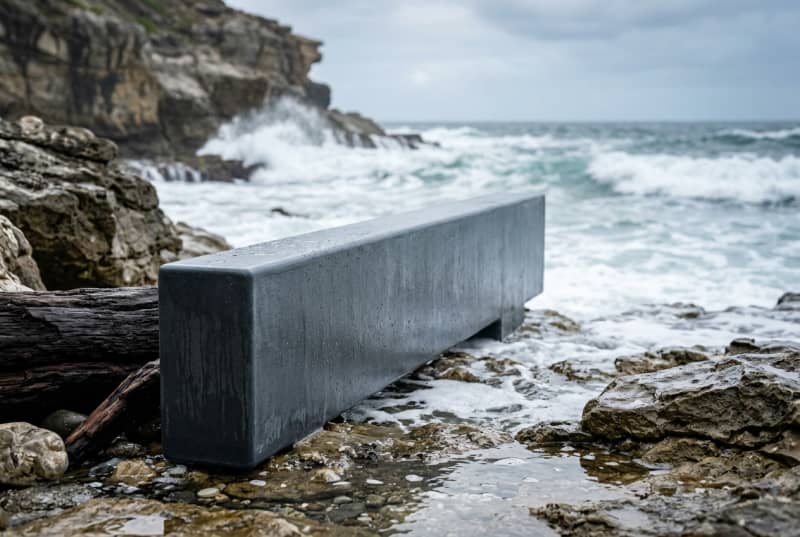
A quality exterior gelcoat can provide a robust weatherable surface because it is relatively thick compared with a typical paint film. It is widely used for molded enclosures, panels, covers, vehicle components, marine-adjacent equipment, and other FRP products that spend time outdoors. However, even a suitable gelcoat can lose gloss or gradually chalk after extended UV exposure, particularly where sun intensity is high or maintenance is limited.
Exterior paint systems can provide strong UV and color retention when the selected primer and topcoat are designed for the service environment. Paint may be especially useful when a defined corporate color, a specialty coating, or a specific repair process is required. But a coating system is only as reliable as the substrate preparation beneath it. Contamination, inadequate abrasion, incorrect primer selection, or uncontrolled cure conditions can lead to poor adhesion, blistering, or peeling.
For severe environments, do not accept a generic request for an “outdoor finish” as sufficient. Define the exposure profile, expected service life, cleaning agents, operating temperatures, and appearance retention expectations. For more context on why composite materials are often used in exposed applications, see how fiberglass products perform in harsh outdoor environments.
Review Color, Gloss, Texture, and Cosmetic Zones
Gelcoat and paint can both produce attractive finished surfaces, but each gives the buyer different control over visual results.
Gelcoat is effective when the project needs a consistent molded color, such as white, gray, safety yellow, or another standard shade. It can be formulated with different gloss levels and can reproduce a mold texture, from smooth surfaces to patterned or low-glare finishes. The mold condition is critical: scratches, print-through, polish quality, and texture variations in the tool can show on the finished part.
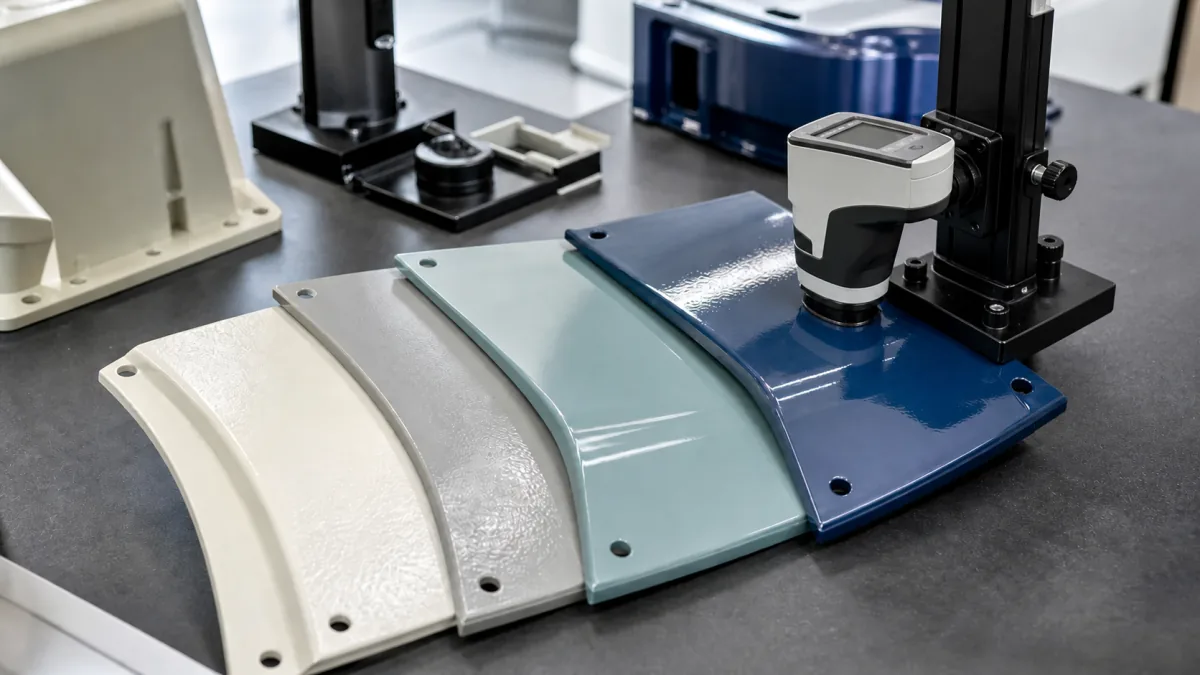
Paint provides greater flexibility when colors may change, multiple colors are needed on one part, or the visual target is established after prototype evaluation. It also supports graphics, stripes, masking, and selective coverage more easily than a single molded gelcoat operation. A painted finish may be preferable when the visible surface needs more cosmetic leveling than the molded process alone can provide.
Before selecting either option, classify surfaces by cosmetic importance:
- Class A cosmetic surfaces: Highly visible customer-facing areas where color consistency, gloss, and minimal defects are essential.
- Class B cosmetic surfaces: Visible surfaces where minor variations may be acceptable at normal viewing distance.
- Functional or non-cosmetic surfaces: Areas where protection matters more than a uniform decorative appearance.
This classification prevents a frequent RFQ mistake: applying Class A expectations to every face of a large composite part without defining viewing distance, lighting, surface orientation, or allowable variation. That approach can add unnecessary cost and create inspection disputes.
Specify the following where appearance matters:
- Color reference, such as a physical approved chip or recognized color standard.
- Gloss target and measurement method, if applicable.
- Texture requirement or approved sample.
- Viewing distance and lighting condition for visual inspection.
- Allowed variation between production parts.
- Locations where minor mold marks, knit lines, witness marks, or touch-up may be unacceptable.
Dark colors deserve special attention. They often make surface waviness, print-through, and handling marks more apparent. They can also absorb more heat in direct sunlight. A dark outdoor finish may still be appropriate, but it should be reviewed against the part’s stiffness, geometry, laminate design, and cosmetic standard.
Match the Finish to Part Geometry and Tooling
Part geometry frequently decides whether gelcoat, paint, or a combined approach makes the most sense.
Gelcoat is most efficient on surfaces that are well-supported by a mold and can be released cleanly. Large exterior panels, housings, lids, fairings, and molded covers are common candidates. The mold establishes the surface, so good tool design supports a repeatable finish.
Paint can be more practical for features that are difficult to finish in-mold, including:
- Deep recesses or narrow channels
- Sharp returns and difficult-to-release contours
- Trimmed edges and machined openings
- Areas altered after molding
- Assemblies made from multiple FRP components
- Parts with bonded hardware or inserts that need cosmetic blending
- Surfaces that do not contact the mold
Tooling investment matters as well. A dedicated mold can make gelcoat attractive for a stable product design and repeat production because the finish is incorporated during molding. If the design is still changing, if colors will vary frequently, or if the quantity does not justify specialized surface tooling, paint may offer more flexibility.
That does not mean paint eliminates tooling requirements. A poor molded surface may require extra sanding, filling, and preparation before paint, which can increase process time and introduce cosmetic variation. Likewise, gelcoat does not eliminate post-mold work: trimming, edge finishing, drilling, assembly, and handling can still affect the final appearance.
For a new component, review the part design and finish decision together. A supplier providing custom composite product support can evaluate how shape, draft, mold split lines, finish zones, and process requirements interact before the tooling path is finalized.
Consider Repair, Touch-Up, and Field Maintenance
The best finish is also the one your organization can maintain realistically.
Gelcoat can be repaired after scratches, chips, or localized damage, but a good repair requires more than applying a matching material. The damaged area typically needs cleaning, removal of compromised material, preparation of the surrounding edges, careful color matching, filling, curing, sanding, and polishing. Repairs can be durable, but they may remain visible under close inspection, particularly on high-gloss or dark-colored surfaces.
Painted FRP is often easier to integrate into established maintenance practices because maintenance personnel may already understand sanding, priming, and repainting procedures. A damaged section can sometimes be feathered, primed, and recoated without rebuilding the entire surface. However, color blending can still be difficult when the original coating has weathered or faded.
Choose gelcoat when:
- The part needs a molded, self-contained exterior finish.
- The product color is stable across production runs.
- Field repainting is unlikely to be part of normal maintenance.
- Small repair areas are acceptable when properly color matched.
- A molded texture or durable integral surface is desired.
Choose paint when:
- The part will be repainted, rebranded, or color changed during its life.
- Local repair and refinishing are expected.
- The design includes multiple colors or graphics.
- Final assembly creates seams or modifications that need a unified appearance.
- A coating system with a defined maintenance process is required.
For either approach, request a repair recommendation as part of the project documentation. It should identify compatible materials, surface preparation steps, cure conditions, acceptable repair size, and visual limitations. Do not assume that any generic automotive, marine, or industrial repair product will adhere to your specific surface.
Confirm Substrate Preparation and Compatibility
Painted FRP succeeds or fails at the interface between the coating and the composite surface. Mold-release residues, waxes, oils, dust, moisture, unreacted surface material, and handling contamination can interfere with adhesion.
A paint specification should state the intended preparation sequence rather than simply saying “paint FRP.” Typical items to define include:
- Cleaning method and approved cleaners
- Required removal of mold-release contamination
- Sanding or abrasion method and target surface profile
- Filler or surfacer requirements for defects and porosity
- Primer type and compatibility with the FRP substrate
- Topcoat system and recommended film build
- Cure requirements and recoat windows
- Masking and protection of non-painted areas
Compatibility also matters with gelcoat. Adhesives, gaskets, sealants, decals, fasteners, and cleaning products may contact the finished surface. A material that bonds well to bare FRP may not bond reliably to gelcoat without preparation. Similarly, a sealant or adhesive can discolor a surface or create stress concentrations if it is not suitable for the application.
When the part includes bonding, sealing, graphics, or overmolding, identify those interfaces early. Ask whether the relevant materials should be applied directly to gelcoat, to prepared paint, or to a masked bare composite area. This avoids avoidable rework after components reach assembly.
Define Samples and Acceptance Criteria
A written finish name is not an acceptance standard. “White gelcoat,” “high-gloss paint,” or “outdoor-grade coating” can mean different things to different teams.
The strongest way to align expectations is to approve representative samples before full production. Samples should reflect the actual or closely comparable substrate, color, texture, geometry, and process. A flat color chip alone may not reveal how gloss, waviness, texture, edge treatment, or mold lines will appear on the finished component.
Your sample and acceptance package should address:
| Item | What to Confirm |
|---|---|
| Color | Physical color chip, standard reference, and permitted batch variation |
| Gloss | Target range, measurement angle if used, and visual standard |
| Texture | Molded texture, paint texture, orange peel tolerance, or approved sample panel |
| Cosmetic zones | Drawings that identify Class A, Class B, and non-cosmetic areas |
| Defects | Limits for pinholes, fisheyes, scratches, chips, sink marks, print-through, and repairs |
| Inspection | Viewing distance, lighting, orientation, and inspection timing |
| Durability | Any required weathering, adhesion, chemical-resistance, or abrasion validation |
| Packaging | Surface protection needed to prevent scuffs during shipment and handling |
Be cautious about calling for an exact visual match without providing a master reference. Screen colors, unapproved photographs, and verbal descriptions are poor substitutes for a physical standard.
Also distinguish between process marks and defects. A molded FRP part may exhibit characteristics that are normal for its process but unacceptable for a particular cosmetic class. The right outcome is not to hide that distinction; it is to define the allowed condition before production begins.
Choose the Finish from Project Requirements
Use the following decision framework for gelcoat vs. paint for outdoor FRP.
Gelcoat is generally the stronger fit when
- The visible surface is molded and the product design is stable.
- One color or a limited set of stable colors will be used.
- The part benefits from a consistent in-mold texture.
- Outdoor resistance is needed without adding a separate paint operation.
- Tooling can be built and maintained to support the cosmetic requirement.
- The product can tolerate gelcoat-specific repair methods if damage occurs.
Paint is generally the stronger fit when
- Color, branding, graphics, or gloss requirements may change.
- Multiple colors or masked zones are required.
- The part is assembled, modified, or trimmed after molding in ways that affect visible surfaces.
- A unified appearance across multiple components is important.
- Field repair or periodic refinishing is expected.
- A specified coating system is needed for the environment or customer standard.
A combined approach may be appropriate when
Some projects benefit from gelcoat on primary molded faces and paint on edges, assemblies, repair zones, or selected features. This can preserve the efficiency of an in-mold finish while allowing visual control where molding alone cannot meet the requirement. The tradeoff is added process coordination and the need to confirm paint-to-gelcoat compatibility.
Before issuing an RFQ, provide:
- Part drawings and 3D files, including visible-surface callouts.
- Expected outdoor environment and cleaning exposure.
- Color, gloss, texture, and cosmetic-zone requirements.
- Whether gelcoat, paint, or both are acceptable—and why.
- Prototype and production quantity expectations.
- Any required test methods or customer acceptance documents.
- Repair, maintenance, and packaging expectations.
GFIND can review buyer drawings and application requirements for custom FRP products, including manufacturability, tooling, prototypes, molded production, finishing, inspection references, and shipment preparation. If you have a defined part and finish target, contact GFIND to discuss the information needed for a practical review.